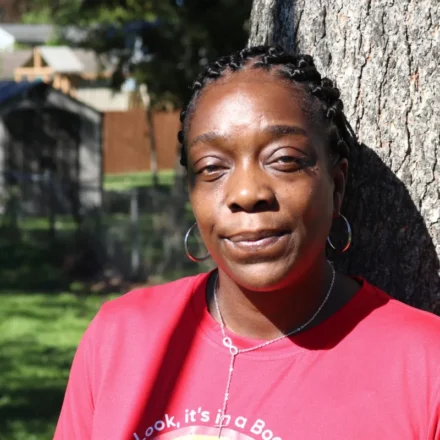
















































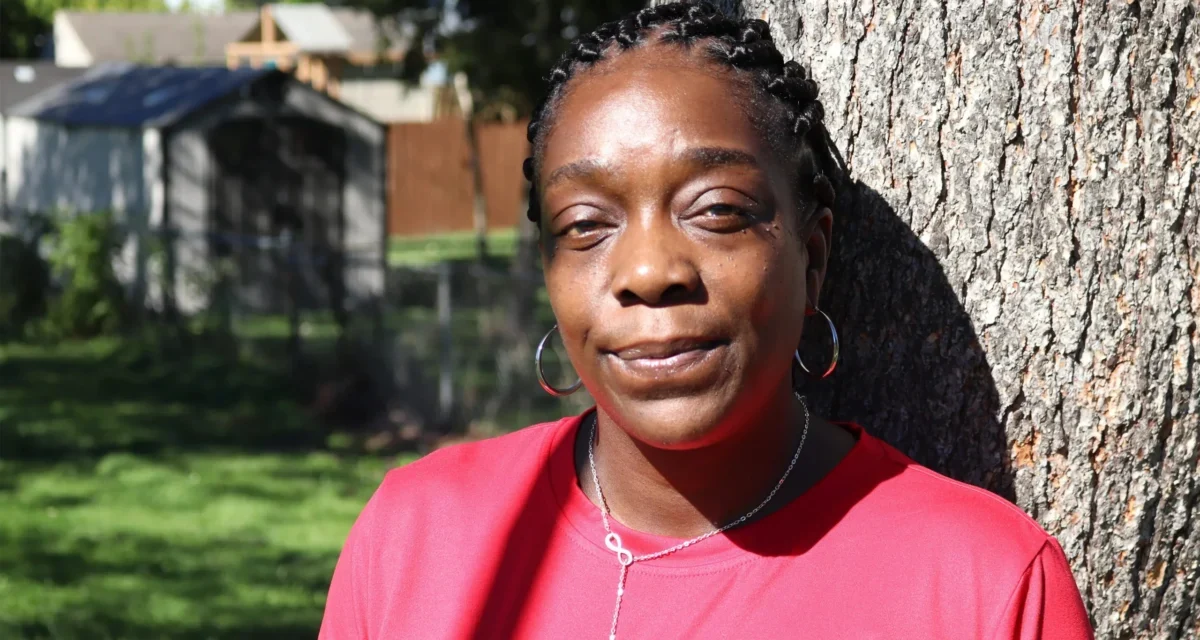





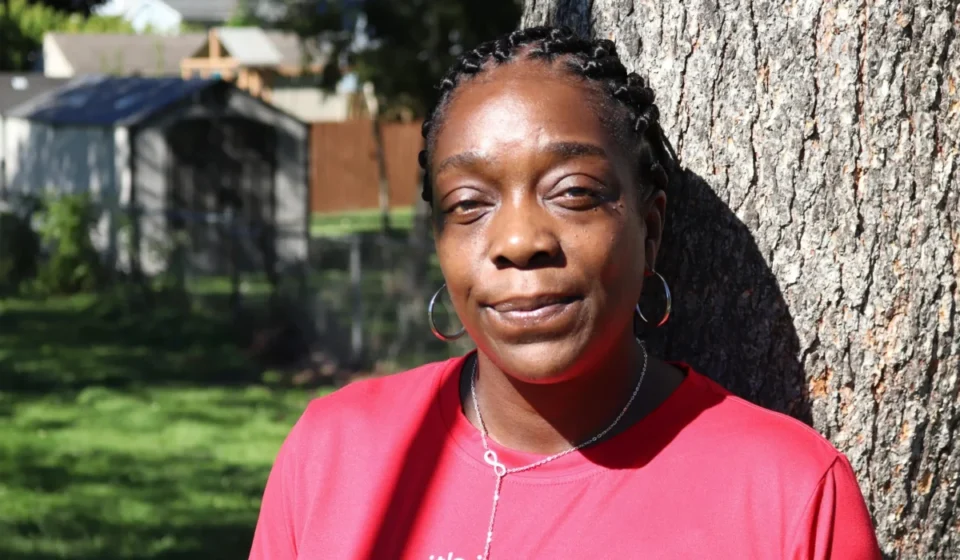

LANSING, Mich. — For Christina Starks-Clay, the American healthcare system isn’t an abstract policy debate or a line item in a federal budget—it is a $1,000 cashier’s check clutched in her hand at a local bank, a desperate payment to chip away at her son’s mounting dental bills. Despite being employed as an early childhood special education paraprofessional with what is considered "good" dental insurance, she still faced a remaining balance of $389 after the payment. Her own recent routine cleaning had cost $600.
As she stood in the humid late-summer air waiting for a town hall meeting hosted by U.S. Senate candidate Abdul El-Sayed, Starks-Clay wasn’t looking for political platitudes. She was looking for a lifeline. “I’m like, ‘Tina, OK, you were in a position for this moment to do this,’” she recounted, her voice tight with the strain of navigating a system that feels designed to drain the working class. “A lot of people couldn’t do what I had to do today. I couldn’t do it. But I did it. So I need to hear, how are you going to make this better for everyone?”
Starks-Clay is far from alone. Across Michigan—a pivotal battleground state—voters are increasingly defining their political priorities through the lens of medical bankruptcy, insurmountable deductibles, and the agonizing choice between life-sustaining medication and basic necessities like food.
A State in Financial Distress
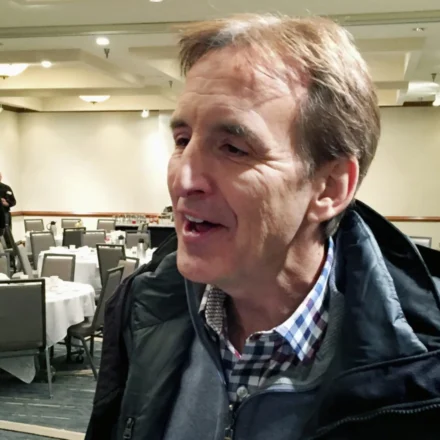
The scene in downtown Lansing reflected a broader, national anxiety. The line for El-Sayed’s event snaked through city blocks, populated by citizens whose personal histories read like a catalog of systemic failure. Ahead of Starks-Clay, a man spoke of his brother’s crushing medical debt. A professor emeritus from Michigan State University expressed deep concern for his grandchildren, whose parents were struggling to navigate a $9,000 insurance deductible.
These stories are the human face of a system that, according to the latest Gallup data, has pushed the ability of Americans to afford healthcare to a five-year low. For those gathered in Lansing, the rallying cry was clear and rhythmic: “Money out of politics! Money in your pocket! Medicare for All!”
The Evolution of a Progressive Shorthand
While "Medicare for All" has become the defining slogan for progressive candidates, it remains a concept often misunderstood by the public. At its core, the policy proposes a single-payer health insurance program administered by the federal government, aiming to provide universal coverage while significantly curbing or eliminating the role of private insurance companies.
Public support for the idea is currently at its highest level in a decade. A recent KFF poll indicates that two-thirds of Americans favor expanding the government program that currently serves the nation’s seniors. Yet, experts warn that public opinion is highly elastic, shifting based on how the policy is framed and what specific information—or misinformation—is presented.
“Too many people don’t have health insurance, too many people who do have insurance can’t afford medical care, and many people are terrified about the costs of being sick,” said Jonathan Oberlander, a professor at the University of North Carolina-Chapel Hill and a specialist in healthcare reform politics. “In an electorate that wants change, that is disenchanted with the status quo, Medicare for All is an important symbol.”
Chronology of a Healthcare Conflict
The path to this moment has been paved with cycles of progress and reversal. Following the 2010 passage of the Affordable Care Act (ACA), the nation saw its uninsured rate cut nearly in half. Protections for pre-existing conditions were codified, and 40 states, including the District of Columbia, moved to expand Medicaid to low-income populations.
However, the last two years have marked a period of regression. In Michigan, the political landscape shifted dramatically following the expiration of enhanced tax subsidies that had previously lowered premiums for residents on the ACA marketplace. With the repeal of these supports, insurance companies in the state hiked individual marketplace rates by an average of 20%.
Further compounding the issue are legislative changes initiated under the federal "One Big Beautiful Bill Act" (OBBBA), which critics argue has gutted critical safety nets. The Urban Institute estimates that as many as 355,000 Michiganders could lose their Medicaid coverage by 2028 due to the stringent work requirements and eligibility cuts mandated by the legislation. For many, the progress of the last decade feels like a receding tide.
Personal Tolls and Economic Realities
The statistics are harrowing, but the anecdotal evidence from the field is even more damning. Darleana Ash, who works at a medical diagnostics lab, reports that patients are now routinely skipping essential tests because they cannot afford the out-of-pocket costs. Those living in rural areas face an additional burden: the closure of local facilities has forced them to drive hours just to access care, provided they can even find a provider within their dwindling insurance networks.
"If you have somebody that’s 75, 80 years old, guess what? They’re going to go without the medication, because they have to eat," Ash said.
The story of Cindy Lou Coolich, a retiree, offers a stark look at the fragility of the American dream. After a life of hard work, a bout of sepsis left her disabled and stripped of her assets, including a 15-acre horse farm. She found herself living on $900 a month in Social Security, only gaining a semblance of financial stability through the death of her ex-husband and the subsequent access to his benefits.
"So now I’m doing quite well!" she laughed, though the bitterness of her reality was clear. For her, the fact that a death was the catalyst for her financial stability is a damning indictment of a system that fails to protect its most vulnerable citizens until it is too late.
Official Responses and Political Liability
Healthcare has become the central fault line in the Michigan Senate race. Abdul El-Sayed, a former physician and Detroit’s top public health official, has centered his campaign on the promise of Medicare for All, a position he has held since his 2018 gubernatorial bid. His supporters view his consistency as a mark of integrity in a political climate defined by shifting loyalties.
Conversely, his opponent, Republican Mike Rogers, has launched a vigorous critique of the plan. During a recent press conference, Rogers characterized Medicare for All as a government overreach that would strip citizens of their private coverage and necessitate massive tax increases.
“If the government is going to give you something, they have to take it away from someone else,” Rogers argued. He pointed to the estimated $4 trillion annual price tag of a single-payer system as evidence of its fiscal irresponsibility.
However, proponents of the plan, citing a recent Yale study, argue that the $4.2 trillion cost estimate misses the forest for the trees. The study suggests that implementing a universal system could actually save the nation $1 trillion in total healthcare spending annually by eliminating administrative waste and lowering drug prices.
The Road Ahead: Implications and Skepticism
Despite the passion surrounding the issue, political experts like Oberlander caution that the road to systemic reform remains fraught with obstacles. Even a decisive electoral victory in November would not guarantee the passage of a Medicare for All bill. The entrenched power of the healthcare industry, the lobbying influence of insurance and pharmaceutical giants, and the resistance from moderate wings of the Democratic Party suggest that a massive overhaul is unlikely in the short term.
For activists like Thomas "Jermaine" Carey, the cynicism is a survival mechanism. Standing at a town hall in Detroit, he expressed a common sentiment among the disillusioned: the belief that the system is rigged regardless of who occupies the seat of power.
“It’s still America,” Carey said, shrugging. “You still have super PACs, the lobbyists that control everything.”
As Michigan voters head to the polls, they are faced with a fundamental question: Is the current healthcare trajectory sustainable, or is the radical shift promised by candidates like El-Sayed the only way to heal a broken system? For voters like Christina Starks-Clay, the answer is no longer a matter of policy—it is a matter of necessity. The pressure to choose between their health and their financial future has reached a breaking point, and for the first time in a long time, the status quo is no longer an acceptable answer.