

















































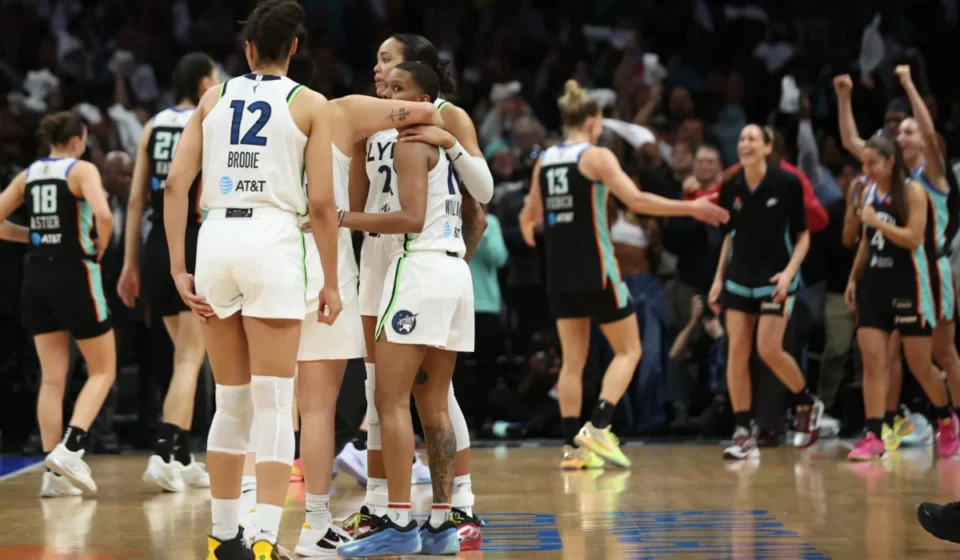
A Crossroads in Minneapolis: Napheesa Collier, Cheryl Reeve, and the Uncertain Future of the Minnesota Lynx

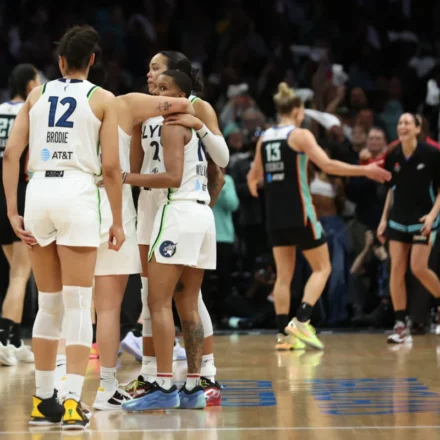
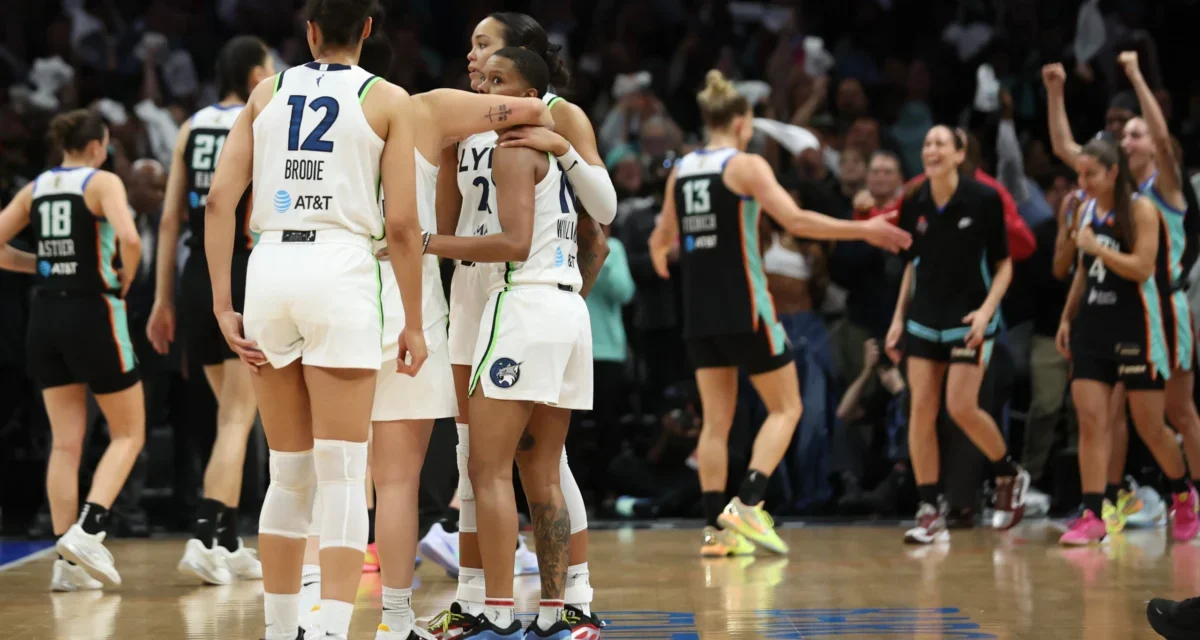
The atmosphere inside the Mayo Clinic Square practice facility was heavy with the familiar, stinging scent of an early offseason—a sharp departure from the championship aspirations that typically define the Minnesota Lynx organization. Just two days removed from a shocking, rapid-fire elimination at the hands of the New York Liberty, the team’s locker room was quiet, contemplative, and defined by the looming shadow of uncertainty.
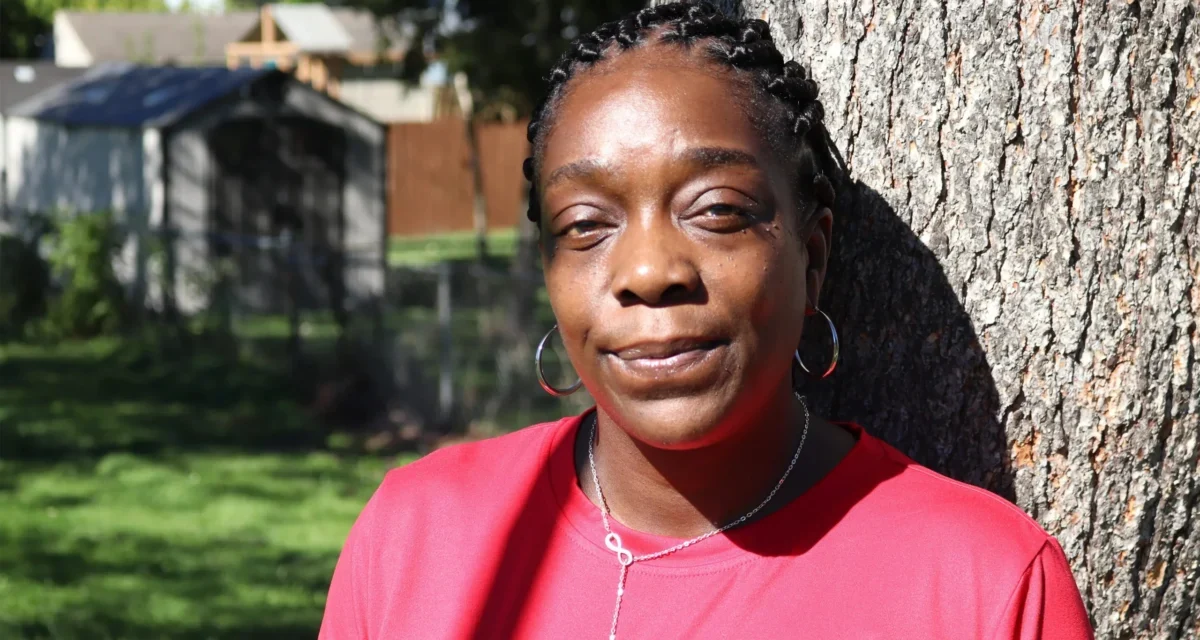
At the center of it all sat Napheesa Collier. One year ago, the WNBA Players Association vice president had commanded the room with a prepared, multi-page statement, decrying league leadership and officiating standards ahead of pivotal labor negotiations. This time, there were no notes. There was no manifesto. There was only the raw, unfiltered reality of a star athlete standing at the most significant career juncture of her professional life.
The Weight of the Offseason
The 2026 season was supposed to be the year the Lynx solidified their dynasty. Instead, it ended in a stunningly lopsided first-round sweep. For Collier, a perennial All-Star and the heart of the franchise, the silence of the room was deafening. Having returned to Minnesota on a one-year deal following a cycle of catastrophic ankle injuries and subsequent surgeries, her status as a free agent has once again moved to the front of the WNBA conversation.
The skepticism from the fanbase is palpable. Following the Liberty’s clinical dispatching of the league’s top seed, any ambiguity in Collier’s post-game remarks was immediately dissected by social media analysts. When asked about her future, her response—"Honestly, I haven’t even thought about that"—was met with a chorus of doubt.
"We lost less than 48 hours ago, and we didn’t expect to be here at all," Collier told reporters, her tone measured. "I can tell you I love it here, I love the organization, I love my team, but I just haven’t had time to give that any thought."
To the casual observer, it was a standard non-answer. To the cynical, it was a departure strategy. However, looking at the structural challenges facing the Lynx, the question is not just where Collier will go, but what the Lynx will look like when they return to the court in 2027.
A Chronology of the Unraveling
To understand the current crisis, one must look back at the trajectory of the 2026 season. The Lynx finished with a league-best 33-11 record, a feat that earned Cheryl Reeve her record-breaking fifth WNBA Coach of the Year award. On paper, it was a masterclass in development. In practice, the cracks were forming as early as mid-summer.
The turning point, according to internal assessments, was a 99-86 loss to the Liberty on July 3. That defeat marked the beginning of a concerning trend: the Lynx, long known for their defensive tenacity, began to bleed points. Over the first 19 games of the season, the team held opponents under 40 percent shooting from the field with regularity. In their final 25 games, they hit that defensive benchmark only twice.

The team’s struggles were compounded by an inability to close out games at home, losing seven times on their own floor. In five of those losses, the Lynx held leads or were tied entering the fourth quarter—a statistical anomaly for a team led by a coach as disciplined as Reeve. As they limped into the playoffs, losing four of their last six games, the writing was on the wall. The draw against a physical, imposing New York Liberty side—a team that defied its eighth-seed status—proved to be the death knell for the Lynx’s title hopes.
Data and Disparity: The Size Problem
The series against New York exposed a fundamental flaw that can no longer be ignored: the Lynx are simply too small. The Liberty’s frontcourt, anchored by the 6-4 Breanna Stewart and 6-6 Jonquel Jones, dismantled the Minnesota defense with clinical precision.
The statistical evidence is stark. In the two-game sweep, the Liberty rendered the Lynx’s primary offensive weapon—the pick-and-roll tandem of Natasha Howard and standout Rookie of the Year Olivia Miles—ineffective. For the first time in club history, the Lynx lost consecutive postseason games by 15 or more points.
"We like our roster a lot, but we have a flawed roster in some ways," Cheryl Reeve admitted during her post-mortem. "There are some matchups that are going to get to us."
The individual toll was also visible. Napheesa Collier, at 6-1, was asked to do the impossible: contain Stewart. The result was a 55-26 scoring discrepancy in favor of the Liberty star across the series. While Collier played with her characteristic grit, her acknowledgment that she was not at 100 percent highlighted the physical toll of a long season and the lack of a secondary rim protector to alleviate her defensive burden.
Official Perspectives: The Coach’s Stance
Cheryl Reeve’s approach to the current roster volatility is one of calculated pragmatism. Speaking on the potential departure of her franchise cornerstone, Reeve offered a perspective that was as much about life as it was about basketball.
"Phee knows exactly what exists here," Reeve noted. "She knows the care, the love, all the things that have been poured into her. This is a Phee decision, and it’s probably more than basketball. Sometimes you stay, and sometimes you go, because maybe there’s something—I don’t say better, but maybe better for her. And that’s something I respect."
Reeve is effectively granting her star player the agency to decide her future, a move that signals a transition in the team-player dynamic. If Collier decides to move on, Reeve knows the business reality: the Lynx must adapt. The challenge, however, is that the assets needed to compete with the league’s titans—size, shooting, and perimeter defense—are the most expensive commodities in the WNBA.

Implications for 2027 and Beyond
The road ahead for the Minnesota front office is fraught with fiscal and personnel hurdles. The salary cap remains the ultimate arbiter of success. With significant financial commitments already slated for 2027 to veterans like Courtney Williams and Kayla McBride, the room to maneuver is razor-thin.
The organization holds rights to Dorka Juhász and Emma Čechová, but both are coming off significant, season-altering injuries. Juhász, a former EuroLeague MVP, has yet to return to form, and Čechová’s torn ACL has kept her off the court since May. Relying on their recovery is a gamble the team can ill afford.
There is also the matter of positional versatility. During her exit interviews, Collier mentioned an interest in refining her perimeter game and three-point shooting. When pressed on whether she would be willing to move to small forward to accommodate a larger lineup, her answer was definitive: "I would go wherever a coach wants to put me."
This willingness to adapt offers a glimmer of hope. If Collier can effectively shift positions, it opens the door for Reeve to pursue a true power forward or center to anchor the defense. However, as Reeve pointed out, "The things that we need, they don’t grow on trees. We’re not the only team that would like to have size that shoots 3s, and can pass, defend, and rebound."
Conclusion: A Franchise at the Edge
The Minnesota Lynx are not in a state of collapse, but they are undeniably in a state of transition. The "undersized and overachieving" model that defined their 2026 regular season has reached its ceiling in the modern WNBA, where length and physicality are the primary currencies of success.
For the fans, the coming months will be a period of agonizing suspense. Will Collier stay to lead the charge for a fifth ring, or is her time in Minneapolis coming to an organic, albeit painful, close? For the front office, the task is clear: find the next Alanna Smith—the undervalued veteran who can provide high-level production at a budget price—or accept that the current championship window is rapidly closing.
As Courtney Williams succinctly put it, "I ain’t the G.M., bossman. Let them do their job, and I do mine. But it’s something. We need something."
That "something" will define the next chapter of Minnesota Lynx basketball. Until then, the silence of the off-season serves as a reminder that even the most storied organizations must eventually evolve or risk being left behind by the very league they helped build.