



















































Minneapolis is currently playing host to a bold intersection of the past and the future, as two of the city’s most prestigious cultural institutions—the Minnesota Orchestra and the Guthrie Theater—present reimagined interpretations of 20th-century masterpieces. Whether through the high-tech, architectural video mapping of Stravinsky’s The Firebird or the raw, existential dread of Samuel Beckett’s Waiting for Godot, the city’s arts scene is proving that modernism remains a potent, evolving language for contemporary audiences.
Orchestrating Light: Tal Rosner’s Digital Canvas at Orchestra Hall
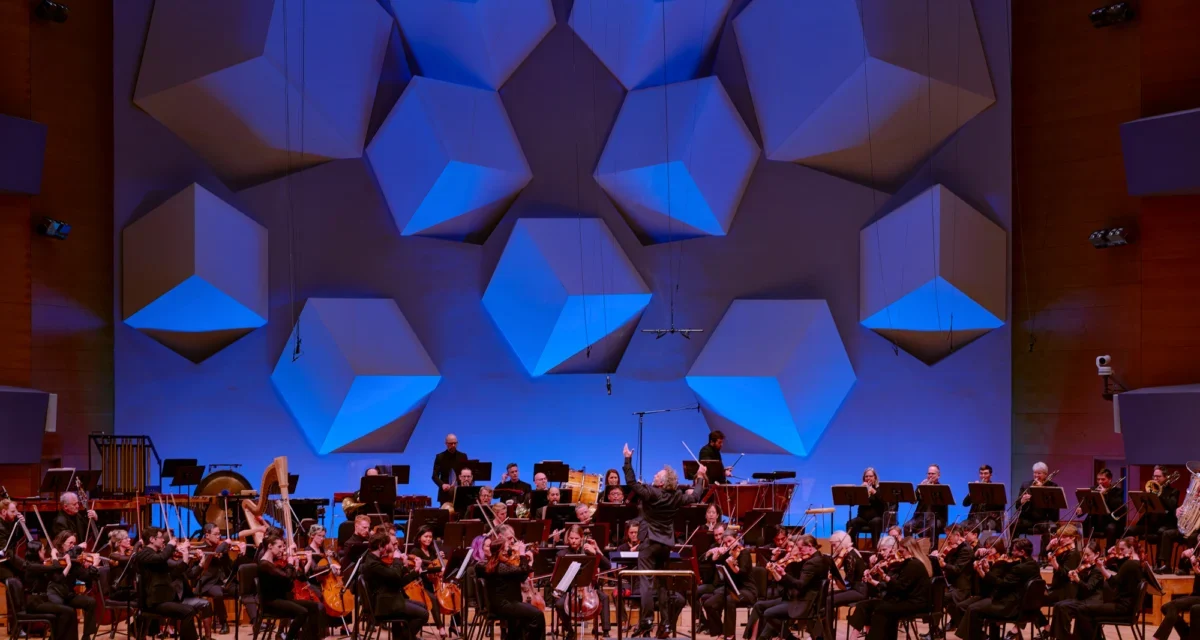
The Minnesota Orchestra has officially kicked off its ambitious "Sound Unbound" series, a multi-year initiative dedicated to interdisciplinary collaborations between the orchestra and visionary visual artists. For the season opener, the organization has turned to London-based designer Tal Rosner, a BAFTA-winning artist tasked with breathing new life into Igor Stravinsky’s 1910 ballet, The Firebird.
The Technical Marvel of Video Mapping
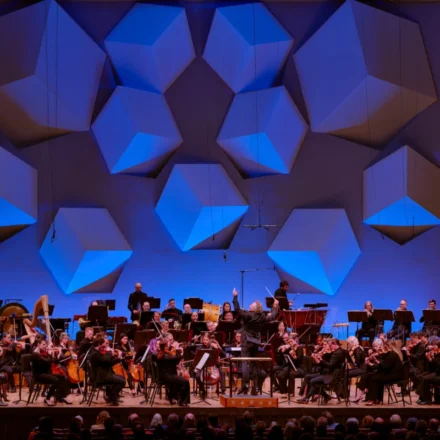
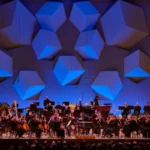
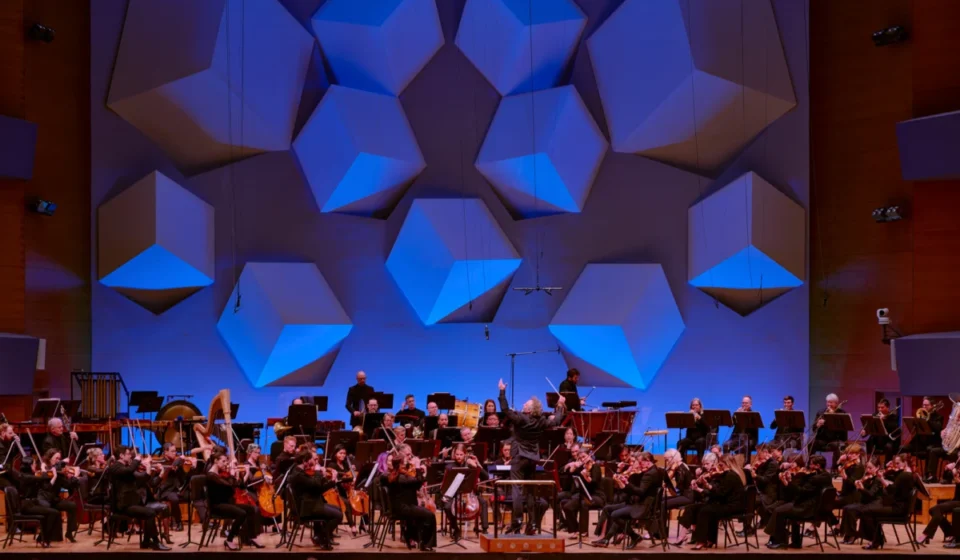
Orchestra Hall is known for its iconic, acoustically precise geometric cubes that line the back wall and ceiling. Rather than viewing these as static architecture, Rosner has transformed them into a dynamic digital canvas. Utilizing "video mapping"—a sophisticated projection technique that aligns digital imagery with the physical contours of an object—Rosner has created a visual landscape that physically reacts to the music.
"Almost every design decision I made is rooted in the fact that the cubes are the projection surface," Rosner explained. "All the design elements are in constant consideration of the layout of the cubes, so the mapping is very, very, very accurate."
A Chronology of the Firebird
To understand the gravity of this performance, one must look back to 1910. Commissioned by Sergei Diaghilev for the legendary Ballets Russes, The Firebird served as a foundational pillar for musical modernism. It was a bridge between the romanticism of the 19th century and the radical, chaotic shift that would fully manifest three years later with the premiere of Stravinsky’s The Rite of Spring—a performance so avant-garde it famously incited a riot in Paris.
In the Minnesota Orchestra’s current production, the visual narrative mirrors the folklore of Prince Ivan’s quest. The audience is taken on a journey involving the malevolent sorcerer Koschei, the elusive magical Firebird, and a series of diversions, including a celestial game played with golden apples and 12 princesses.
Artistic Philosophy: Moving Beyond the "Look at Me" Aesthetic
Rosner’s approach to the production is intentionally metaphorical. He avoids literal, distracting depictions, opting instead for suggestive imagery. For instance, the 12 princesses are not portrayed as physical actors, but as fluid, golden ribbons of light that weave through the cubes in response to the score.
"I think that it’s still very communicative because I’m following the rhythms and the colors and what is suggested," Rosner noted. "It’s a very simple tale, and with quite a lot of theme and variation, but it was really wonderful to be able to work with a piece that has such a strong, visual association."
This project marks a shift in Rosner’s professional maturation. Having once aspired to a career in high-energy television graphics—dreaming of working for MTV—Rosner has found that the concert hall offers a superior, more expansive canvas. His collaboration with the orchestra’s in-house lighting crew is defined by a rejection of individual ego. "As the years progressed, I’m much more aware of everyone else on the team," he says. "It’s not just like, ‘Look at me! Look at me!’ Now it’s a much more holistic approach."
The Guthrie Theater’s Existential Mirror
While the Minnesota Orchestra embraces the spectacle of light and sound, the Guthrie Theater is turning inward. Artistic Director Joseph Haj is currently staging Samuel Beckett’s Waiting for Godot, a play that defines the minimalism of the 1950s.
The Rigidity of Beckett’s Vision
Beckett was notorious for his strict control over his scripts. Every pause, silence, and stage direction is mandatory. For a director, this leaves little "wiggle room." However, Haj’s production manages to find new urgency in the text, treating the play’s existential dread as a commentary on our current era of hyper-polarization and digital exhaustion.
The play’s origins—written by a man who survived the Nazi occupation while working in the French Resistance—carry a specific weight today. In an age often described as one of "end times fascism," the image of two men, Vladimir and Estragon, waiting indefinitely for a savior who never arrives, feels less like an absurdist trope and more like a mirror of modern societal anxiety.
Supporting Data: Performance and Chemistry
The production features the veteran actor David Strathairn as Vladimir and Jimmy Kieffer as Estragon. Despite the inherent difficulty of the script, the chemistry between the two anchors the performance. Kieffer brings a grounded, lovable comic timing that balances Strathairn’s celebrated gravitas.
Supporting them, William Sturdivant portrays the tyrannical Pozzo with chilling precision, while Jim Lichtscheidl handles the play’s emotional core—Lucky’s frantic, nonsensical monologue—with remarkable intensity. The production is further bolstered by sound designer Darron L. West, whose work creates an atmosphere of terrifying immediacy, pulling the audience into the desolate, empty road where the characters reside.
Implications for the Minneapolis Arts Ecosystem
The simultaneous presentation of these two works highlights a significant trend in the Twin Cities: the desire to challenge audiences through innovation. By pairing Stravinsky with cutting-edge video technology and Beckett with a visceral, stripped-back theatrical performance, these institutions are ensuring that the classics do not stagnate.
The implications are clear: the "traditional" concert or play is no longer sufficient. Audiences are seeking an immersive experience. Whether it is the "serendipity" of Rosner’s cube-mapped Firebird or the "existential ache" of the Guthrie’s Godot, the goal is to make the art feel relevant to the modern condition.
Official Details for Attendees
For those wishing to witness these contributions to the Minneapolis cultural landscape, the schedules are as follows:
The Minnesota Orchestra: "The Firebird"
- Program: Includes Stravinsky’s The Firebird, George Walker’s Icarus in Orbit, and Prokofiev’s Piano Concerto No. 2 (feat. Vadym Kholodenko).
- Conductor: Music Director Thomas Søndergård.
- Dates: Friday, Sept. 25 (8 p.m.) and Saturday, Sept. 26 (7 p.m.).
- Venue: Orchestra Hall, 1111 Nicollet Mall.
- Pricing: $64–$159.
The Guthrie Theater: "Waiting for Godot"
- Director: Joseph Haj.
- Dates: Running through October 11, with multiple shows weekly including matinees and evening performances.
- Pricing: $25–$91.
As Minneapolis moves through this busy autumn season, the dialogue between these two productions offers a rare opportunity for residents to engage with the evolution of the 20th-century canon. Whether one prefers the high-tech, neon-infused rhythms of a digital Firebird or the silent, agonizing pauses of two men waiting in the dirt, the city’s message is consistent: the art of the past is very much alive, and it is demanding to be seen through a modern lens.