

























































The Evolution of X: Elon Musk’s Social Media Platform Launches ‘X Money’ Financial Services

The transition of X (formerly Twitter) from a public square for microblogging into an all-encompassing "everything app" has taken its most significant step forward. On July 27, X officially began rolling out X Money, a built-in financial service that allows users to deposit paychecks, earn high-yield interest, transfer funds peer-to-peer, pay bills, and spend money via a physical or virtual Visa debit card.
By integrating banking infrastructure directly into a social media platform, X is attempting to replicate the success of Asian super-apps like WeChat and Alipay. However, the launch brings a complex web of high-yield promises, subscription requirements, regulatory partnerships, and security challenges that users must navigate before trusting their financial livelihoods to a social media account.
1. Main Facts: What is X Money?
At its core, X Money is a financial technology (fintech) layer embedded directly within the X platform. It is designed to replace traditional checking accounts and peer-to-peer (P2P) payment apps like Venmo, PayPal, and Cash App. Through X Money, users can perform a wide range of daily financial tasks without leaving the app.
Key Offerings at Launch:
- Direct Deposits: Users can route their paychecks directly to X Money, with the option to receive funds up to two days early.
- High-Yield Interest: X is advertising an annual percentage yield (APY) of up to 6%, a rate that vastly exceeds the national average for traditional savings accounts.
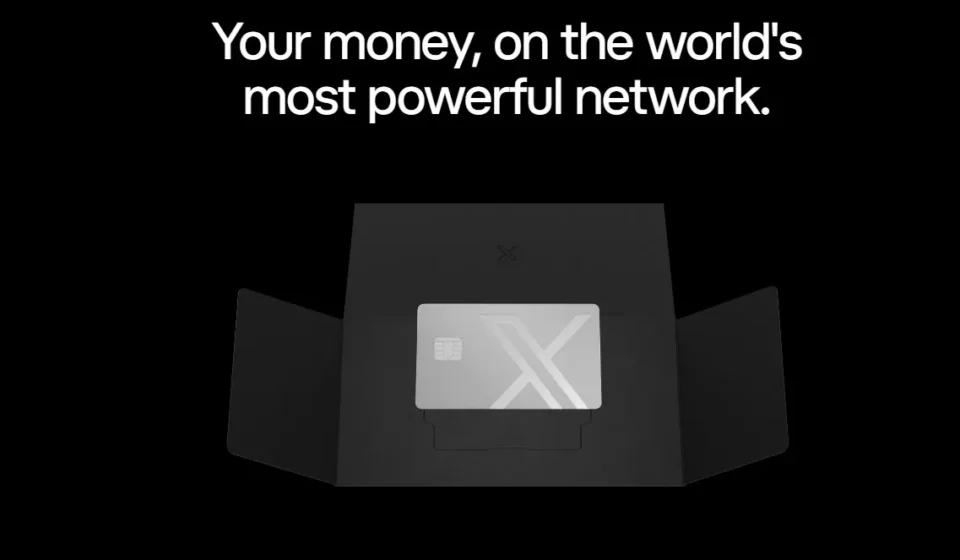
- Debit Card Integration: A virtual Visa debit card is generated immediately upon account opening, which can be linked to Apple Wallet. A physical card is also available for point-of-sale transactions and ATM withdrawals.
- Peer-to-Peer Transfers: Instant, fee-free money transfers can be sent directly to other X users via direct messages or profile interfaces.
- Bill Pay and Wire Services: The platform supports traditional banking functions, including wire transfers, bill payments, and the ability to request that a paper check be printed and mailed on the user’s behalf.
The Banking Infrastructure
Crucially, X Payments is not a bank. Under federal and state laws, non-bank technology companies are prohibited from holding deposits or operating as depository institutions without a banking charter.
To bypass this hurdle, X Payments has partnered with Cross River Bank, a New Jersey-chartered commercial bank known for powering major fintech platforms. While X provides the user interface, customer experience, and branding, Cross River Bank handles the regulated banking infrastructure, processes the transactions, and holds the deposits.
Additionally, to offer enhanced deposit protection, X Money utilizes a cash sweep program. This mechanism automatically distributes customer deposits exceeding standard limits across a network of other FDIC-insured partner banks, allowing X to advertise deposit insurance far beyond the standard $250,000 threshold.
2. Chronology: The Journey to the "Everything App"
The launch of X Money is the culmination of a decades-long vision held by Elon Musk, punctuated by aggressive regulatory filings and strategic corporate restructuring since his acquisition of Twitter in late 2022.
[1999] Musk co-founds X.com (later PayPal) with the vision of an all-in-one financial platform.
  │
[Oct 2022] Musk acquires Twitter for $44 billion, stating the purchase is an "accelerant" to creating X.
  │
[2023] Twitter Rebrands to X; "X Payments LLC" is established and begins applying for state money transmitter licenses.
  │
[Early 2024] X Payments secures regulatory approvals in a majority of US states.
  │
[July 27] X Money officially rolls out to selected US-based X Premium and Premium Plus subscribers.- 1999 – The X.com Origin: The concept of X Money dates back to 1999, when Musk co-founded X.com, an online financial services and e-mail payment company. Although X.com merged with Confinity to become PayPal—and was subsequently sold to eBay—Musk maintained the ambition to build a singular platform that seamlessly combines media, communication, and commerce.
- October 2022 – The Twitter Acquisition: Upon purchasing Twitter for $44 billion, Musk immediately declared his intent to transition the platform into "X, the everything app." He publicly targeted the financial sector, stating that the platform would eventually handle "half of the global financial system."
- 2023 – Securing State Licenses: Throughout 2023, the newly formed subsidiary X Payments LLC quietly applied for money transmitter licenses across the United States. These licenses are legally required for non-bank entities to facilitate money transfers and process payments in individual states.
- July 27 – The Soft Launch: X Money officially commenced its rollout in the United States. Rather than a unilateral launch for all users, the service was introduced as a phased rollout, restricted to selected adult users who pay for X’s subscription tiers.
3. Supporting Data: A Deep Dive into Features, Costs, and Mechanics
To understand the viability of X Money, consumers must analyze the specific metrics, requirements, and mathematics underpinning its headline features.
Feature Matrix: X Money Specifications
| Feature | What X Money Currently Offers |
|---|---|
| Availability | Selected US users aged 18 or older |
| Required Account | X Premium or Premium Plus subscription |
| Interest Rate | Up to 6% APY (subject to subscription tier and direct deposit setup) |
| Debit Rewards | 3% cashback on eligible retail purchases |
| P2P Payments | Instant transfers to other X users (no advertised fee) |
| Debit Card | Virtual and physical Visa debit card |
| Mobile Wallet | Apple Wallet support at launch |
| ATM Withdrawals | ATM operator fees reimbursed within three calendar days |
| Foreign Transaction Fee | None advertised |
| Direct Deposit | Early payroll access (up to two days early) |
| Deposit Protection | Up to $10 million in FDIC coverage via a cash sweep network |
The Math Behind the 6% APY Offer
The 6% APY interest rate is X Money’s primary customer acquisition tool, arriving at a time when the national average savings account rate hovers well below 1%. However, this yield is not a free benefit; it is tethered to X’s paid subscription tiers.
To qualify for the maximum rate, users must subscribe to X Premium or Premium Plus and meet specific direct deposit requirements.
Because these subscriptions carry recurring costs, users must calculate whether the interest earned offsets the subscription fee:
- X Premium Cost: Priced at approximately $8/month ($84/year if billed annually).
- X Premium Plus Cost: Priced at approximately $40/month ($395/year if billed annually, or $480 if paid monthly).
Break-Even Analysis for Premium Plus ($395/year annual plan):
To recoup the $395 annual subscription cost solely through the 6% APY interest, a user must maintain a constant, qualifying balance in their X Money account.
$$textRequired Balance = fractextAnnual Subscription CosttextAPY$$
$$textRequired Balance = frac$3950.06 approx $6,583.33$$
- If a user maintains a balance of $6,584 at a constant 6% APY, they will generate approximately $395 in interest over 12 months, effectively neutralizing the cost of the subscription.
- If paid monthly ($480/year total), the required balance to break even rises to $8,000.
- Balances below these thresholds mean the user is net-negative on the subscription cost, unless they derive equal value from other Premium features (such as ad reduction, blue checkmark verification, or creator revenue sharing).
- Furthermore, interest earned is considered taxable income, meaning the real-world break-even point is higher depending on the user’s marginal tax bracket.
The 3% Cashback Mechanics
While a 3% cashback rate on a debit card is highly competitive—most traditional debit cards offer 0%—it is governed by strict eligibility rules.
- Eligible vs. Ineligible Purchases: The 3% reward applies strictly to qualifying retail purchases.
- Excluded Transactions: Financial transactions such as ATM withdrawals, peer-to-peer transfers, wire transfers, purchasing gift cards, or funding external brokerage and cryptocurrency accounts do not qualify for cashback.
- X Payments reserves the right to cap monthly cashback earnings or adjust the percentage rate as market conditions dictate.
4. Official Responses, Regulatory Compliance, and Security
Because X Money represents a convergence of social media and consumer banking, it operates under intense regulatory scrutiny from federal and state agencies.
The Role of Cross River Bank
In an official statement regarding the launch, Cross River Bank highlighted its role as the regulatory backbone of the service, stating that it "powers X Money’s first P2P payments experience built into a US social media platform." By utilizing Cross River’s infrastructure, X Payments ensures that all transactions comply with Know Your Customer (KYC) and Anti-Money Laundering (AML) regulations. Consequently, applicants must submit to identity verification, including providing their Social Security Number (SSN) and proof of address.
FDIC Pass-Through Insurance Explained
X prominently advertises "up to $10 million in deposit protection." Because the FDIC standard limit is $250,000 per depositor, per bank, X utilizes a pass-through cash sweep network.
[User Deposit: $1,000,000]
       │
       ▼ (X Money Platform)
 ┌───────────────┬───────────────┬───────────────┬───────────────┐
 │               │               │               │               │
 ▼ ($250k)       ▼ ($250k)       ▼ ($250k)       ▼ ($250k)       ▼ (Remaining)
[Bank A]        [Bank B]        [Bank C]        [Bank D]        [Other Partner Banks]
(FDIC Insured)  (FDIC Insured)  (FDIC Insured)  (FDIC Insured)  (FDIC Insured)
If a user deposits $1,000,000, the sweep program automatically fragments that balance into four $250,000 increments and deposits them into separate, participating FDIC-insured institutions.
The Caveat: If a user already holds a personal account at one of those participating sweep banks (e.g., Cross River Bank), their direct holdings and their swept X Money holdings are combined for FDIC limit calculations. If the combined total exceeds $250,000 at that specific bank, the excess amount may not be insured.
Regulatory and Consumer Warnings on P2P Fraud
The Federal Trade Commission (FTC) and consumer advocacy groups have repeatedly warned about the rise of fraud on instant-payment applications.
- The FTC Position: Instant P2P transfers operate like physical cash. Once a transfer is authorized, reversing the transaction is virtually impossible.
- Liability Limits: FDIC insurance only protects consumers against bank failures. It does not reimburse users who willingly send money to scammers, fall victim to impersonation fraud, or experience unauthorized transactions due to poor personal credential management (such as sharing passwords or falling victim to phishing).
5. Implications: The Rise of the "Everything App" and Associated Risks
The launch of X Money is a double-edged sword, offering unprecedented convenience while exposing users to unique structural, privacy, and cybersecurity risks.
The Advantages: Ecosystem Lock-In and Creator Monetization
For content creators, digital storefronts, and frequent users of X, the integration of financial tools simplifies monetization.
- Direct Tips and Subscriptions: Creators can receive tips and subscription revenue directly into their X Money account, eliminating the transaction friction of third-party processors.
- Unified Digital Identity: By consolidating messaging, news consumption, professional networking, and financial transactions into a single portal, users reduce the need to manage multiple disconnected applications.
The Security Implications: Creating a High-Value Target
Consolidating personal finances and social media presence creates a singular, highly lucrative target for cybercriminals.
Traditional Model:
[X Social Account] ──► Access to posts, DMs, followers (Low-Medium Financial Value)
[Bank Account]     ──► Access to funds, routing numbers (High Security/MFA)

X Money Model:
[Unified X Account] ──► Access to posts, DMs, followers + Cash Balance + Debit Card + Early Paycheck
Historically, a compromised social media account resulted in reputational damage, spam posts, or leaked direct messages. With X Money, a hijacked account grants attackers direct access to:
- The user’s active cash balance.
- The virtual Visa debit card credentials.
- Direct deposit routing details.
- The ability to execute instant, irreversible P2P transfers to anonymous accounts.
To mitigate this, X has mandated the availability of passkeys, multi-factor authentication (MFA), and custom transaction alerts. Security analysts argue that these tools should not be viewed as optional; they are absolute necessities for anyone utilizing the service.
Privacy and Data Profiling Concerns
Fintech integration raises significant privacy questions. Social media platforms thrive on behavioral data profiling to serve targeted advertisements. By adding transactional financial data—where users spend money, how much they earn, who they send funds to, and what bills they pay—X gains access to an incredibly detailed financial profile of its users.
While X’s privacy policy states that financial transaction details are handled confidentially and in compliance with banking privacy laws, the consolidation of social behavior and financial history under one corporate umbrella remains a point of concern for privacy advocates.
The Verdict: A Calculated Trial
For existing X Premium subscribers who can easily meet the direct deposit requirements to unlock the 6% APY and 3% cashback, X Money presents an incredibly lucrative alternative to traditional checking accounts.
However, for the average consumer, the sensible path involves cautious experimentation. Rather than transferring an entire life savings or primary paycheck on day one, financial experts recommend starting with a nominal balance. This allows users to personally evaluate the platform’s security protocols, transfer speeds, transaction dispute processes, and customer support responsiveness before fully committing to Elon Musk’s vision of a unified financial and social network.