






















































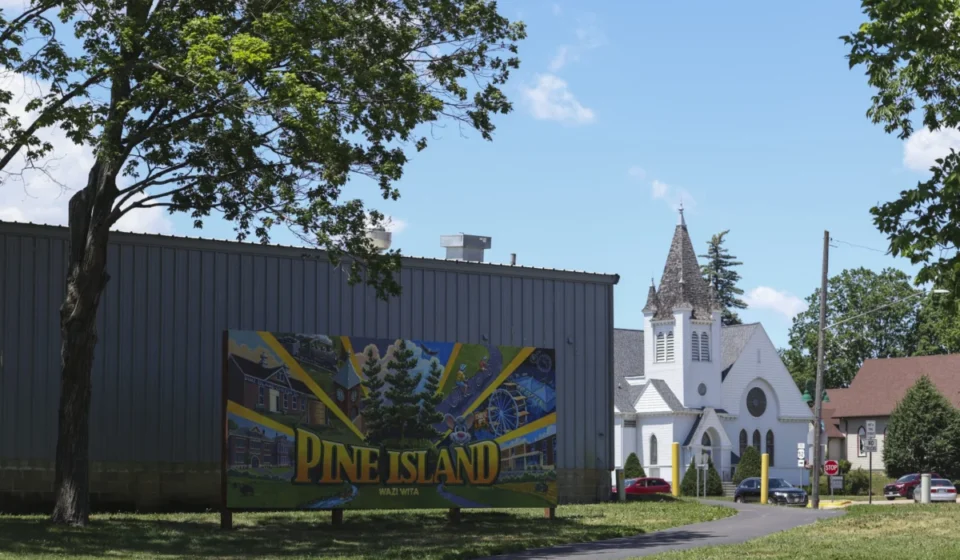

Pine Island, MN – Driving along a dusty rural road that bisects vast agricultural fields, Aubree Derksen describes her battle against Google as a modern-day "David against Goliath." Her "Goliath" is the tech titan, in partnership with a developer, poised to transform the tranquil countryside into a massive hyperscale data center. From her nearby Pine Island home, adorned with conspicuous anti-data center signage, Derksen stands as a leading voice in a burgeoning grassroots movement. She and her allies across Minnesota are determined to halt these sprawling developments, asserting that the allure of economic growth has blinded local governments to critical concerns regarding health, environmental sustainability, and resource management.
This local struggle is far from isolated. Across Minnesota, communities in Farmington, Hermantown, Monticello, and other cities are witnessing similar conflicts. Despite fervent protests and significant public outcry, many proposed data center projects have smoothly navigated local regulatory channels over the past two years. Only the intervention of court orders, as seen in Pine Island and Faribault, has managed to force a pause. At the state level, legislative efforts last session to impose moratoriums or introduce stricter regulations on data center proposals ultimately failed, leaving activists like Derksen profoundly disappointed. "That was incredibly disappointing," Derksen stated, reflecting on the legislative inaction.
However, the upcoming election season presents a renewed opportunity for these determined residents. With city, county, and state offices on the ballot this fall, Derksen and her coalition believe that data centers have transcended niche local issues to become a defining statewide election concern. "This is the new single-issue voter," she declared. "It’s not going to be abortion or LGBTQ or immigration issues. I think it’s going to be data centers, and I think that’s something both parties are going to have to reckon with."

A Growing Chronology of Conflict
The journey to this pivotal election season has been marked by a series of escalating confrontations, legislative frustrations, and judicial interventions, painting a clear picture of the intensifying battle between community preservation and technological expansion.
Initial Proposals and Rising Tensions: The saga began with the quiet introduction of various data center projects across Minnesota. Google’s "Project Skyway" in Pine Island, targeting a sprawling rural field, and "Project Loon" in Hermantown, swiftly became flashpoints. Similar proposals emerged in Farmington, Monticello, and Faribault. Initially, these projects often moved forward under the radar, facilitated by non-disclosure agreements (NDAs) that kept local officials tight-lipped and public discourse minimal. However, as details began to emerge, residents in these affected areas quickly recognized the profound implications for their communities.
Formation of Grassroots Opposition: What started as isolated pockets of concern soon coalesced into a powerful, interconnected grassroots movement. Individuals like Aubree Derksen, a former Minneapolis resident who moved to Pine Island seeking a quieter life, found themselves unwilling activists. Cathy Johnson, a retired teacher in Farmington, similarly emerged from retirement to lead the "Coalition for Responsible Data Center Development," driven by environmental concerns over water and energy usage. These groups began organizing local meetings, disseminating information, and challenging project approvals at every possible juncture. Their collective voice highlighted a shared sense of betrayal by local authorities perceived to be prioritizing corporate interests over resident well-being.

Legislative Setbacks and Judicial Interventions: The first major test for the burgeoning movement came during the last legislative session. Activists tirelessly lobbied state lawmakers, pushing for bills that would impose moratoriums on new data center constructions or mandate more stringent environmental and community impact assessments. Despite their concerted efforts and compelling testimonies, these bills ultimately failed to pass. This outcome fueled a sense of frustration and underscored the political power of the tech industry and its allies.
In the face of legislative inertia, legal challenges became a crucial avenue for resistance. In Pine Island and Faribault, court orders provided temporary reprieves, forcing pauses in projects that had otherwise sailed through local approvals. These legal victories, though often temporary, served as vital morale boosters for the activists, demonstrating that the "Goliath" could, indeed, be challenged.
Political Mobilization at State Conventions: The momentum shifted significantly as the election cycle gained traction. The widespread dissatisfaction culminated in remarkable displays of political engagement at the DFL (Democratic-Farmer-Labor) and GOP (Republican) state conventions. Aubree Derksen, a political novice, attended the DFL convention as a first-time delegate, a testament to the issue’s galvanizing power. There, data center resolutions garnered substantial support. A moratorium proposal secured 64% of the votes, while a more moderate resolution advocating for tighter regulations, designed to be palatable to labor unions, received an even higher 76% approval.

Remarkably, the issue also resonated within the Republican Party. Although the GOP convention was less singularly focused on data centers than its DFL counterpart, platform committee members adopted a resolution calling for a "data center pause." This bipartisan consensus, even if differing in approach, underscored the universal appeal of the concerns being raised. Sarah Mooradian, government relations and policy director at CURE, a Montevideo-based nonprofit tracking data center issues, noted, "(The DFL platform votes) were a pretty good indicator of what’s happening statewide. We know how bipartisan it is."
Recent Local Moratoriums: A Shift in Strategy: Amidst the state-level legislative gridlock, some local governments began to take proactive measures. Rosemount, a southeast Twin Cities suburb, became a notable example. After Meta began construction on a data center within its borders, the city imposed a moratorium on any new projects beyond the existing one, signaling a newfound caution. Further south, Lonsdale, a city of about 40 miles south of Minneapolis, enacted a one-year moratorium in May. Mayor Tom Berg explained that Lonsdale aimed to avoid the mistakes of other cities that rushed into agreements without adequate regulations or community feedback. These local actions offered a template and inspiration for activists in other embattled communities.
Supporting Data and Expert Perspectives
The grassroots opposition to data centers is rooted in a range of concerns, substantiated by growing evidence and expert analysis, that challenge the conventional narrative of economic prosperity often presented by developers.

Environmental Impact: Water and Energy Demand: At the forefront of the environmental critique is the immense resource consumption of hyperscale data centers. These facilities require colossal amounts of electricity to power servers and, critically, to cool them. Many employ energy-intensive cooling systems, some of which rely heavily on water. Critics point to studies indicating that a single large data center can consume as much electricity as a small city and millions of gallons of water daily, particularly in regions that utilize evaporative cooling. In Minnesota, a state rich in freshwater resources but increasingly mindful of sustainable practices, this demand poses an "unnecessary risk to local energy and water resources," as articulated by Cathy Johnson, leader of the Coalition for Responsible Data Center Development. The cumulative effect of multiple such facilities across the state raises serious questions about grid stability and long-term water availability, especially in the face of changing climate patterns.
Economic Promises Versus Reality: Developers and their corporate partners frequently tout the significant economic benefits of data centers, including substantial property tax revenues and job creation. However, local activists and skeptical officials like Lonsdale Mayor Tom Berg challenge these claims. Berg testified at the Capitol, expressing skepticism about the long-term fiscal responsibility of relying on these projects. While construction phases do create temporary jobs, data centers are largely automated once operational, requiring a relatively small permanent workforce. "Most of the jobs would be for construction, providing only a temporary benefit to the local economy," Berg noted. Furthermore, he warned that property tax revenues, while initially attractive, could "dry up in the long-term, leaving cities overextended with an empty industrial building." This raises the specter of "stranded assets" – large, specialized industrial buildings that offer limited repurposing options if the tech landscape shifts or companies relocate. "Praying for a boom is just not good fiscal responsibility," Berg concluded.
Quality of Life and Community Character: For residents, the concerns extend beyond abstract environmental and economic models to the tangible impacts on daily life. Aubree Derksen vividly describes her move to Pine Island for its rural tranquility, the ability to watch stars from her deck, and the sounds of birds. Proposed data centers, often operating 24/7, bring with them significant noise pollution from powerful cooling fans and constant light pollution, disrupting natural darkness and quiet. The sheer scale of these industrial complexes also drastically alters the aesthetic and character of rural landscapes, replacing agricultural fields with sprawling, windowless buildings. Rodney Lanners, a 74-year-old Pine Island resident, who has lived in his home for 26 years, cherishes the raptors soaring over his field and songbirds visiting his feeders. He fears these simple pleasures, fundamental to his quality of life, would be irrevocably lost.

Transparency and Erosion of Public Trust: A recurring point of contention is the use of Non-Disclosure Agreements (NDAs) by data center developers. These agreements, common in corporate land deals, effectively muzzle local officials from discussing project details with their constituents until late in the approval process. Mayor Berg has been a vocal opponent of NDAs, testifying in favor of a bill banning local officials from signing them. He argues that such secrecy erodes public trust in institutions and prevents informed community input at critical stages. This lack of transparency has fueled suspicion and resentment, making it difficult for communities to engage meaningfully with proposals that will profoundly affect their future.
Polling Data Reflects Broad Concern: The nuanced political landscape surrounding data centers is illuminated by recent polling. An Ipsos poll found that while partisan rifts exist, they are not as straightforward as one might assume. Democrats are indeed most concerned about the environmental impacts, aligning with typical party platforms. However, a significant number of Republicans also share this sentiment. While Republicans generally oppose government restrictions on data centers more than Democrats, conservatives are notably split on the question of regulation. The pollster concluded, "Partisan rifts on data centers come from unsurprising areas. Republicans have a stronger inclination for a more free-market approach, while Democrats are more cautious about environmental impacts. And while Republicans are slightly more optimistic about data centers, overall support for their construction remains low." This data underscores the bipartisan nature of the concern and suggests that the issue has the potential to unify voters across traditional political divides.
Official Responses and Local Government Actions
The responses from various levels of government have varied widely, reflecting both the economic pressures and the growing public pushback.

Local Governments’ Dilemma: Many local governments, particularly in Greater Minnesota, find themselves in a challenging position. Faced with limited revenue streams and the constant need to fund public services, the promise of significant property tax revenue from a large industrial development can be incredibly tempting. This often leads officials to be "charmed by the promises of economic development," as observed by activists, sometimes overlooking or downplaying residents’ concerns about long-term impacts. The initial stages of project development often involve discreet negotiations, further exacerbating public distrust when plans are eventually unveiled.
Pockets of Local Resistance and Proactive Measures: Despite the general trend of rapid approvals, a growing number of local governments are demonstrating a willingness to slow down or even halt data center developments.
- Rosemount’s Moratorium: After securing a Meta data center, Rosemount recognized the need for a more cautious approach. The city imposed a moratorium on any further new data center projects, allowing it to assess the impacts of the existing development and formulate comprehensive regulations before committing to more. This "pause and plan" strategy offers a pragmatic model for other communities.
- Lonsdale’s Proactive Stance: Mayor Tom Berg of Lonsdale articulated a clear rationale for his city’s one-year moratorium. Lonsdale observed the pitfalls faced by other communities that engaged with developers without robust regulations in place. "It was easy for us to take that pause and enact it now, and then start really pushing forward with regulations with community feedback," Berg stated. This proactive approach aims to empower the community and ensure that any future development aligns with local values and needs. Berg’s advocacy extends to the state level, where he testified in favor of banning NDAs, emphasizing their detrimental effect on public trust. His skepticism regarding the long-term economic benefits further highlights a growing critical assessment among local leaders.
State Legislative Inaction and Party Platform Shifts: The failure of data center bills in the last legislative session represents a significant hurdle for activists. Despite widespread public support for moratoriums and increased transparency, these proposals did not gain enough traction to pass. This legislative inertia underscores the formidable lobbying power of tech companies and their allies, including certain labor groups who see construction jobs as beneficial.

However, the state conventions revealed a shifting political tide within both major parties. The strong showing of data center resolutions at the DFL convention, with substantial majorities supporting both moratoriums and tighter regulations, signals that the issue can no longer be ignored by party leadership. Similarly, the Republican Party of Minnesota’s adoption of a resolution calling for a "data center pause" demonstrates that environmental and community concerns resonate across the political spectrum. These platform shifts, while not legally binding, indicate a growing internal pressure on elected officials to address the issue.
Implications for Future Elections and Community Character
The emergence of data centers as a "single-issue voter" concern has profound implications for the upcoming elections, potentially reshaping political landscapes from city halls to the state Capitol, and ultimately determining the very character of Minnesota’s communities.
The Rise of the "Single-Issue Voter": Aubree Derksen’s assertion that data centers will transcend traditional political divides to become the "new single-issue voter" is gaining traction. The Ipsos poll confirms a bipartisan concern, even if the preferred solutions differ. This means candidates in races across the state cannot afford to ignore the issue. Voters, driven by deeply personal connections to their homes and environments, are increasingly willing to cast their ballots based on a candidate’s stance on data center development, potentially disrupting established political loyalties.

Targeting Local Elections: The most immediate battleground for activists is at the municipal level. In Pine Island, the fight against "Project Skyway" hinges on securing a majority on the City Council. With three of the five council seats, including the mayoral position, on the ballot this fall, the stakes are incredibly high. The recent resignation of Mayor David Friese, citing work changes, has opened a critical opportunity. Derksen and her coalition are actively working to identify and support candidates who align with their vision for a data center-free future. Similarly, in Hermantown, where Google is pursuing "Project Loon," Rebecca Gilbertson’s group is exploring all avenues to influence local government, recognizing that local officials hold significant power over land use and development approvals. The successful moratoriums in Rosemount and Lonsdale serve as powerful examples of what can be achieved when local leadership is responsive to community concerns.
Targeting State Legislative Races: Beyond local councils, activists are also setting their sights on state House and Senate races. A shift in party control or even the election of a few sympathetic legislators could revive proposals for statewide moratoriums or more stringent regulations that failed last session. This is particularly relevant in "battleground" districts where the outcome could be close. For instance, Cathy Johnson supports DFL challenger Mark Legvold in a swing Senate district south of the Twin Cities, believing he will be more aligned on data center issues than the incumbent Republican, Bill Lieske. In northern Minnesota, Gilbertson’s community falls within another high-stakes swing district, defended by DFL Senator Grant Hauschild and Republican Representative Natalie Zeleznikar. While achieving "positive changes" may not be possible in every district, activists are committed to targeting opportunities where candidates are willing to slow down data center development.
What’s Truly at Stake: Preserving Community Character and Future: The emotional core of this movement lies in the profound changes data centers represent for the character and landscape of Minnesota communities. For Aubree Derksen, who chose Pine Island for its small-town, rural feel and proximity to nature, the proposed data center threatens her very way of life. She monitors native plants, birds, and pollinators in her backyard, enjoys clear views of the Northern Lights, and cherishes the bald eagle’s nest near a local cemetery. "If this were to get built, with the noise, with the light, are we still going to be able to hear the birds?" she asks, highlighting the existential threat to her peace and the local ecosystem. Her poignant concern, "We can’t afford to move, so we don’t have an escape plan," underscores the irreversible nature of these developments for many residents.

Rodney Lanners, another Pine Island resident, echoes this sentiment. From his backyard, he sees raptors soaring and songbirds at his feeders. For him, the prospect of a data center less than a mile away threatens the "little bit in heaven" he has cultivated over 26 years. The fight is not just against a building, but against the loss of the intangible qualities that make a place home – quiet, dark skies, natural beauty, and a sense of community.
The disparity in resources between grassroots activists and tech giants like Google, Meta, and their partners (such as Ryan Companies and Xcel Energy, who were "platinum sponsors" at Pine Island’s annual Cheese Festival) is stark. Yet, this "David vs. Goliath" struggle is energizing citizens who might otherwise be disengaged. It’s a fight for local control, transparency, and the right of communities to determine their own future, rather than having it dictated by external corporate interests. As Lanners poignantly states, "This is supposed to be our final home, and hopefully it is." For these Minnesotans, the upcoming elections are not just about politics; they are about preserving their homes, their environment, and the very soul of their communities.