


























































The Footwear Arbitrage: The Physics, Economics, and Health Risks of the Women’s-to-Kids’ Shoe Conversion Trend

In the highly competitive world of modern retail, consumer "hacks" often spread like wildfire across social media platforms. Among the most enduring of these trends is the practice of adult women purchasing "Grade School" (GS) or youth-sized sneakers instead of their adult equivalents. Driven by a mix of financial savings, product availability, and unique fitting needs, this consumer strategy has evolved from a niche sneakerhead secret into a mainstream purchasing pattern.
However, converting a women’s shoe size to a kids’ size is not merely a matter of simple subtraction. While the basic arithmetic—typically subtracting 1.5 or 2 sizes from a women’s US size—serves as a starting point, it masks a complex web of structural, biomechanical, and orthopedic differences. Buying a youth shoe as an adult means navigating different manufacturing standards, simplified material specs, and altered support systems that can have long-term consequences for foot health.
Main Facts: The Mechanics of Size Conversion and Physical Construction
At its most fundamental level, the conversion from a US women’s shoe size to a kids’ (youth) shoe size relies on two distinct brand-dependent formulas:
- The Minus 1.5 Rule: Utilized by major athletic brands including Nike, Jordan, Adidas, New Balance, Vans, and Under Armour. Under this system, a women’s US size 8 translates directly to a youth size 6.5Y.
- The Minus 2.0 Rule: Utilized by brands such as Converse, Crocs, and Clarks. Here, a women’s US size 8 translates to a youth size 6Y.
[Women's US Size] ────(Subtract 1.5 or 2.0)────> [Youth / Kids' Size (Y)]While these formulas suggest that the resulting shoes are identical in length, they are not identical in construction. Footwear designers build adult and youth shoes on entirely different "lasts"—the three-dimensional mechanical forms that shape the shoe during manufacturing.
Key Structural Divergences
- Last Shape and Proportions: Kids’ lasts are designed for developing feet, which feature a straighter silhouette and a proportionally wider forefoot relative to the heel. Conversely, adult women’s lasts are typically contoured with a narrower heel cup, a more pronounced instep, and a distinct taper toward the toes.
- Midsole Cushioning and Tuning: The foam compounds (such as EVA or polyurethane) in youth shoes are calibrated for the body mass of children, who weigh significantly less than adult women. When subjected to the static and dynamic load of an adult, these foams compress beyond their intended limits, bottoming out prematurely and losing their energy-return properties.
- Simplified Material Specifications: To maintain lower price points, manufacturers frequently omit premium tech features from youth models. A grade-school version of a high-performance basketball or running shoe may feature basic rubber outsoles instead of advanced high-traction compounds, simplified mesh uppers instead of proprietary knit materials, and smaller or entirely absent cushioning units (such as Nike’s Air or Zoom bags).
Chronology: The Evolution of Shoe Sizing Standards
To understand why shoe sizing is so fragmented, we must trace the history of standardized measurement and the emergence of modern sneaker culture.
[1920s] Brannock Device standardizes US sizing (1/3 inch per full size)
   │
[Post-WWII] Rise of gender-differentiated marketing splits Men's & Women's scales
   │
[Late 1990s] Sneaker culture booms; collectors target "Grade School" (GS) sizes
   │
[2010s-Present] E-commerce & social media turn the "size hack" into a mainstream trend- The 1920s: The Brannock Era: In 1925, Charles F. Brannock patented the Brannock Device, standardizing shoe measurements across the United States. Brannock established that one full size step equals one-third of an inch (approximately 8.46 mm), a standard still used today. Youth and men’s sizes were placed on a continuous linear scale, while women’s sizing was shifted to accommodate retail marketing preferences.
- Post-WWII: The Divergence of Women’s Sizing: As mass-market retail expanded, brands began shifting the women’s scale upward. By treating a women’s shoe as roughly 1.5 to 2 sizes larger than a men’s/unisex shoe of the exact same physical length, brands created a psychological marketing buffer, though it permanently decoupled women’s sizes from the traditional unisex scale.
- The Late 1990s and 2000s: The Rise of Sneaker Culture: With the explosion of limited-edition basketball shoes and streetwear, manufacturers introduced "Grade School" (GS) lines. High-heat releases often sold out instantly in adult sizes, leading female sneaker collectors to realize they could buy the same aesthetics in the youth section.
- The 2010s to Present: The Digital Arbitrage Era: The rise of e-commerce, online sizing calculators, and social media platforms turned this insider secret into a mainstream consumer phenomenon. Faced with rising inflation and sneaker price hikes, millions of adult shoppers began systematically using conversion charts to bypass higher adult retail prices.
Supporting Data: The Quantitative Reality of Foot Sizing
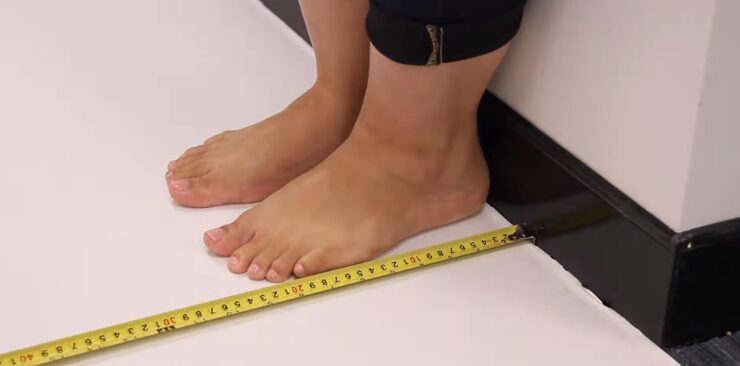
To make informed purchasing decisions, consumers must rely on exact physical measurements rather than arbitrary size numbers. The gold standard of shoe sizing is foot length in centimeters (CM), which remains constant across all brands and demographic classifications.
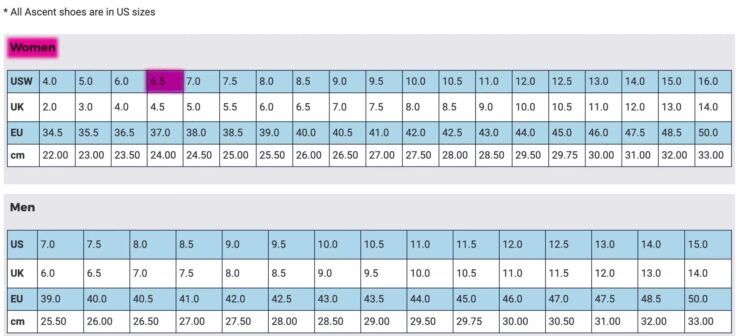
The following table provides a comprehensive conversion matrix mapping women’s US sizes to their exact foot lengths and corresponding youth sizes under both major sizing systems:
Women’s to Kids’ Shoe Size Conversion Matrix
| Women’s US Size | Foot Length (cm) | Foot Length (inches) | Kids’ Size (Minus 1.5 Brands) | Kids’ Size (Minus 2.0 Brands) | UK Size | EU Size |
|---|---|---|---|---|---|---|
| 5.0 | 21.6 | 8 1/2 | 3.5Y | 3.0Y | 2.5 | 35.5 |
| 5.5 | 22.0 | 8 5/8 | 4.0Y | 3.5Y | 3.0 | 36.0 |
| 6.0 | 22.5 | 8 7/8 | 4.5Y | 4.0Y | 3.5 | 36.5 |
| 6.5 | 23.0 | 9 1/8 | 5.0Y | 4.5Y | 4.0 | 37.5 |
| 7.0 | 23.5 | 9 1/4 | 5.5Y | 5.0Y | 4.5 | 38.0 |
| 7.5 | 23.8 | 9 3/8 | 6.0Y | 5.5Y | 5.0 | 38.5 |
| 8.0 | 24.1 | 9 1/2 | 6.5Y | 6.0Y | 5.5 | 39.0 |
| 8.5 | 24.6 | 9 11/16 | 7.0Y (Max Youth) | 6.5Y | 6.0 | 40.0 |
| 9.0 | 25.0 | 9 7/8 | None | 7.0Y (Max Youth) | 6.5 | 40.5 |
| 9.5 | 25.4 | 10.0 | None | None | 7.0 | 41.0 |
| 10.0 | 25.9 | 10 3/16 | None | None | 7.5 | 42.0 |
Brand-Specific Sizing Rules
Understanding which formula to apply is critical, as a mistake of half a size represents a difference of approximately 4.2 millimeters—greater than the thickness of a standard winter sock.
| Brand | Applied Rule | Women’s Size 8.0 Becomes |
|---|---|---|
| Nike / Jordan | Subtract 1.5 | 6.5Y |
| Adidas | Subtract 1.5 | 6.5Y |
| New Balance | Subtract 1.5 | 6.5Y |
| Vans | Subtract 1.5 | 6.5Y |
| Under Armour | Subtract 1.5 | 6.5Y |
| Converse | Subtract 2.0 | 6.0Y |
| Crocs | Subtract 2.0 | 6.0Y |
| Clarks | Subtract 2.0 | 6.0Y |
| UGG | Outlier (Custom Last) | 5.0Y (Maps to Women’s 6.5) |
Industry and Medical Perspectives: Official Responses to the Trend
The practice of adults wearing youth footwear has drawn distinct, often contrasting reactions from the manufacturing sector and the medical community.
The Footwear Industry’s Stance
Major brands like Nike, Adidas, and New Balance acknowledge that their youth size ranges (specifically Grade School or "Y" sizes) are built on unisex scales that mirror men’s dimensions. However, their official size guides stop short of actively encouraging adult women to purchase youth shoes, particularly for athletic use.
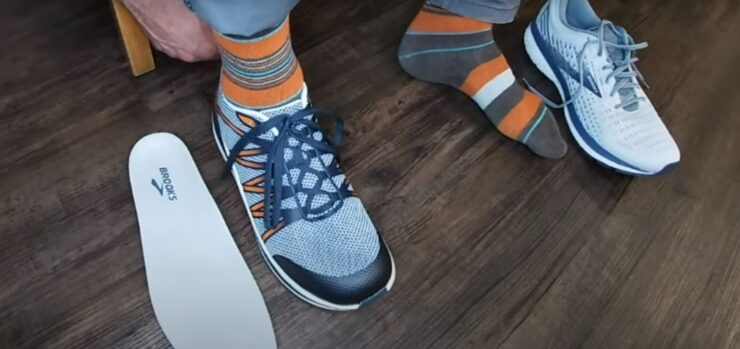
Product designers point out that while lifestyle sneakers (such as the Nike Dunk Low or Adidas Samba) can be worn interchangeably between adults and youth without major issues, performance footwear is a different story. Brands do not warrant youth-engineered running, basketball, or tennis shoes for adult use, citing liability concerns over accelerated material degradation under adult weight.
The Medical and Orthopedic Consensus
Podiatrists and orthopedic surgeons warn against using youth shoes for high-impact activities.
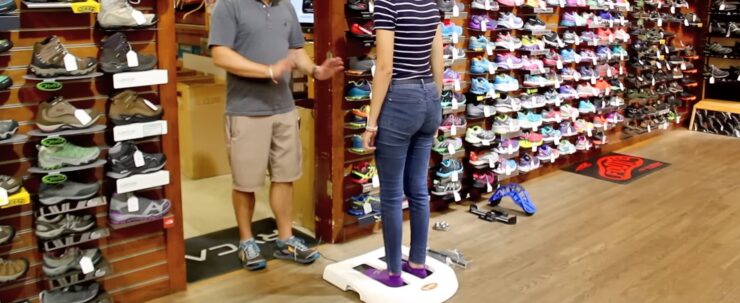
A comprehensive scientific review of footwear fit literature, published by researchers Andrew M. Buldt and Hylton B. Menz in the Journal of Foot and Ankle Research, revealed that between 63% and 72% of study participants were wearing shoes that did not properly accommodate the length or width of their feet. The researchers directly linked ill-fitting footwear to chronic foot pain, structural deformities, and localized skin lesions.
The American Academy of Orthopaedic Surgeons (AAOS) has also published guidelines warning that wearing shoes with inadequate structural support can cause or worsen several conditions:
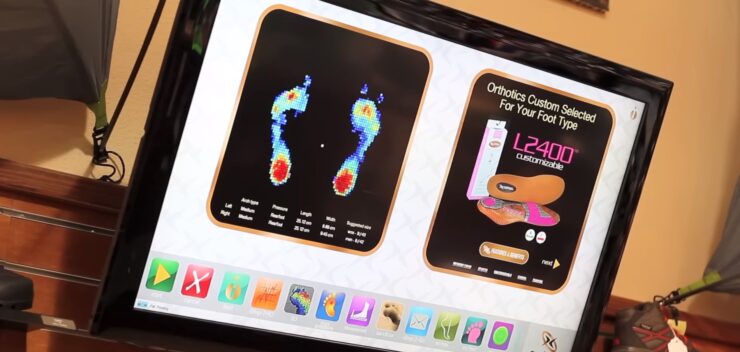
- Bunions (Hallux Valgus): The wider forefoot and narrower heel cup of a kids’ shoe can cause the foot to slide forward, crowding the toes and aggravating the joint at the base of the big toe.
- Hammertoes: If the shoe’s toe box lacks sufficient vertical clearance or length, the toes are forced into a curled position, leading to permanent tendon shortening over time.
- Plantar Fasciitis: Because youth shoes are engineered with simplified, less rigid shank pieces and softer midfoot support, they can fail to stabilize the adult longitudinal arch, placing excessive strain on the plantar fascia.
Implications: The True Cost of the "Size Hack"
The decision to buy youth shoes instead of adult women’s shoes involves a clear trade-off between short-term financial savings and potential long-term physiological costs.
               ┌──────────────────────────────┐
               │  ADULT WOMEN IN YOUTH SHOES  │
               └──────────────┬───────────────┘
                              │
              ┌───────────────┴───────────────┐
              ▼                               ▼
   ┌────────────────────┐          ┌────────────────────┐
   │ PROS (Short-Term)  │          │ CONS (Long-Term)   │
   ├────────────────────┤          ├────────────────────┤
   │ • Lower retail cost│          │ • Faster wear      │
   │ • More stock       │          │ • Less support     │
   │ • Narrower heel fit│          │ • Pain/injury risk │
   └────────────────────┘          └────────────────────┘
Economic Trade-offs
For casual, low-impact wear, the financial benefits are clear. A grade-school version of a popular lifestyle sneaker often retails for 30% to 40% less than the adult women’s equivalent. For shoes rotated occasionally, this price difference represents a genuine savings opportunity.
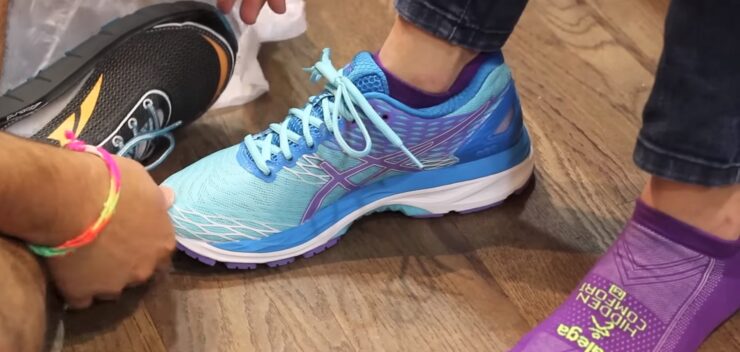
However, for daily wear or high-impact activities, this financial benefit quickly disappears. An adult’s heavier gait will wear out a youth shoe’s simplified outsole and soft midsole foam much faster than an adult shoe. As a result, the shoe needs to be replaced more often, wiping out any initial savings.
Parent-Specific Sizing Guidelines
For parents navigating shoe sizes for actual children, the priorities are very different. Here, accuracy and regular monitoring are essential:
- Understand Sizing Bands: Children’s sizing is split into two distinct scales. The Toddler/Little Kid scale runs from 1C to 13C, which then transitions into the Youth/Big Kid scale from 1Y to 7Y. The "C" and "Y" designations are not interchangeable, and the scale restarts at 1.
- Monitor Growth Rates: Between the ages of three and six, a child’s feet grow by approximately half an inch per year. Because a full US shoe size is only one-third of an inch, children can easily outgrow their shoes in just a few months. Podiatrists recommend measuring children’s feet every two to three months up to age six, and every three to four months thereafter.
- Check for Proper Fit: Always measure a child’s feet while they are standing, as weight-bearing flattens and extends the foot. Ensure there is 10 to 12 mm of space between the longest toe and the end of the shoe to allow for natural growth and movement.
Ultimately, while the women’s-to-kids’ shoe conversion remains a popular way to save money and find rare styles, it requires a careful approach. By understanding the math behind the sizes, recognizing the structural differences in how the shoes are built, and listening to orthopedic advice, consumers can enjoy the benefits of this sizing crossover without sacrificing their long-term foot health.