






















































AMD Challenges Nvidia’s Data Center Hegemony with the Launch of the ‘Helios’ AI Rack System

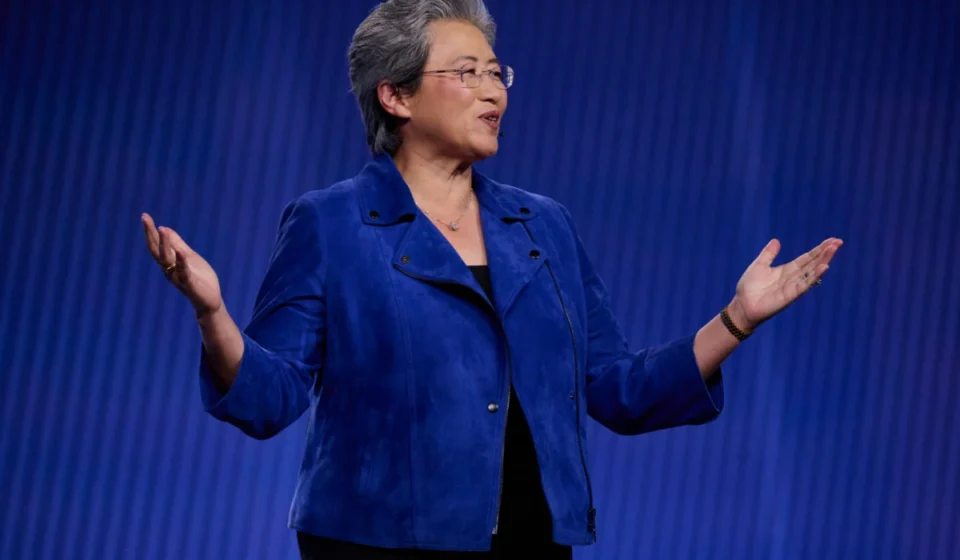
In a definitive move to capture the rapidly expanding artificial intelligence infrastructure market, AMD has officially taken the wraps off its highly anticipated rack-scale system, Helios. Unveiled at the company’s sold-out "Advancing AI" conference in San Francisco this Thursday, the hardware represents a monumental pivot for the Santa Clara-based chipmaker. By delivering a comprehensive, integrated solution designed for the world’s most demanding AI laboratories, AMD is mounting a direct and formidable challenge to Nvidia’s long-standing dominance in the data center sector.
Led by Chair and CEO Dr. Lisa Su, the event served as a clarion call to the industry: AMD is no longer merely a component supplier; it is an architect of the next generation of global computing.
Main Facts: The Helios Revolution
At the heart of AMD’s latest strategy is Helios, a massive, rack-scale computing unit that bundles high-performance processors into a single, high-efficiency architecture. While individual chips have traditionally been the focus of semiconductor competition, the industry has shifted toward "rack-scale" engineering—where the entire cabinet acts as the singular unit of deployment for massive data centers.
Dr. Su described Helios as the tech industry’s "highest-performance AI rack," specifically engineered to handle the training and inference requirements of frontier models. As AI architectures grow in complexity, the physical constraints of power consumption and thermal management become the primary bottlenecks. Helios is designed to navigate these hurdles, allowing AI labs to deploy at "gigawatt-scale"—a metric previously reserved for national energy grids.
Beyond the rack itself, AMD continues to iterate on its core silicon. The company also unveiled the Venice-X CPU, a next-generation data center processor slated for a 2027 launch. With 96 cores and a massive 1152 MB of 3D V-Cache, the Venice-X is intended to act as the "brain" of the rack, providing the robust management needed to feed the "compute-hungry dragon" of modern AI.
A Chronological Shift: From Concept to Deployment
The trajectory of Helios is a testament to the rapid pace of the current AI arms race:
- 2025: AMD formally announces the Helios concept, signaling its intent to move beyond individual GPU sales into the "full-stack" data center market.
- January 2026: At the Consumer Electronics Show (CES) in Las Vegas, AMD provides a physical, onstage reveal of the Helios rack. The sheer physical footprint of the unit—which reportedly weighs as much as two compact cars—drew significant attention from industry analysts.
- July 2026: At the Advancing AI conference, the company pivots from conceptualization to execution. With the system now slated for imminent shipment, AMD confirms a roster of industry titans—including Microsoft, OpenAI, Meta, Oracle, and Anthropic—as inaugural customers.
- July 2026 (Strategic Expansion): Concurrent with the conference, Anthropic and AMD announced a strategic partnership to deploy up to two gigawatts of AMD Instinct MI450 series GPUs, effectively guaranteeing a massive installation base for the Helios architecture.
Supporting Data: Performance Metrics and Market Projections
For years, Nvidia has held a near-monopoly on the hardware backbone of the AI boom, primarily through its Grace Blackwell and Vera Rubin architectures. However, internal testing and early reporting suggest that Helios may be the first true "Nvidia killer" in terms of raw throughput.
According to reports from The Register, early performance benchmarks indicate that Helios outperforms Nvidia’s flagship Vera Rubin systems in several key metrics. This competitive edge is critical for AMD; in the data center market, a 5% to 10% increase in power efficiency or computational speed can result in millions of dollars in savings for hyperscalers like Microsoft or Meta.
Dr. Su’s economic outlook for the sector is equally aggressive. She predicts that the AI accelerator market will reach a staggering $1.4 trillion by 2030. To put this in perspective, this would mean the market for AI chips alone would be roughly equivalent to the entire global semiconductor industry today.
"We’re seeing a step change in compute demand," Su remarked during her keynote. She argued that as AI transitions from simple chatbots to "agentic" systems—AI that can reason, access tools, and execute multi-step tasks autonomously—the need for massive, interconnected GPU arrays will explode.
Official Responses and Strategic Partnerships
The industry’s reaction to the Helios launch has been swift and overwhelmingly positive, particularly from the hyperscalers. Microsoft CEO Satya Nadella publicly committed to expanding Azure’s infrastructure with Helios, emphasizing the need for high-performance, scalable solutions to meet the needs of the company’s enterprise clients.
The partnership with Anthropic is particularly telling. By focusing on "agentic AI"—the next frontier of generative models—the partnership serves as a validation of AMD’s architecture. As Dr. Su explained, "When you ask the agent to do something, it actually has dozens of steps… it has to reason, call tools, access data, and do it over and over. You need lots of GPUs to do all that."
For AMD, these partnerships are the "proof of concept" required to unseat an incumbent. By embedding their hardware into the foundations of OpenAI and Anthropic, AMD is ensuring that its software ecosystem, ROCm, becomes a standard alongside Nvidia’s CUDA.
Implications: The Future of the Silicon Ecosystem
The implications of the Helios launch extend far beyond a mere hardware release. It signals a fundamental shift in how the industry views the semiconductor life cycle.
The Rise of the "Agentic" Era
As AI models evolve, they are moving away from being static question-and-answer machines toward becoming active participants in workflows. This requires not just raw "flops" (floating-point operations), but massive, low-latency memory bandwidth and interconnects between thousands of GPUs. Helios is designed to be the physical manifestation of this requirement.
The Battle for Programmability
Dr. Su emphasized that GPUs will constitute the "vast majority" of the $1.4 trillion market by 2030. This is because, as she noted, AI algorithms are still in their infancy. Hardware that is overly specialized (fixed-function silicon) risks becoming obsolete as researchers invent new types of neural networks. By maintaining a focus on high-performance, programmable GPU architectures, AMD is betting that flexibility will win the war against proprietary, rigid hardware.
A Rebalanced Market
Nvidia will undoubtedly respond. The company’s ability to move rapidly and maintain a tight integration between software and hardware has kept them ahead for a decade. However, the sheer size of the AI infrastructure market suggests that there is room for more than one dominant player. If Helios proves as efficient in production as it does in early benchmarks, the era of the "Nvidia monopoly" may be coming to a close.
As we look toward 2030, the competition between AMD and Nvidia will likely define the boundaries of what is possible in artificial intelligence. With the launch of Helios, AMD has officially entered the fray, armed with the capital, the partners, and the silicon necessary to challenge for the crown. The race is no longer just about who can make the fastest chip; it is about who can build the most efficient, scalable, and "agent-ready" data center of the future.