


























































The Silent Crisis: How Nitrate Pollution is Turning the Corn Belt’s Groundwater into a Public Health Hazard

This report was originally published by Circle of Blue.
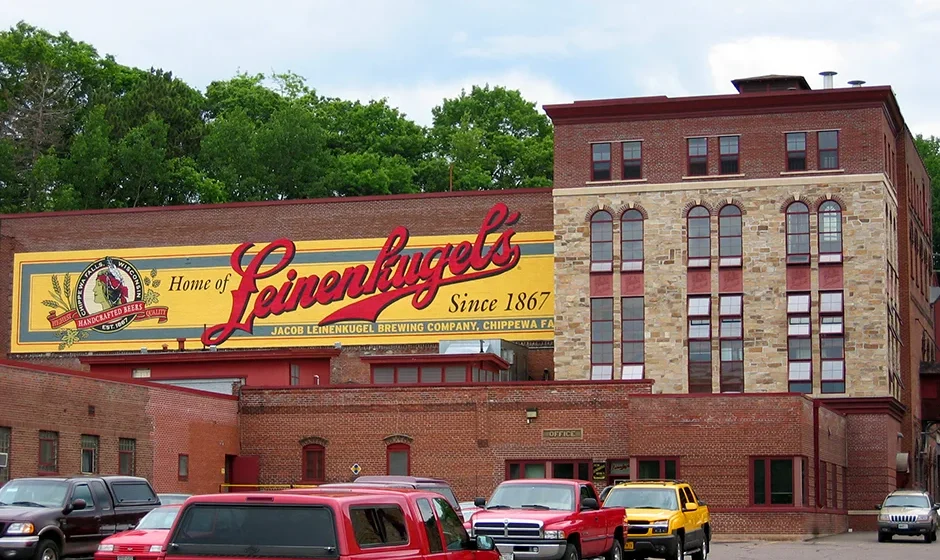
For generations, the pristine spring waters of Chippewa Falls, Wisconsin, served as the bedrock of local industry. It was this water—pure, cold, and abundant—that drew Jacob Leinenkugel to establish his legendary brewery, cementing the city’s identity as a place where water quality was paramount. Yet, today, that historical legacy of purity masks a deepening crisis. While the city’s municipal water remains a sanctuary of safety, it stands as an increasingly lonely island in a sea of contaminated groundwater.
Across the American Corn Belt, a silent, invisible pollutant is infiltrating the aquifers that sustain millions of households. Nitrates—the chemical byproducts of industrial-scale synthetic fertilizers and massive livestock operations—are seeping into the soil and traveling into the water table. What was once a localized concern has evolved into a regional health emergency, exposing a dangerous divide between those with access to municipal filtration and those forced to rely on the increasingly toxic output of private wells.
The Tale of Two Water Supplies: A Study in Inequality
In 1997, Chippewa Falls utility managers detected nitrate concentrations that threatened the safety of their 16,000 customers. Acting with foresight, the city invested in high-grade filtration equipment and drilled deeper into cleaner aquifers. Today, the city spends $200,000 annually to ensure its water remains below the federal safety threshold of 10 parts per million (ppm).
However, this triumph of municipal engineering highlights a stark civic capitulation. While city residents enjoy the peace of mind provided by advanced treatment, the remaining 67,000 residents of Chippewa County are largely left to fend for themselves. Most rely on private wells tapping into the same aquifers, many of which now show nitrate levels far exceeding federal limits.
Matthew Boos, the supervisor of the Chippewa Falls water treatment plant, lives the contradiction daily. While he manages a system that provides safe water to thousands, his own home—located just outside city limits—is served by a well where nitrate levels have doubled from 10 ppm to 20 ppm in recent years. "It was 10 when I got there," Boos said. "Now it’s 20." Forced to take matters into his own hands, Boos installed a reverse osmosis system for his family, while his parents were forced to navigate state grant programs to drill deeper, more expensive wells in a desperate search for untainted water.
A Chronology of Neglect
The roots of the current crisis extend back over half a century, tracing a path of legislative inertia and expanding industrial agriculture.
- 1962: The U.S. Public Health Service sets the 10 ppm limit for nitrates in drinking water, specifically to prevent "blue baby syndrome," or methemoglobinemia, a condition where infants’ blood loses the ability to carry oxygen.
- 1975: The 10 ppm standard is adopted as an interim requirement under the newly enacted Safe Drinking Water Act.
- 1992: The Environmental Protection Agency (EPA) formalizes the 10 ppm threshold. It has remained unchanged for 64 years, despite vast shifts in agricultural technology and emerging medical science.
- 2000s–2010s: Industrial agriculture scales up significantly in the Corn Belt. The use of synthetic nitrogen fertilizer skyrockets, and massive concentrated animal feeding operations (CAFOs) begin producing millions of tons of manure that exceed the land’s capacity to absorb nutrients.
- 2019: Wisconsin reports that farmers are applying five times more nitrogen fertilizer than they did in 1960.
- 2022–Present: Mounting peer-reviewed research begins to link nitrate consumption at levels well below the 10 ppm legal limit to a host of chronic illnesses, including colorectal cancer, thyroid disease, and various birth defects.
The Toxic Science: Why Nitrates Matter
Nitrates are highly soluble compounds formed when nitrogen—a key component of fertilizer and manure—is exposed to oxygen. Because they do not bind to soil particles, they move effortlessly through the earth and into the groundwater.
The medical community is sounding the alarm. While the 10 ppm limit was designed to protect infants from acute respiratory failure, modern epidemiological studies indicate that the "safe" limit is far too high for long-term health. A study published two years ago in the journal Public Health found that even at concentrations considered legal, nitrate exposure was associated with a 61 to 73 percent higher risk of cancer mortality.
Researchers have linked chronic exposure to cancers of the bladder, ovaries, brain, and breast. The mechanism is believed to be the body’s conversion of nitrates into N-nitroso compounds, which are known carcinogens. In the Corn Belt, where nitrate contamination is most pervasive, cancer rates are among the highest in the nation. Despite this, federal regulators have been paralyzed. While the Obama and Biden administrations both explored formal reviews of the nitrate standard, those efforts were systematically halted under the Trump administration, leaving the 1960s-era threshold in place.
The Failure of Voluntary Oversight
The federal government and state agencies have largely relied on voluntary measures to control agricultural runoff. The logic was that farmers would adopt "best management practices"—such as planting cover crops or precision fertilizing—to reduce their environmental footprint.
The results have been a categorical failure. Without mandatory limits on how much fertilizer or manure can be applied to a specific plot of land, industrial agriculture continues to saturate the Corn Belt with nutrients. Tyler Lobdell, a staff attorney with Food & Water Watch, notes that the problem is a direct result of industrialization. "The Corn Belt is an especially acute example of what’s happening around the country," Lobdell explains. "It’s almost entirely attributable to industrial agricultural practices… We’re not regulating the sources despite it being very obvious that we have a growing problem."
Supporting Data: A National Contamination
The scope of the nitrate crisis is not limited to isolated pockets in Wisconsin. According to an Environmental Working Group (EWG) report published this year, roughly 18 percent of the U.S. population—over 62 million people—relies on water systems that contain nitrate levels of at least 3 ppm.
More concerning is the lack of infrastructure. The EWG found that 85 percent of the 50,000 public water treatment utilities in the U.S. have zero capacity to remove nitrates. When a system is contaminated, there is often no "Plan B" other than costly, long-term investments in filtration, which many small towns cannot afford. In the interim, communities like Chippewa County are forced to set up "refill stations" where residents can fill jugs with treated water—a makeshift, stopgap measure that highlights the failure of the broader regulatory system.
Implications: A Future in Jeopardy
The implications for the American heartland are dire. As groundwater becomes increasingly tainted, the economic burden of water treatment shifts from the industrial polluters to the public and private well owners.
For the families of the Corn Belt, the choice is becoming binary: either pay for expensive, proprietary filtration systems or risk exposure to a carcinogen that has been linked to severe health outcomes. This is not just a rural issue; it is a fundamental breakdown of the social contract. When the basic human right to clean water is compromised by the pursuit of industrial agricultural output, the long-term viability of these communities is threatened.
As Matthew Boos noted, municipal water—where it exists—is the only reliable shield against the tide of agricultural waste. But as the contaminants continue to move deeper into the aquifers, even that protection is not guaranteed forever. Without a significant shift in federal policy—moving from voluntary guidelines to strict, enforceable regulations on fertilizer application—the water that once sustained the growth of the Corn Belt may ultimately become the catalyst for a public health catastrophe.