




















































The Silicon Valley Cold War: Apple and OpenAI Square Off Over Trade Secrets and Talent Poaching

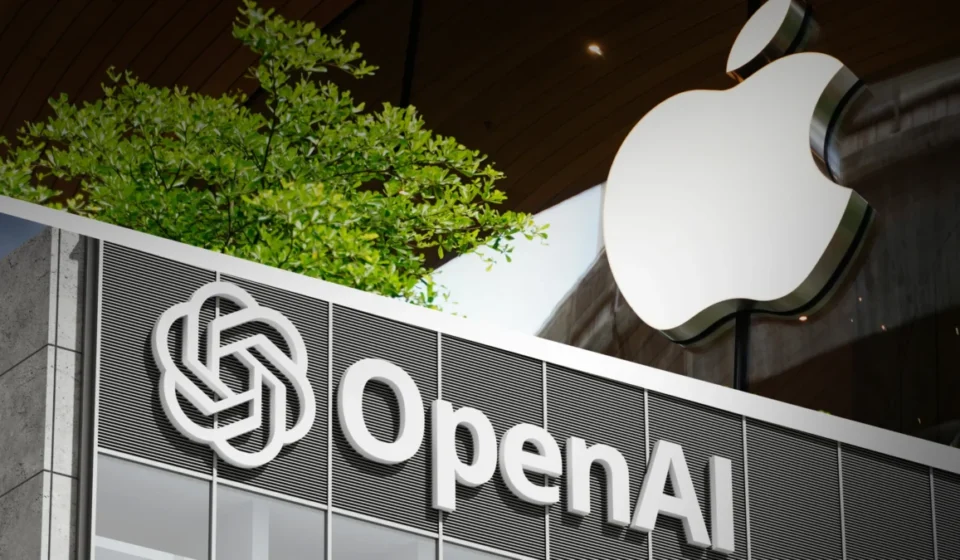
In a high-stakes legal battle that threatens to reshape the landscape of artificial intelligence and hardware manufacturing, Apple Inc. has launched an aggressive, multi-pronged lawsuit against OpenAI. The dispute, which centers on allegations of industrial espionage, intellectual property theft, and the systematic raiding of top-tier talent, has moved from private boardroom warnings to the public stage. As both companies trade barbs in open letters and courtroom filings, the tech industry is left to wonder: is this a genuine case of corporate sabotage, or a desperate move by an incumbent struggling to maintain its relevance in an AI-first world?
The Core Allegations: A Breach of Trust
The litigation, filed in the U.S. District Court for the Northern District of California on July 10, 2026, paints a picture of a calculated effort by OpenAI to strip-mine Apple’s institutional knowledge. Apple’s complaint is wide-ranging, naming not only the OpenAI Foundation and its associated corporate entities but also specific high-profile defectors.
Among those named are Chang Liu, a former senior systems electrical engineer at Apple, and Tang Yew Tan, who previously served as Apple’s vice president of product design for the iPhone and Apple Watch. Tan now serves as OpenAI’s chief hardware officer. Apple’s legal team alleges that these individuals did not merely change jobs; they allegedly brought the “blueprints” of Apple’s future with them.
The most damning accusations involve physical and digital security breaches. Apple claims that Tan directed subordinates who were still on the Apple payroll to bring “actual parts”—proprietary hardware components—to job interviews for “show and tell” demonstrations. Furthermore, the suit alleges that Tan disseminated internal security protocols to incoming recruits before they had officially resigned from Apple, effectively coaching them on how to bypass internal safeguards. Liu, meanwhile, is accused of retaining an Apple-issued laptop after his departure and using it to systematically download confidential technical documentation.
A Chronology of Conflict
The friction between the two giants has been building for months, characterized by a series of escalating warnings and missed opportunities for mediation.
- February 2026: Apple reportedly sends a formal warning letter to OpenAI, expressing concerns over the behavior of former staff and the potential compromise of trade secrets. OpenAI fails to respond, or at least fails to address the concerns to Apple’s satisfaction.
- July 10, 2026: Apple officially files its lawsuit in the Northern District of California, alleging breach of contract and misappropriation of trade secrets under the Defend Trade Secrets Act.
- Late July 2026: Apple files for preservation orders, seeking to lock down digital evidence and prevent the destruction of communication logs between former employees and OpenAI leadership.
- Early August 2026: OpenAI breaks its silence, publishing an open letter that characterizes Apple’s legal action as a “headline-chasing” effort based on flawed evidence and bureaucratic errors.
OpenAI’s Rebuttal: The “Open Letter” Defense
OpenAI’s response to the lawsuit has been one of indignant denial. In an open letter published this week, the AI giant attempted to frame Apple as a company lashing out due to its own internal mismanagement.
OpenAI claims that Apple’s case is riddled with factual errors, including a bizarre administrative mix-up where Apple allegedly contacted the wrong legal counsel due to a confusion of surnames. OpenAI argues that these errors demonstrate a lack of rigor in Apple’s investigation. More significantly, OpenAI contends that the “stolen” information Apple is concerned about—such as the files Liu is accused of accessing—were actually requested by Apple colleagues in a display of poor internal access-management protocols.
“Apple’s request for a preliminary injunction is both based on false information and completely unnecessary because we do not have, nor want, any of their trade secrets,” the letter stated. “We’re much more interested in building innovative products and technologies that push the frontier.”
Supporting Data: Security Failures or Strategic Sabotage?
To bolster its defense, OpenAI has leaked portions of correspondence that reveal a disconcerting culture of informality at Apple. The documents suggest that Apple employees frequently utilized personal iMessage accounts to transmit sensitive corporate communications, a practice that bypasses standard data loss prevention (DLP) controls.

If the allegations hold, this represents a massive security oversight by one of the world’s most security-conscious organizations. However, these documents also reveal something else: evidence of aggressive, personal recruitment tactics. One message allegedly sent to a former colleague promised, “I can always give you some fun side projects,” a statement that legal analysts suggest could be interpreted as an inducement to perform work for a competitor while still under contract.
With more than 400 former Apple employees now on staff at OpenAI—a roster that includes the legendary designer Jony Ive—the sheer volume of human capital transfer is statistically significant. While the transition of labor is common in Silicon Valley, the concentration of this specific talent pool at one company raises questions about whether this was a targeted, multi-front campaign to hollow out Apple’s product development capabilities.
The Implications: What Happens Next?
The legal battle is likely to be a long, drawn-out affair that could fundamentally change how Silicon Valley approaches the hiring of competitors’ staff.
1. The Question of "Creative Energy"
One of the most profound implications concerns the training of Large Language Models (LLMs). If OpenAI has, in fact, integrated Apple’s proprietary design philosophies and technical specifications into its internal development models, the legal implications are uncharted. Can an AI be trained on the “intellectual fingerprint” of a competitor? If Apple can prove that its trade secrets were ingested into the systems that OpenAI uses to design its future hardware, the case could result in unprecedented injunctions against AI model usage.
2. The "Smoking Gun" and Corporate Governance
The case highlights the dangers of the “informal workplace.” Apple’s reliance on, or failure to police, iMessage for professional communications has provided OpenAI with the ammunition it needs to frame Apple as a hypocrite. If Apple cannot control its own internal communications, how can it demand the courts protect the secrecy of its R&D?
3. The Future of the Rivalry
This is no longer a simple talent dispute; it is an existential fight. Apple has built its reputation on vertical integration and iron-clad secrecy. OpenAI has built its reputation on the rapid iteration of open-frontier technology. These two philosophies are now colliding in court.
Industry analyst Brian Roemmele summarized the sentiment of many observers on social media: “This isn’t Apple getting it wrong. It is OpenAI getting caught with its hand in the hardware cookie jar and then writing a blog post about how the jar was left unlocked.”
Conclusion: A Matter of Law, Not Opinion
While the public relations war is currently being fought through blogs and press releases, the ultimate resolution will occur behind closed doors in the halls of justice. Whether or not Apple’s legal team can move past its own administrative missteps to prove a systematic theft of intellectual property remains to be seen.
If the court finds in favor of Apple, OpenAI could face severe restrictions on its hardware ambitions and a massive financial penalty. If OpenAI prevails, it will signal a new era of "free-market" talent acquisition where the walls of corporate secrecy are effectively dismantled. Regardless of the outcome, the relationship between these two tech titans is irreparably severed, setting the stage for a period of fierce, and perhaps litigious, competition for years to come.