

























































WASHINGTON — A sweeping, state-led initiative to root out fraud within Minnesota’s Medicaid program has inadvertently triggered a widespread humanitarian crisis. While the Minnesota Department of Human Services (DHS) maintains that its aggressive "Revalidation 2026" campaign is a necessary measure to protect taxpayer dollars and satisfy federal mandates, the collateral damage is being felt in the homes of thousands of low-income seniors, individuals with disabilities, and autistic children across the state.
For many, the promise of government-funded support has been replaced by a labyrinth of red tape, systemic delays, and financial instability. As providers struggle to stay afloat, the most vulnerable Minnesotans are finding themselves increasingly isolated, forced to navigate a broken system that has, in the name of "program integrity," failed to prioritize their basic human needs.
The Anatomy of a Systemic Failure
The crisis centers on a collision between federal pressure and state-level administrative implementation. To avoid the withholding of hundreds of millions of dollars in federal funding—sanctions threatened by the Centers for Medicare & Medicaid Services (CMS) over concerns regarding "high-risk" billing practices—the Minnesota DHS launched an emergency, off-cycle revalidation effort.
The scope of this mandate was massive: 5,600 providers across 13 distinct high-risk service categories were forced to undergo immediate, rigorous scrutiny. This included onsite inspections, mandatory fingerprint-based background checks for anyone with a controlling interest in a company, and the submission of extensive, redundant documentation.

The result was not merely a verification of credentials, but a administrative bottleneck of unprecedented proportions. Providers who had operated in good standing for years suddenly found themselves trapped in a limbo of pending approvals. For companies like Minnesota Behavioralist Specialists, based in Eagan, the fallout has been catastrophic. Co-owner Paige Berland reports that authorization processes, which historically took one week, have ballooned into two-month ordeals. With nearly a third of her clients’ authorizations currently in a state of purgatory, the financial strain on her 55-employee firm has been severe, forcing her and her partner to take out personal loans just to keep the doors open and staff paid.
Chronology: A Descent into Chaos
The timeline of this crisis reveals how quickly a well-intentioned policy can devolve into operational paralysis:
- Early 2026: Under intense pressure from federal authorities claiming Minnesota’s Medicaid programs were susceptible to "aberrant billing," the DHS initiates an emergency revalidation of 5,600 providers.
- Spring 2026: The May deadline for revalidation passes. Despite the massive administrative mobilization, thousands of providers remain caught in a backlog of appeals and processing errors.
- May–August 2026: As the backlog grows, the human toll becomes visible. Families report significant gaps in care, including the cessation of critical physical therapy and personal care assistance.
- September 2026: Testimonies before the state Senate Human Services Committee reveal that over 1,000 children are currently waiting for autism-related services. DHS reports that nearly 1,200 providers are still trapped in the appeals process.
- Late 2026: The state announces a freeze on the authorization of any new Medicaid providers until January 2027, effectively slamming the door on families seeking new avenues for support during this period of scarcity.
The Human Impact: Families in the Crosshairs
For the McGuire family of Bloomington, the theory of "program integrity" is a cold abstraction. Their six-year-old son, Colin, who lives with cerebral palsy, experienced a four-month gap in physical therapy—a critical intervention for his development. His mother, Caroline McGuire, describes the new monthly requirement to prove "medical necessity" as an exhausting and dehumanizing burden.
"It’s always been a far from perfect system, but now they have made it so much worse," McGuire said. "People with disabilities are paying the price, and it’s so much worse when it’s children."

The situation is equally dire for Addyson Carpenter, a disability advocate and chair of the Minnesota Council on Disability. After surviving a life-threatening bout of septic shock earlier this year, Carpenter has struggled to secure in-home nursing care for herself and her 18-year-old daughter, Lydia, who has profound autism. The bureaucratic delays meant that even when her partner, Adam, sought to become a state-paid caregiver, the enrollment process took months of agonizing uncertainty.
Supporting Data and the Fraud Question
The core justification for these measures—the assertion that massive fraud justifies the current level of disruption—has come under intense scrutiny. A July 2026 study by Georgetown University regarding the revalidation effort yielded a startling finding: the Minnesota DHS had only referred a mere 1% of the providers required to revalidate to the Office of Inspector General for further investigation.
This discrepancy has fueled criticism from advocacy groups. Maren Christensen, executive director of the Multicultural Autism Action Network, noted that while some fraud undeniably exists—as evidenced by recent reports of group home directors billing the state while living abroad—the state’s "sledgehammer" approach is hitting the wrong targets.
"There will be people who do not survive this," Christensen warned. "And there are many states that have a lot more fraud than Minnesota."

The data provided by the DHS itself paints a picture of a system in disarray. As of September 8, 2026, 695 providers simply opted not to revalidate, while another 1,177 remain in the appeals process. The department has admitted it has no clear assessment of how many patients have lost access to services entirely, stating that some clients may be seeking care through alternative means—an assumption that fails to account for the reality that many low-income families have no "alternative means."
Official Responses and Administrative Acknowledgment
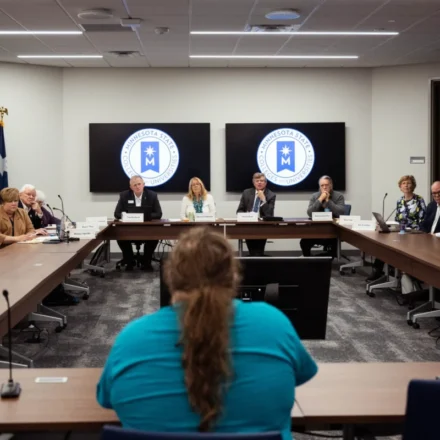
At a Senate Human Services Committee hearing, state Medicaid director John Connolly offered a rare moment of public contrition, acknowledging the severity of the situation.
"DHS is in a very difficult moment, as I know you are," Connolly told those in attendance.
However, the agency’s official stance remains that the administrative hurdles are a consequence of necessary "integrity controls." The DHS maintains that the transition to new portals, such as the one managed by third-party agent Acentra Health, was essential to strengthening the Medicaid system. They argue that the complexity of these updates, combined with the volume of the revalidation effort, created a perfect storm of technical and procedural difficulties that they are working to resolve.

Long-term Implications: A Future in Jeopardy
The implications of the current crisis extend far beyond the immediate waitlists. The exodus of skilled providers—such as the 34 employees who left Behavior Frontiers in Coon Rapids—leaves a vacuum in specialized care that will take years to rebuild. When a company loses the ability to hire or retain staff due to a pending revalidation, the institutional knowledge and the patient-provider relationships built over years are lost, often permanently.
Furthermore, the state’s decision to freeze new provider authorizations until January suggests that the "Revalidation 2026" fallout will continue to ripple into the new year. For families like the McGuires and the Carpenters, the wait for a functional, compassionate, and efficient system feels increasingly like a distant dream.
As Minnesota balances the federal government’s demand for fiscal austerity with the state’s moral obligation to its most vulnerable residents, the lesson of 2026 is becoming clear: when the mechanism of oversight becomes more complex than the service it is meant to provide, it is the most marginalized who suffer the consequences. The "war on fraud" may be meeting its metric-based objectives, but in the process, the state risks losing its ability to fulfill its primary mandate: ensuring that those in need receive the care they require to survive.