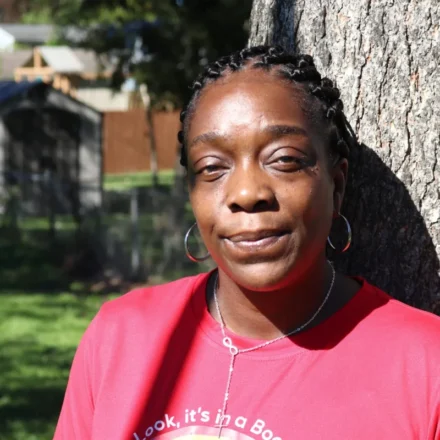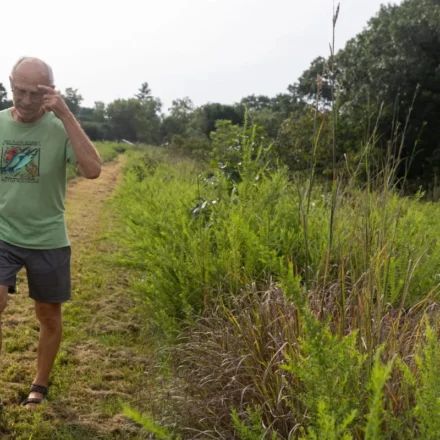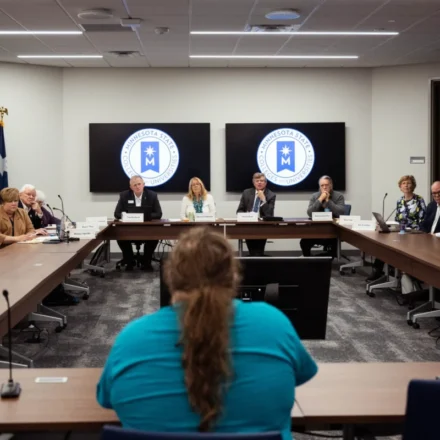



















































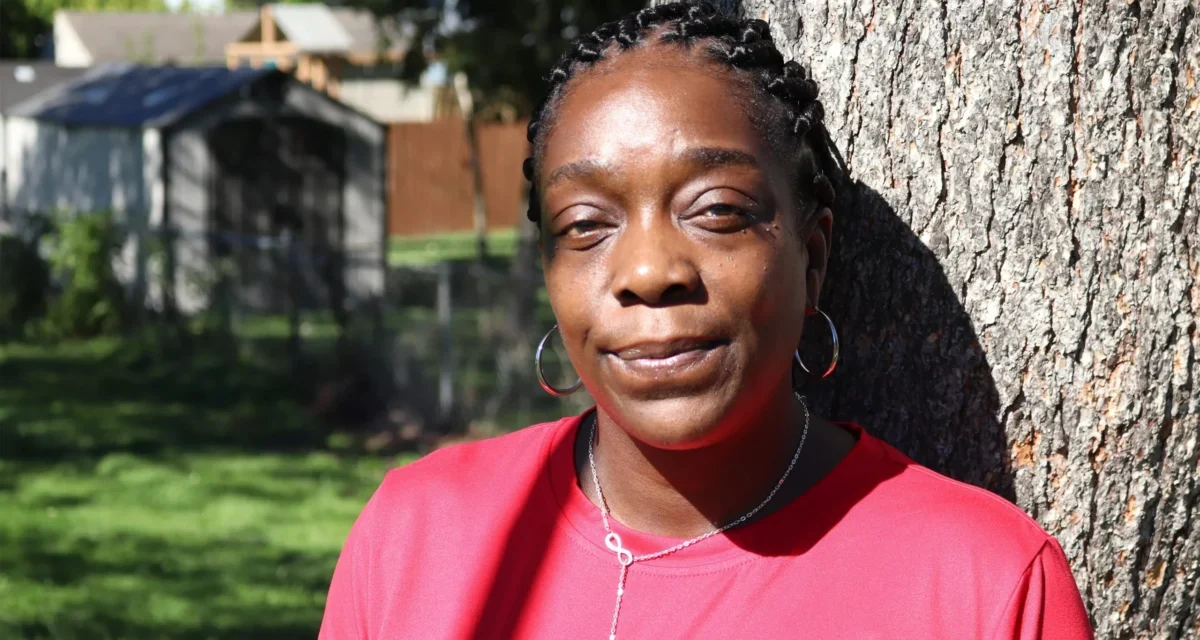






On a sun-drenched late summer morning in Hibbing, Minnesota, the local playground near Greenhaven Elementary is quiet, save for the laughter of two-year-old twins, Maya and Lucy. Their grandfather, Dave Benz, watches as they navigate the climbing structures with the cautious assistance of their mother, Sabrina Weberg. It is a quintessential small-town scene, yet it sits in the shadow of a stark reality: a large, yellow “For Sale” sign stands prominently in front of the schoolhouse.
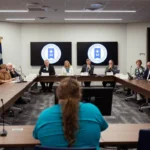
In March, the Hibbing School Board made the painful decision to shutter Greenhaven Elementary, a move necessitated by a $2 million budget deficit. For families like Benz’s, the closure is more than a logistical inconvenience; it is a profound loss of community infrastructure. As the girls prepare to turn three, they face a future where the neighborhood school—a bedrock of their community—will no longer exist.
Across Minnesota, this scenario is becoming an all-too-common refrain. Driven by plummeting enrollment and ballooning operational costs, school districts are finding themselves in a fiscal “pressure cooker.” As the state’s rural landscape shifts, the debate over whether to consolidate or collapse has moved from the periphery to the center of civic life.
A Historical Context: The Long Shadow of Consolidation
The current crisis is not a new phenomenon. In the 1990s, Minnesota experienced a seismic shift in its educational geography. Confronted with the same triad of stressors—declining enrollment, shaky finances, and state-level incentives for efficiency—rural districts began to fold into one another.
Between the mid-90s and the early 2000s, Minnesota lost one-fifth of its school districts. Over 150 districts opted for consolidation, often sacrificing local buildings to preserve the district’s overall viability. Farming communities bore the brunt of this transition, as the schoolhouse was often the last remaining institution anchoring a town’s identity.
While the pace of consolidation slowed in the last decade, with only seven districts merging, the underlying pressures are flaring up again. Today, the conversation has moved toward even more drastic measures, with neighboring towns like Hibbing and Chisholm exploring collaborative models that many fear are merely the prelude to formal consolidation.

Chronology of a Crisis
The trajectory of rural education in Minnesota has been defined by a series of incremental losses that eventually force a breaking point.
- The 1990s Consolidation Wave: A period defined by state-sponsored incentives that encouraged small, independent rural districts to merge, resulting in a 20% reduction in the total number of districts statewide.
- The 2023-2024 Fiscal Squeeze: A period characterized by the post-pandemic realization that state funding, tied strictly to pupil counts, could no longer support the fixed overhead costs of aging buildings and administrative mandates.
- The 2026 Reckoning: The current year has seen a surge in emergency meetings and school closures, such as the shuttering of Greenhaven in Hibbing and the formalization of the Carlton-Wrenshall merger, which only narrowly passed after a contentious community vote.
This timeline reflects what Superintendent Noel Schmidt calls a “death by a thousand paper cuts.” Districts often spend years attempting to patch holes in their budgets through service-sharing agreements, sports co-ops, and early-childhood program mergers before finally acknowledging that the math no longer adds up.
Supporting Data: The Math of Diminishing Returns
The fundamental problem facing rural Minnesota is that the state’s education funding model is tethered to enrollment numbers. When a town’s population declines—a trend particularly visible in the Iron Range, where mining and immigration history have shaped a unique, localized economy—the number of students follows suit.
However, the cost of running a school district does not shrink proportionally with student numbers. A district must still pay for a superintendent, a business manager, building maintenance, and support staff.
- The Enrollment Gap: As districts report kindergarten classes as small as 29 students, the per-pupil cost of maintaining aging facilities—many of which require massive boiler replacements and roof repairs—becomes unsustainable.
- The Cost of Inaction: Experts note that for many small districts, the cost of borrowing to maintain failing infrastructure eventually leads to a fiscal cliff.
- The Collaborative Shift: In Itasca County, districts have begun sharing everything from business services to special education resources. While these moves save money in the short term, they are often insufficient to offset the long-term impact of declining tax bases.
Official Perspectives: The “No-Brainer” vs. The Cultural Cost
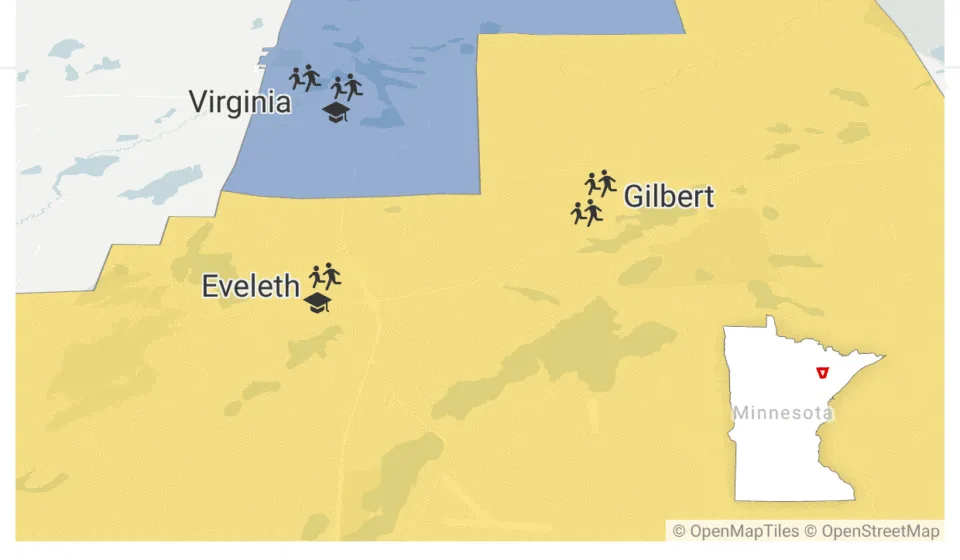
For school leaders, the decision to consolidate is often framed as a moral imperative to save the quality of education for the children who remain. John Uhan, School Board Chair for the Rock Ridge district—which was formed by merging the Virginia and Eveleth-Gilbert districts—describes the transition as a “no-brainer.”
“The curriculum catalog is way better than what Eveleth-Gilbert was able to offer,” Uhan says, pointing to the modern career academy model at the new, consolidated high school. “The facilities are great, the opportunities are greater, and we are able to provide things like a grand piano in the cafeteria and a 3-ton crane in the shop—things a stand-alone district could never afford.”

However, this pragmatic view faces stiff resistance from residents who see their towns’ histories being erased. For many, the high school is not just a building; it is a repository of shared memory.
Paul Peltier, who leads the Range Association of Municipalities and Schools (RAMS), highlights the emotional toll of this transition. Having attended four different schools himself, Peltier understands the feeling of being “bounced around.”
“Communities and families anchor themselves in their school,” Peltier notes. “Schools owe it to them to make sure they are custodians and stewards of that identity. When you take the school district out, I think you take a piece of that identity away.”
The Implications: Moving Forward in a Changing Landscape
The long-term implications of these consolidations are profound. When a school district dissolves, the local economy often follows. Schools are significant employers, and they serve as hubs for community gatherings.
Mayor Adam Roen of Eveleth acknowledges the trade-off. While the consolidated Rock Ridge district provides better equipment and a wider array of electives, the loss of the school district building in the heart of town has left a void. “We don’t have our school district building right in the heart of it,” Roen says. “The biggest downside is that people don’t have a reason to come into town as often.”
Yet, the proponents of consolidation argue that holding onto the past is a luxury that shrinking rural communities can no longer afford. Noel Schmidt, who spearheaded the Rock Ridge consolidation, argues that the real danger is waiting too long.

“If we wait for an external factor to cause the consolidation, the improvement of education for our rural kids, we’re done for,” Schmidt warns.
The Identity Dilemma
The struggle, then, is one of balancing nostalgia with necessity. Steve Giorgi, a veteran of several consolidation battles, sums up the sentiment that haunts many board meetings: “Somebody is going to lose an identity.”
The challenge for the future is determining how these communities can maintain their distinct cultures when the institutions that defined them for a century are replaced by regional centers. Whether through community centers housed in former school wings or new, collaborative municipal efforts, towns like Eveleth are attempting to pivot toward a new definition of community.
As the state of Minnesota continues to grapple with these shifts, one thing is clear: the era of the autonomous, small-town school district is sunsetting. For the families, teachers, and students caught in this transition, the path forward is marked by both the grief of what has been lost and the hope that, by joining forces, they can preserve a future for the next generation.
This report is part of a collaborative effort involving the Rural News Network and Big Local News at Stanford University, with data analysis by Cherry Salazar. The project was made possible by support from the Walton Family Foundation.