





























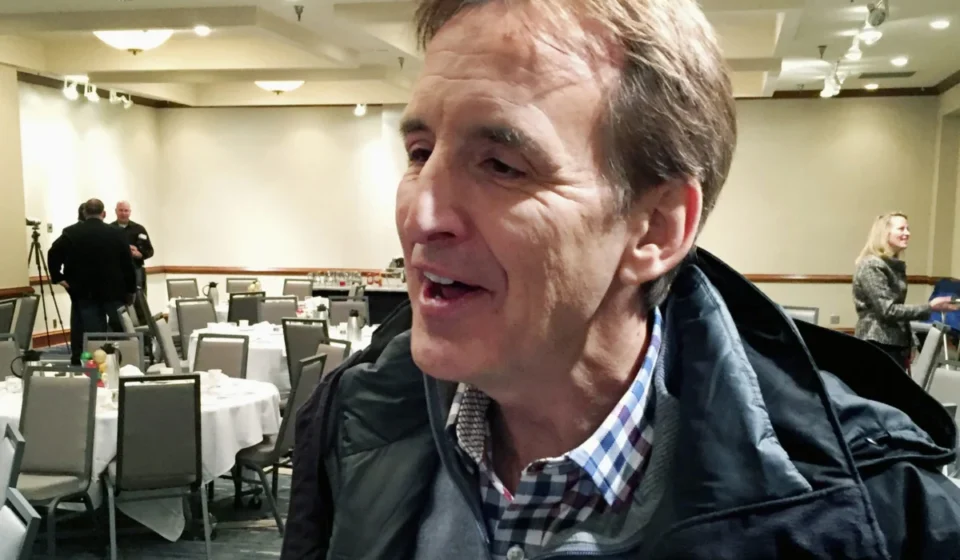

Introduction: A Political Veteran Takes the Helm
In a move that signals a significant strategic shift for the American renewable energy sector, former Minnesota Governor Tim Pawlenty has stepped into the role of President and CEO of the Solar Energy Industries Association (SEIA). A two-term Republican governor and a 2012 presidential primary contender, Pawlenty’s arrival at the nation’s largest solar trade group comes at a defining moment of turbulence.
The industry finds itself in a post-IRA (Inflation Reduction Act) landscape, navigating the fallout of the 2024 elections, which saw a Republican administration gut key climate provisions in favor of a new, protectionist energy framework. Pawlenty is not just a lobbyist; he is an evangelist for a new kind of solar politics—one that prioritizes national security, property rights, and domestic industrial strength over the traditional environmental arguments that have long defined the climate movement.
Chronology: From Climate Optimism to Political Realignment
To understand the weight of Pawlenty’s task, one must look at the recent trajectory of U.S. energy policy.
- 2022: The passage of the Inflation Reduction Act (IRA) created a gold-rush atmosphere for solar developers, with unprecedented tax incentives fueling massive project pipelines.
- 2024: The federal political tide shifted as Republicans reclaimed full control of Washington.
- 2025: The "One Big Beautiful Bill Act" was signed into law, effectively dismantling the core of the previous administration’s climate agenda and forcing the solar industry to pivot its strategy overnight.
- June 2026: Tim Pawlenty assumed the presidency of SEIA.
- September 2026: At Canary Media’s Climate Week NYC summit, Pawlenty made one of his first public appearances, framing the future of the industry not as a "green" crusade, but as a pragmatic business and security imperative.
"The current state is relatively bleak," Pawlenty admitted during an onstage interview. "But nothing stays the same in politics, and there is hope in what’s to come in the future."
Supporting Data: The Resilience of Solar
Despite the legislative headwinds, the business case for solar has arguably never been more robust. Solar currently leads the nation in new power capacity construction, a trend that has persisted for several years.
The industry is currently bolstered by an "unbelievable exploding demand" for electricity, driven by the rapid expansion of artificial intelligence data centers, the electrification of the transport sector, and the domestic manufacturing boom. According to recent industry reports, the cost-effectiveness of solar and battery storage systems is now so profound that market forces are pushing adoption even in regions where state-level political support has waned.
Furthermore, a common critique—that the U.S. solar industry is tethered to Chinese supply chains—is rapidly becoming an outdated narrative. Thanks to stringent trade policies and the rapid maturation of domestic manufacturing capacity, the U.S. has successfully reduced its reliance on Chinese-made panels. This shift aligns perfectly with the current political climate, which favors "Made in America" industrial policies.

Official Perspectives: Redefining the Solar Narrative
Pawlenty’s strategy involves "refreshing" the intelligence that policymakers use to make energy decisions. He argues that the industry has spent too long relying on outdated talking points.
"Eventually, the policymakers catch up to the facts," Pawlenty noted. "We have really good facts on our side. If you bring policymakers to the current story with current facts, it goes something like this: Solar and storage is the most cost-effective form of energy in the country, without question."
The National Security Angle
Perhaps the most potent tool in Pawlenty’s rhetorical arsenal is the national security argument. By framing solar as a decentralized, domestic energy source, he appeals directly to conservative voters and lawmakers who prioritize sovereignty.
"Iran can’t block the sun," Pawlenty remarked, drawing applause. "If you’re into national security, as I am, I like things that Iran can’t block, or North Korea, or China, or Russia, or any of the other folks who want to do us harm." This framing effectively strips away the partisan baggage of "climate change" and replaces it with the universal conservative value of self-reliance.
The Property Rights Defense
The tension between large-scale solar deployment and rural land use is a major obstacle. As of last year, 87% of clean energy generation occurred in rural America. This has led to friction with local communities concerned about the loss of farmland, a sentiment often stoked by social media misinformation.
Pawlenty is positioning SEIA as a champion of private property rights. He argues that if a farmer wants to host a solar installation on their land, they should have the right to do so without excessive government interference. By aligning solar with the sanctity of the farm and the rights of landowners, Pawlenty is attempting to neutralize the rural "Not In My Backyard" (NIMBY) movement.
Implications: Building Durable Policy
The ultimate goal of the Pawlenty era at SEIA is to create "durable" policies—rules that will survive the next pendulum swing in Washington.

"While it’s very tempting to just say, ‘Let’s roll whenever we can roll,’ I think it’s wise to at least take a half a step back and say, ‘Are we advocating for policies that are likely to survive political turbulence and change?’" Pawlenty explained.
The Manufacturing Imperative
The focus on domestic manufacturing is a key example of this durability. Even as the current administration cut tax credits for simple installations, it maintained support for domestic production. The surge in U.S. solar and battery cell factories over the last four years is a testament to the fact that industrial policy can cross party lines if it is marketed as a jobs-and-security initiative.
Communicating Outside the Bubble
The solar industry has historically suffered from an "insider" language problem, relying on technical jargon that alienates those outside the sector. Pawlenty’s background in retail politics—the ability to distill complex problems into simple, relatable concepts—is his greatest asset. He is translating the benefits of solar from "gigawatts and carbon reduction" to "property rights and energy independence."
Conclusion: A New Era for Renewable Advocacy
Tim Pawlenty’s transition from the governor’s mansion to the head of the nation’s primary solar trade group is more than a career pivot; it is a signal of the industry’s maturation. The days of relying on climate-focused subsidies alone are over.
To thrive in a landscape dominated by skepticism of federal climate programs, the industry is adopting a new identity. By focusing on domestic manufacturing, the inviolability of private land rights, and the strategic imperative of energy independence, Pawlenty is insulating solar from the volatile shifts of the American political cycle.
Whether this strategy will be enough to win over a skeptical Congress remains to be seen. However, by changing the narrative, Pawlenty has ensured that solar is no longer just an environmental project—it is now a fundamental component of the American conservative vision for the future. The "bleak" political environment may be a challenge, but if Pawlenty’s track record as a political operative is any indication, the solar industry has found a spokesperson who knows exactly how to navigate the corridors of power to get the job done.
As he noted, the facts are on their side. Now, the challenge is ensuring that those facts are heard in the right rooms.