















































This story was originally reported by Kate Sosin of The 19th. It has been expanded to explore the broader implications of gender inclusivity in competitive sports.
For Juniper Simonis, the memory of that night in 2012 remains as vivid as a cinematic frame. It was a humid summer evening in Ithaca, New York, and she was cycling through the city streets with the wind against her face and the soulful, atmospheric sounds of American folk singer Mariee Siou pouring through her headphones.
The moment was transformative—not just because of the ride, but because of an email sitting in her inbox. It was a notification from the Ithaca League of Women Rollers: the team had officially voted to allow her to join their ranks.
"As somebody who played sports and was queer, but those were two very separate parts of my life, the promise and the opportunity to integrate those was very hopeful for me," Simonis reflects. As a transgender woman, being accepted into an all-women’s athletic collective wasn’t just a sports milestone; it was an act of profound validation. "Getting a message that was like, ‘You are welcome,’ was, obviously, very uplifting."
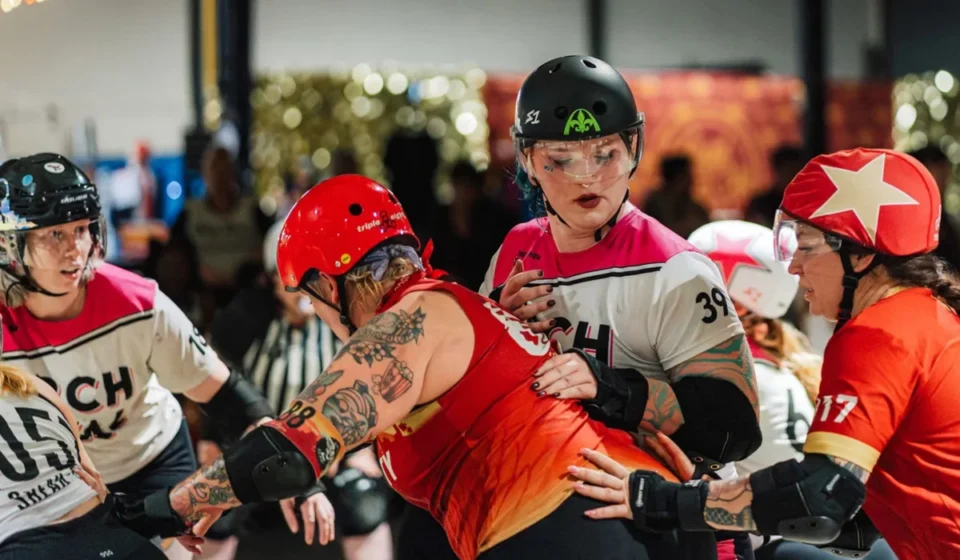
Years before the inclusion of transgender athletes became a flashpoint in national political discourse, the world of roller derby—a high-contact, fast-paced sport defined by its punk-rock ethos and aggressive physicality—was already wrestling with the complexities of gender. While the sport’s history is not without its imperfections, and while athletes of color and trans individuals continue to face systemic challenges, roller derby stands as a unique laboratory for what happens when a community chooses radical inclusion over rigid exclusion.
The Evolution of a Counter-Culture Sport
To understand why roller derby has become a vanguard for inclusion, one must look to its unconventional origins. Tracing its roots back to the 1930s, the sport began as a roller-skating endurance race promoted by Leo Seltzer. According to the Smithsonian, even in its earliest iterations, the sport was co-ed, though it was marked by the gender-based pay disparities characteristic of the era.
As the endurance races evolved into the full-contact sport recognized today, the culture shifted. Rachel "Rotten" Johnston, a veteran skater and director of the Angel City League Derby, notes that the "sport" aspect emerged from the chaos. "Over the course of these races, people start to run into each other. They get tired, they try to sabotage each other," Johnston explains. "That’s the thing that people started to get really into."
By the early 2000s, a grassroots movement in Austin, Texas, breathed new life into the sport, trading the spectacle of televised professional leagues for a decentralized, DIY culture. This era birthed a "punk rock" aesthetic—think fishnets, tattoos, and fierce, self-selected monikers like "Beyonslay" or "Iron Maven." It was a direct rebuttal to the mainstream pop culture of the time, favoring grit and autonomy over polished femininity.
Chronology of Inclusion: From Gatekeeping to Open Doors
In the early 2000s, as the Women’s Flat Track Derby Association (WFTDA) began to organize the sport, the focus was on creating a space for women to reclaim athletic agency. At the time, the term "cisgender" was not part of the common lexicon, and the intent was to build a sanctuary away from the dominance of men in sports.
"It was cis men that we didn’t want," explains Nicole Williams, better known on the track as "Bonnie Thunders," widely regarded as the greatest derby skater in history.
Early WFTDA policies mirrored the broader athletic world, often tethering inclusion to medical milestones, such as two years of hormone replacement therapy. However, these policies were often applied inconsistently, leading to a patchwork of experiences for trans skaters. For some, like Penelope "Fifi Nomenon" Nederlander, entry into the community was shockingly simple. When she joined the LA Derby Dolls in 2010, the process was almost bureaucratic; if a skater’s legal documents matched the category, they were in.
"It was the first group of friends who I met who only knew me as Penny, and that was huge," Nederlander says.

The tipping point arrived in 2015 when the WFTDA officially updated its policy to welcome anyone of a marginalized gender, regardless of their transition status or appearance. This move signaled a shift: the league was no longer protecting a static definition of "womanhood" but was instead building a community based on shared experience and defiance of traditional gender norms.
The Friction of Reality: Discrimination and Inequality
Despite this progressive framework, the sport is not a utopia. The experiences of skaters like Donita "Blaxyl Rose" Green highlight that inclusion on paper does not always translate to equitable treatment on the track. Green, a Black skater with the Angel City Derby, notes that race and trans identity frequently intersect to create unique hurdles.
"I’ve seen firsthand how much worse some of these microaggressions and problems happen when you are a dark-skinned Black skater," Green explains. "You add knowledge of trans identity, and it tends to be even worse. We talk often about skating while Black. It just happens."
Furthermore, physical violence and harassment remain a reality for many. Juniper Simonis, despite her fond memories of being accepted, reports that she has been physically assaulted by other players specifically due to her transgender identity. These instances serve as a stark reminder that even in spaces designed to be "safe," the broader societal prejudices against trans people continue to infiltrate the rink.
Official Responses and the "Fairness" Debate
The broader debate regarding trans athletes often centers on the concept of "competitive fairness" and the preservation of "women’s spaces." Bonnie Thunders, who has spent two decades at the pinnacle of the sport, finds the rhetoric surrounding these issues to be increasingly hollow.
"When I see, ‘protect women’s spaces,’ that feels so repressive," she says. "I don’t want to discount that women’s spaces are important. They are, but I don’t really identify with that in the way that I used to."
When the question of the Olympics arose for roller derby, the community’s response was telling. The WFTDA eventually declined to pursue Olympic inclusion, partly because of the international governing body’s rigid requirements. The skaters were unwilling to sacrifice their values—specifically their inclusive gender policies—to satisfy the requirements of a global institution.
Implications: A Model for the Future of Sports
The implications of the roller derby model are significant. By prioritizing the human experience of the athletes over the perceived need to gatekeep, the sport has flourished. As Penelope Nederlander argues, there is a path toward more honest discourse. She advocates for an approach that acknowledges biological differences without weaponizing them to exclude transgender women.
"In roller derby, there doesn’t seem to be an important difference. We really don’t have any complaints about trans skaters," Nederlander says. "And I think that’s just a more honest, accepting way."
Ultimately, the lesson from the track is that sport is not inherently "fair" in a laboratory sense, and attempting to legislate absolute parity often results in the marginalization of vulnerable groups. For the skaters of the WFTDA, the risk of injury—which is inherent in any full-contact sport—is a price worth paying for a community that reflects the diversity of the world outside the rink.
As the political landscape continues to tighten around the rights of trans athletes, roller derby remains a defiant, rolling testimony that inclusion is not a zero-sum game. It is, perhaps, the most radical act of all.