













































By [Author Name/Journalism Staff]
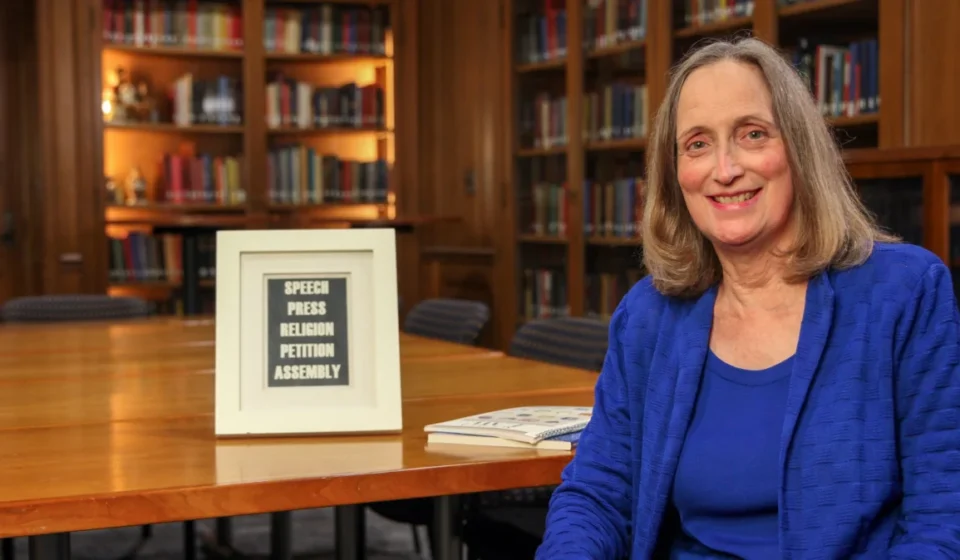
For decades, the name Jane E. Kirtley has served as a lighthouse for journalists navigating the turbulent, often litigious waters of the American media landscape. As the Silha Professor of Media Ethics and Law at the University of Minnesota’s Hubbard School of Journalism and Mass Communication, Kirtley has been the definitive authority on First Amendment rights and freedom of information. On May 25, she will conclude a distinguished career that has spanned the halls of academia and the front lines of press freedom advocacy.
As she prepares to step away from the podium, Kirtley leaves behind a legacy defined by an unwavering commitment to the public’s right to know, even as she warns that the foundational principles of American journalism are facing their most precarious moment in modern history.
A Career Dedicated to the Truth
Kirtley’s departure is not merely a personnel change for the University of Minnesota; it marks the closing of a chapter for the journalism profession at large. Her career has been marked by a relentless pursuit of accountability.
Before joining the University of Minnesota in 1999, Kirtley spent 14 years as the executive director of The Reporters Committee for Freedom of the Press in Arlington, Virginia. In that role, she became a frequent voice for newsrooms across the country, offering legal guidance and moral support to reporters facing subpoena threats, censorship, and government intimidation. Her foundation was built even earlier, during a five-year stint as an attorney at a major New York and Washington, D.C. law firm, where she honed the sharp legal acumen that would eventually define her academic work.
Now 72, Kirtley’s decision to retire is rooted in both personal reflection and a desire to remain active while she is still able. She cites the 2009 retirement and subsequent passing of her predecessor, Don Gillmor—the founding director of the Silha Center for the Study of Media Ethics and Law—as a sobering reminder of the fragility of time.
"You just can’t take for granted you can keep doing the things you care about doing," Kirtley said in an interview with MinnPost. "Travel is very important to me. I loved my five-month Fulbright teaching media law and ethics in Riga, Latvia. I want to make sure I’m healthy enough to do it."
Chronology of a Crisis: The Erosion of Press Protections
Kirtley’s perspective is informed by a longitudinal view of American media. She recalls the post-Watergate era, a time when journalism was viewed as a vital, noble pillar of democracy, and reporters were celebrated as essential watchdogs. However, she argues that a deliberate, decades-long campaign to undermine public confidence in the "legacy" press—originating from both the political left and right—has significantly altered the landscape.
The Weaponization of the Courts
According to Kirtley, the primary threat to the press today is the weaponization of the legal system to stifle independent reporting. While she acknowledges that past administrations—from Nixon to Obama—have had contentious relationships with the press, the current environment is unique.
"I’ve never seen a president of the United States sue media organizations for libel, much less other suits, based on all kinds of novel legal theories, like consumer fraud, that have never been used against the press before," she noted.
Central to her concern is the potential reversal of the New York Times v. Sullivan standard, the 1964 landmark ruling that requires public figures to prove "actual malice" in libel cases. Kirtley observes that the current Supreme Court has shown a willingness to overturn long-standing precedents, making the protection of Sullivan—the bedrock of investigative journalism—uncertain.
The Operational Landscape: Corporate Interests vs. Public Service
The challenges facing journalism are not merely external; they are internal as well. Kirtley expresses deep concern regarding the changing nature of media ownership. Where once newspaper and broadcast owners operated with an understanding of their responsibility to the public interest, many modern owners—ranging from venture capitalists to tech-centric entrepreneurs—view media outlets primarily as profit-generating machines or tools for influence.
"They don’t approach their operations in an altruistic way," Kirtley explained. "I’m not naive. William Randolph Hearst wanted to make money, and he wanted power, too. But even they understood the purpose and need for a free press in this country. I don’t get even a hint of that from many of the current mainstream media owners."
The Rise of the "Silo" Effect
Compounding this is the fragmentation of the media ecosystem. With the proliferation of internet-based "information" sources, Kirtley argues that the public has become increasingly isolated in ideological silos. This makes it difficult for journalists to hold powerful figures accountable, as any factual report can be dismissed as "fake news" by an audience that has been primed to distrust institutional media.
The AI Dilemma: A Tool for Disinformation?
Kirtley’s skepticism toward artificial intelligence is profound. She views the technology as a significant threat to the integrity of the information ecosystem, and her reluctance to teach its usage was a key factor in her decision to retire.
"To me, it’s the devil’s tool," she stated. "I don’t feel able to train my students in how to use it. I would feel complicit in a plot to undermine so many values that matter to me, like accuracy and critical thinking."
She points to the erosion of the "copy desk"—the human editors who acted as the final line of defense against factual errors—as a casualty of the push for AI-generated content. For Kirtley, the nuance, skepticism, and ethical judgment required for journalism cannot be replicated by an algorithm that merely processes inputs.
Regulatory Retaliation: The FCC and Political Pressure
The interview also touched on the current state of federal regulation, specifically regarding the Federal Communications Commission (FCC) under the leadership of Chairman Brendan Carr. Kirtley characterizes the current regulatory stance as a radical departure from historical norms.
"I’ve never seen anything so blatantly political in modern history as what Brendan Carr is doing now," she said, referencing the pressure being applied to late-night entertainers and networks that criticize the administration.
While the FCC has historically regulated "indecent speech" via the safe harbor doctrine, Kirtley emphasizes that such regulations were never intended to be tools for political retaliation. The threat to re-evaluate what constitutes "bona fide news" to potentially stifle satire is, in her view, a direct attack on the First Amendment and the Federal Communications Act of 1934.
Implications for the Future of Journalism
Despite the grim outlook, Kirtley maintains a guarded hope. She acknowledges that despite the low pay, the constant legal threats, and the technological disruption, there remains a cohort of young journalists who are driven by a genuine desire to hold the powerful to account.
"I know there are still many young people who want and who need to do journalism," she said. "They want to provide the public with information they need to make good, informed decisions."
However, she warns that for these individuals to succeed, the structural support for the profession—legal, ethical, and corporate—must be defended. The loss of institutions like the Silha Center’s direct leadership from figures of Kirtley’s stature is a blow, but her career serves as a roadmap for those who intend to carry the torch forward.
As she prepares to leave the University of Minnesota, Jane Kirtley’s message is clear: The freedom of the press is not a static right that, once achieved, stays secured forever. It is an active, ongoing struggle that requires the vigilance of journalists, the protection of the courts, and, perhaps most importantly, a public that values the truth over the comfort of their own echo chambers.