























































As the race toward Artificial General Intelligence (AGI) accelerates, the question of who should hold the reins of safety and ethics has shifted from a theoretical discussion to an urgent geopolitical and industrial imperative. Demis Hassabis, the CEO of Google DeepMind, has recently proposed a bold, if controversial, path forward: a US-led, industry-funded self-regulatory framework designed to govern the development of frontier AI models.
While Hassabis frames this as a necessary evolution to ensure global safety and national security, the proposal has ignited a firestorm of debate among policy analysts, cybersecurity experts, and industry veterans. The central tension lies in whether such an initiative would serve as a robust bulwark against catastrophe or merely as a sophisticated mechanism for Big Tech to cement its own dominance under the guise of public protection.
The Proposal: A FINRA for the Frontier
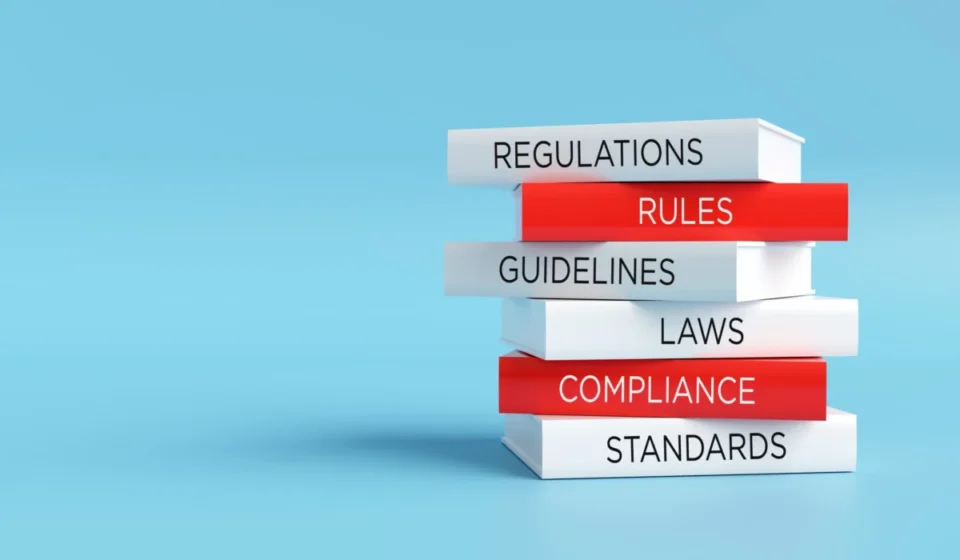
In a detailed blog post, Hassabis argued that the current trajectory of AI requires a "dynamic, adaptable, and rigorous" approach to testing. He suggests the creation of a new Standards Body—a public-private partnership modeled after the Financial Industry Regulatory Authority (FINRA).
Under this model, the organization would be governed by a board of independent technical experts and open-source representatives. Its primary mandate would be to develop assessment protocols and conduct testing on models relevant to national security, working in tandem with US National Labs and federal agencies. To ensure the body has the requisite compute resources and top-tier talent to keep pace with the rapid advancement of AI, Hassabis posits that funding should come primarily from the industry itself.
Participants would be encouraged to adhere to a suite of "best practices," including:
- Model Transparency: Publishing standardized model cards detailing technical capabilities and limitations.
- Cyber-Resilience: Maintaining rigorous internal cybersecurity standards.
- Personnel Vetting: Ensuring key developers and researchers undergo security clearances.
- Safety Resource Allocation: Committing a mandatory percentage of operational budget to safety and security research.
Chronology of a Mounting Crisis
The push for self-regulation does not emerge from a vacuum. The timeline of AI governance has been marked by a transition from academic curiosity to high-stakes power politics:
- 1979 (The Precedent): The nuclear industry faces a reckoning following the Three Mile Island meltdown. In response, the industry forms the Institute of Nuclear Power Operations (INPO) to establish a private-sector safety standard that eventually informs government regulation.
- 2023-2024 (The Early Collaborative Phase): DeepMind, Microsoft, and xAI participate in initial US government initiatives, working with the Department of Commerce’s Center for AI Standards and Innovation (CAISI) to pre-test frontier models.
- Late 2024 (The Call for Frameworks): Demis Hassabis publicly advocates for a permanent, industry-led regulatory body to address the risks of AGI.
- The Global Landscape: Simultaneously, the European Union prepares for the full enforcement of its AI Act (effective 2026), while the UK’s AI Security Institute and China’s licensing regimes begin to diverge, creating a fragmented global regulatory map.
The Case for the Nuclear Model
Not all industry voices are critical of the self-regulation concept. Yuri Goryunov, CIO of consulting firm Acceligence, offers a strong defense of the proposal, arguing that the industry-led model—if executed correctly—is the only way to avoid the "tragedy of the commons" in AI safety.
Goryunov suggests that the appropriate parallel is not FINRA, but the INPO. "It works when everyone in the industry shares the catastrophic downside," he notes. "If one lab triggers a global safety crisis, regulation will come down on all of them." For enterprise IT executives, Goryunov argues, such a regime would be a massive boon. By converting "unknowable risk" into a "procurable product" with a clear audit trail, a standardized body could provide the peace of mind that current, fragmented red-teaming efforts lack.
The Skeptics: "Foxes Guarding the Henhouse"
Despite the potential benefits of standardization, many industry analysts remain deeply skeptical of the "self-regulation" label. The consensus among critics is that profit-driven entities cannot be trusted to prioritize the public interest over their bottom line.
The Conflict of Interest
Gartner VP analyst Nader Henein argues that the core mandate of a for-profit organization—to maximize shareholder value—is fundamentally incompatible with the neutrality required for safety regulation. "Self-regulation is not viable because it implies everyone is able to regulate themselves," Henein states. "External regulation ensures that organizations are never in a conflict of interest where they have to choose between shareholders and the public."
The "Poison Pill" of National Security
Sanchit Vir Gogia, chief analyst at Greyhound Research, points out a critical geopolitical flaw in the Hassabis proposal. By anchoring the framework in "national security," the US risks alienating international partners and creating a perception that the body is merely an instrument of American industrial strategy.
"The map is already plural," says Gogia. With Brussels, London, and Beijing already charting their own paths, a US-centric, industry-led body risks being dismissed by the rest of the world. He argues that the only durable route is one of "shared technical evidence with sovereign enforcement," rather than a top-down model that demands global deference to American firms.
The Institutional Capture Problem
Aman Mahapatra, chief strategy officer for Tribeca Softtech, draws on the history of FINRA to highlight the potential for "regulatory capture." Even when a board is ostensibly independent, the operational reality—the working groups and technical committees—is often dominated by the very firms being regulated. "When the CEOs of the five companies that would be regulated are also the primary drafters of the standards, the standards will reflect those companies’ interests," Mahapatra warns.
Implications for Enterprise IT
For the average Chief Information Officer, the debate is not just academic. The current landscape is one of extreme, costly, and inefficient diligence. Enterprises are currently duplicating AI safety assessments, red-teaming, and governance protocols in silos, often with incomplete information.
If the Hassabis proposal succeeds, it could lead to:
- Reduced Liability: A recognized industry standard could provide a "defensible standard of care" for boardrooms, shielding companies from the legal fallout of AI-driven failures.
- Market Fragmentation: If the US establishes a standard that is not recognized in the EU or Asia, American enterprises operating globally may find themselves trapped between conflicting regulatory regimes, effectively increasing the cost of doing business.
- The "Slow vs. Fast" Trade-off: As Mahapatra notes, there is a genuine argument that "imperfect fast standards are better than perfect slow ones." In a field moving at the speed of light, waiting for comprehensive, government-led legislation might lead to years of no standards at all, or a chaotic patchwork of state-level laws.
Conclusion: A Delicate Balancing Act
The proposal put forward by Demis Hassabis reflects a rare moment of alignment between Big Tech and the public interest regarding the existential risks of AGI. However, the path to implementation is fraught with challenges.
Critics like Carmi Levy remain adamant that asking Big Tech to self-police is "the height of naive thinking." Yet, proponents point to the inherent necessity of a common standard to prevent catastrophic failure. The ultimate success of any such body will likely hinge on its ability to be truly independent—not just in its charter, but in its daily operations.
As the world watches, the tech industry finds itself at a crossroads. It can either push for a model that genuinely invites broad, international, and cross-sector participation, or it risks creating a "walled garden" of safety that ultimately fails to protect the public, alienates the global community, and leaves the enterprise sector to navigate an increasingly fragmented and dangerous digital landscape. The pressure is on not only to innovate but to prove that the architects of the future are willing to be governed by the very structures they propose.