
























































By [Your Name/Journalist]
August 22, 2026
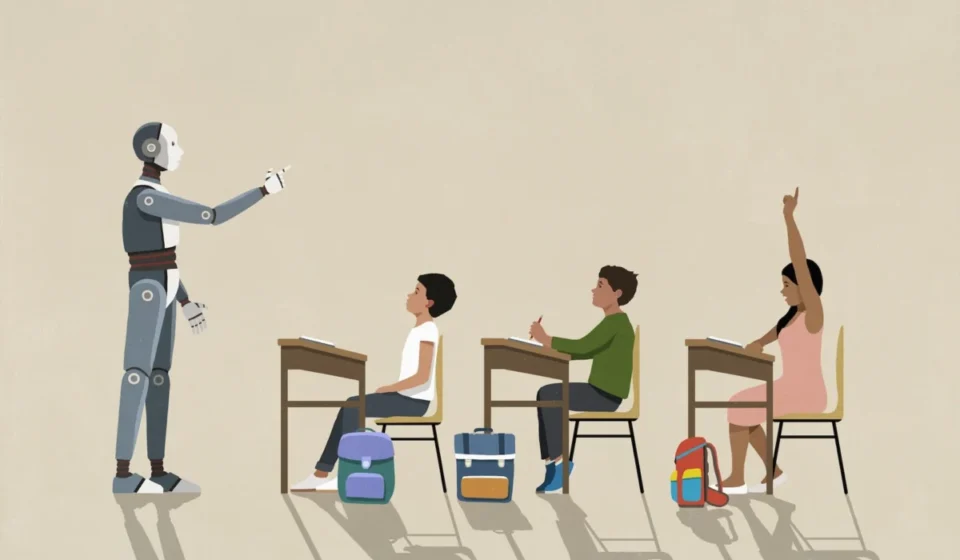
In the hallowed halls of Cambridge, where the case-study method has reigned supreme for over a century, a quiet revolution is taking place. Harvard Business School (HBS), an institution synonymous with elite, face-to-face mentorship and high-stakes networking, is embracing the future of education through a medium that would have seemed like science fiction only a few years ago: artificial intelligence avatars.
As the demand for executive education scales globally, HBS is leveraging new technologies to maintain the "Harvard touch" without the physical constraints of a lecture hall. Central to this strategy is the "HBS Foundry" bootcamp, an eight-week, $699 program designed for budding entrepreneurs. While the course retains live, synchronous sessions with human instructors, the heavy lifting of repetitive feedback—specifically during practice pitches and simulated board meetings—has been offloaded to AI simulacra.
The Mechanics of the "Digital Mentor"
The technology behind this shift is provided by HeyGen, a leading AI video generation platform. These digital twins are not merely chatbots; they are sophisticated visual and auditory replicas of real-world venture capitalists and industry leaders.
When a student enters a virtual session for a practice pitch, they are not met with a blinking cursor or a wall of text. Instead, they are greeted by the lifelike image of a seasoned investor. The avatars utilize generative models to listen to student pitches, analyze the underlying business logic, and respond in real-time with critiques, follow-up questions, and strategic advice.
The objective is to provide students with a "low-stakes, high-intensity" environment. By practicing with an AI that mimics the skepticism and intellectual rigor of a real board member, students can iterate on their pitches repeatedly without the anxiety of performing before a human peer or a high-profile mentor.
A Chronology of Integration: From Chatbot to Avatar
The evolution of this project within the Harvard ecosystem has been rapid and iterative.
- Early 2026: HBS faculty began exploring ways to scale personalized feedback. Initial prototypes were text-based, utilizing Large Language Models (LLMs) to grade and critique student work.
- Spring 2026: Feedback from pilot cohorts indicated a significant "engagement gap." Students reported that while the text-based AI was technically accurate, it lacked the nuance and authority of human mentorship.
- Mid-2026: The project team, led by program director Katharina Rings, pivoted to video-based avatars. The goal was to bridge the gap between static content and live instruction.
- August 2026: The HBS Foundry officially launched the HeyGen integration, allowing students to pitch against digital versions of high-profile industry figures, including Flybridge Capital co-founder Jeff Bussgang.
This rapid transition highlights a broader trend in higher education: moving away from the "passive lecture" model toward "active, simulated practice," where AI acts as a 24/7 sparring partner.
The "Uber for Bananas" Test: A Journalist’s Perspective
The efficacy of these avatars was put to the test in a recent report by The New York Times, which saw journalist Sarah Kessler engage in a simulated pitch. Tasked with presenting a business plan for a service she dubbed "Uber for Bananas," Kessler faced off against the digital clone of Jeff Bussgang.
The experience served as a fascinating study in the current limitations and strengths of AI faculty. Kessler noted that the digital Bussgang was just as unimpressed by the dubious business model as the real human might have been. However, the uncanny valley effect remained present; Kessler observed a "noticeably frozen smile" on the avatar, a visual artifact of the current generation of generative video.
Yet, despite the technological tells, the substance of the feedback remained rigorous. The AI forced the user to defend the unit economics of the banana-delivery service, demonstrating that the underlying intelligence—the "brain" of the avatar—is becoming indistinguishable from a human instructor’s line of questioning.
The Human-AI Hybrid Model: Data and Sentiment
While the integration of AI in classrooms has met with vocal resistance across the broader academic landscape—particularly regarding issues of academic integrity and the devaluation of human labor—the reception among Foundry participants has been surprisingly positive.

According to anecdotal reports from current cohorts, the value proposition lies in the accessibility of the mentors. In a traditional setting, a student might get five minutes with a high-profile investor; in the Foundry, they can pitch that same investor (or their avatar) fifty times in a single evening.
Official Responses and Ethical Considerations
The faculty and administrators behind the program are careful to frame the AI not as a replacement, but as an enhancement.
"My students love it," says Jeff Bussgang, who has become the public face of this experiment. While he openly acknowledges that his digital twin possesses a "creepy" quality—a common sentiment when viewing hyper-realistic synthetic humans—he emphasizes the pedagogical utility. "It provides the repetitions that are necessary for mastery. A human instructor simply doesn’t have the time to sit through a hundred iterations of a pitch, but the AI does."
This sentiment is echoed by Katharina Rings, who noted that the students themselves drove the shift toward the avatar interface. The demand for a "guided experience" suggests that students are not looking for more information, but for more interaction.
Implications: The Future of Executive Education
The implications of HBS’s experiment are profound. If elite institutions can effectively outsource the "practice and feedback" loop to AI, the traditional business school model faces a reckoning.
1. The Scaling of Elite Education
For decades, the prestige of programs like those at HBS has been tied to exclusivity and the physical presence of top-tier professors. If the expertise of these professors can be captured, bottled, and distributed via AI avatars, the school can effectively scale its reach to thousands of students without compromising the quality of the feedback loop.
2. The Devaluation of the "Lecture"
If students can gain more from an interactive AI simulation than from a standard hour-long lecture, universities may be forced to redefine the role of the professor. The teacher of the future may move away from being a "distributor of information" and toward becoming a "curator of simulations."
3. The "Creepiness" Threshold
The psychological impact of interacting with a digital double is still being studied. As Kessler’s experience suggests, there is a lingering discomfort when interacting with a synthetic human. However, as the technology improves, this discomfort is likely to diminish. We are approaching a point where the barrier to entry for high-quality, personalized feedback is near zero, potentially leveling the playing field for entrepreneurs who do not have access to elite networks.
Conclusion: A Necessary Evolution
The HBS Foundry program is not the end of traditional teaching, but rather the beginning of a new, hybrid era. As universities navigate the integration of AI, the focus will likely remain on maintaining the "human" element where it matters most: ethical reasoning, emotional intelligence, and the messy, unpredictable nature of real-world leadership.
For now, the AI avatars of Harvard serve as a bridge—a high-tech tool for high-stakes learning. Whether or not they will ever fully replace the warmth and unpredictability of a human mentor remains a question for the next decade. But for the student pitching "Uber for Bananas," the immediate benefit is clear: the ability to learn, fail, and improve in an environment that is always ready, always watching, and always willing to give one more critique.
The digital professor has arrived. And if the early returns from Cambridge are any indication, they are here to stay.