




















































The Great Return: Target Mandate and the Revitalization of Downtown Minneapolis

The rhythmic hiss of espresso machines and the steady clinking of ceramic mugs have returned to the air in downtown Minneapolis, signaling a significant shift in the city’s post-pandemic recovery. For years, the streets and skyways of the Twin Cities’ central business district felt like a quiet shadow of their former selves. However, as of September 2025, a major policy shift at one of the region’s largest employers has injected a sudden, palpable energy into the urban core.
Main Facts: A New Chapter for the Central Business District
The primary catalyst for this recent surge in activity is Target Corporation. As the city’s second-largest employer, Target holds immense sway over the economic health of downtown. Following a period of flexible remote work that lasted more than four years, the retailer officially ordered employees within its massive commercial unit to return to the office at least three days a week starting September 2, 2025.
The impact was instantaneous. At Corner Coffee, a popular local haunt situated just down the street from Target’s headquarters, the "Monday morning blues" have been replaced by a "Monday morning rush." Store manager Mia Pariseau reported a dramatic shift in foot traffic. Where Monday mornings used to be a slow crawl, the shop now faces hour-long stretches of constant queues.
"We got just slammed," Pariseau noted, reflecting on the first week of the mandate. "And it was just me and one other person here."
According to Kittie Fahey, senior director of advancement for the Minneapolis Downtown Council, in-person work in the city has climbed to approximately 75% of its pre-pandemic levels. This figure is expected to rise further as data from the Target mandate and other major corporate returns are fully reconciled. Of the top 15 employers in the downtown area, 12 have now implemented formal back-to-office policies, signaling a near-unanimous consensus among corporate leadership that the era of total remote work is drawing to a close.
Chronology: The Long Road Back to the Skyway
The journey from the "ghost town" days of 2020 to the bustling sidewalks of late 2025 has been a slow and often precarious one. To understand the current revitalization, one must look at the timeline of Minnesota’s labor shifts:
- March 2020 – 2021: The Great Exodus. Like the rest of the world, Minneapolis saw an overnight disappearance of its workforce. Minnesota’s share of primarily remote workers peaked at 21% in 2021, significantly higher than the national average of 17.9%.
- 2022: The Hybrid Transition. As health concerns eased, some workers returned, but the shift was marginal. The remote worker share in Minnesota dropped to 16.9%, yet the "vibe" of downtown remained stagnant. Jenny Lissarrague, an attorney who has worked downtown since 2012, recalls this period as particularly bleak. "I came down here during some of those high pandemic years, and it was a ghost town… just nobody."
- June 1, 2025: The Public Sector Lead. The first major domino of 2025 fell when Minnesota state government employees were required to spend 50% of their workdays in the office. While the move was met with some union resistance and threats of labor action, it established a baseline for the "new normal" in the Twin Cities.
- September 2, 2025: The Target Mandate. Target’s decision to bring its commercial unit back for a three-day minimum served as the tipping point for the service industry. Because Target is a "tentpole" employer, its schedule dictates the rhythm of the surrounding ecosystem of cafes, restaurants, and retail shops.
Supporting Data: The Economics of Presence
The revitalization of downtown is more than just a feeling; it is backed by evolving labor statistics and demographic shifts. Data from the Federal Reserve Bank of Minneapolis indicates that while Minnesota was initially slower to bring employees back compared to some Sun Belt states, the "catch-up" effect is now in full swing.
The Employer Landscape
Downtown Minneapolis is anchored by several "Big Five" employers who dictate the city’s daytime population:

- Hennepin Healthcare: The city’s largest employer, which maintained a steady presence due to the nature of medical work.
- Target Corporation: The primary driver of white-collar foot traffic in the Nicollet Mall area.
- Wells Fargo: Maintains a significant presence in the eastern portion of downtown.
- Ameriprise Financial: A key fixture in the financial district.
- U.S. Bancorp: Another major financial pillar with a large downtown footprint.
The Residential Factor
While the commuter population is recovering, downtown is also leaning on its 60,000 permanent residents. Urban planners argue that for a city to be resilient, it cannot rely solely on the 9-to-5 crowd. The Downtown Council is increasingly focusing on how to bridge the gap between the professional workforce and the residential community to create a "24-hour city."
The Transit Gap
A significant hurdle in the data is the decline in public transit frequency. Jenny Lissarrague pointed out that getting downtown is objectively more difficult than it was in 2019. Because remote work reduced demand, Metro Transit adjusted schedules, leading to fewer buses. This has created a "chicken-and-egg" problem: workers are hesitant to commute due to poor transit options, but transit options remain limited because of lower ridership.
Official Responses: Collaboration vs. Resistance
The return-to-office movement has sparked a variety of responses from different sectors of the Minneapolis community.
The Corporate Perspective
For many companies, the return is about more than just filling desks; it is about the "creative friction" that occurs in person. Madelyn Dunn-Lammert, an associate designer for Target who had worked almost entirely remotely for three years, admitted that the transition has benefits for her field.
"Being able to grab lunch with co-workers or work through a project in-person helps build team connections and facilitate collaboration, especially in a creative field," Dunn-Lammert said. Her sentiment echoes the corporate leadership’s belief that innovation suffers in a purely digital environment.
The Downtown Council’s Vision
Kittie Fahey of the Minneapolis Downtown Council sees the return as a civic duty and an opportunity for social reconnection. She is pushing for a culture that extends beyond the "clock-out" time.
"Go out for lunch, stay after and go meet friends, go do some things," Fahey urged. "Use all the resources we have." Her goal is to move away from the "commuter culture" where people rush to their cars at 4:30 PM, leaving the city empty by dusk.
The Labor Pushback
It has not been a seamless transition for everyone. When the state government announced its 50% in-office requirement in June, many workers voiced concerns over childcare, commuting costs, and the loss of work-life balance. Some labor groups argued that productivity remained high during the remote years and that the mandate was an unnecessary concession to downtown property owners.

Implications: The Future of the Urban Experience
As Minneapolis moves into the final quarter of 2025, the implications of this "Great Return" are becoming clear. The city is not simply reverting to 2019; it is evolving into something different.
The Changing Workday
The traditional "rush hour" is being replaced by "spread-out traffic." Fahey noted that many employees now choose to commute around noon or arrive later in the morning to avoid the peak congestion of those who still work a traditional 8-to-5. This shift means that coffee shops like Corner Coffee may need to adjust their staffing levels to accommodate a "rolling rush" rather than a single morning peak.
The Nightlife Dilemma
One of the most significant challenges remaining is the "early closure" trend. Fahey pointed out a stark difference in the post-pandemic central business district: "You’d be hard-pressed to find a restaurant open until 11 p.m. That’s crazy different than pre-pandemic."
For downtown to truly regain its vibrancy, the service industry must feel confident enough to extend hours. However, without a guaranteed late-night crowd, many businesses remain trapped in a cycle of closing early to save on labor costs. The success of the Target mandate may provide the necessary "critical mass" of people to break this cycle.
A Trending Optimism
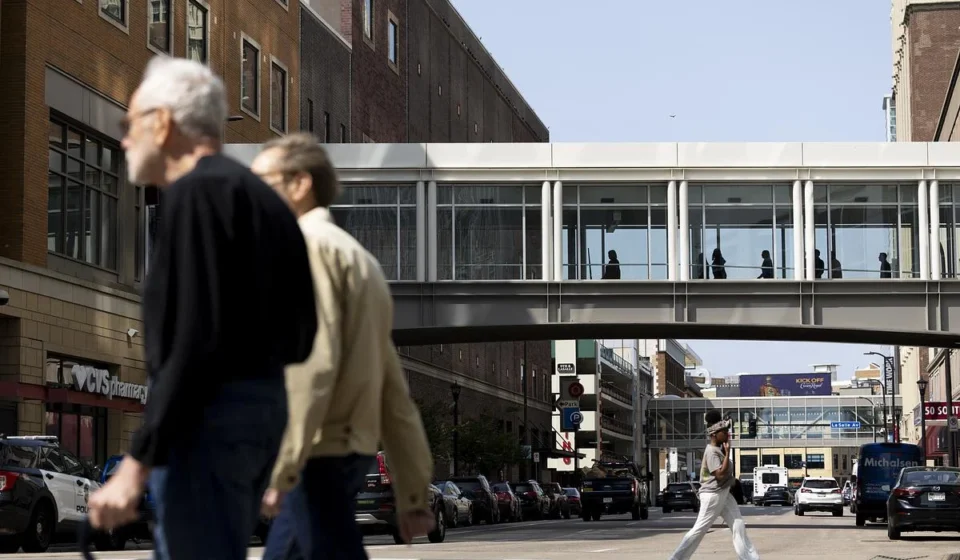
Despite the hurdles of transit and shortened business hours, the mood on the ground is shifting toward hope. The sight of workers walking through the IDS Center with lunch bags and colleagues huddled over blueprints in the skyways suggests that the heart of Minneapolis is beating strongly once again.
As Mia Pariseau of Corner Coffee looks at the growing line of customers each morning, she remains bullish on the city’s trajectory. While the "ghost town" years provided a stark lesson in the fragility of urban ecosystems, the current influx of workers suggests a durable recovery.
"The future is bright," Pariseau said. In a city that has weathered a pandemic, social unrest, and economic uncertainty, that brightness is a welcome change for those who call downtown Minneapolis home—and for those who are finally returning to their desks.