
























































Jurisdictional Defiance: Albert Lea City Council Rejects State-Mandated Cannabis License

ALBERT LEA, MN — In a move that legal experts and city officials warn could trigger a costly and uphill judicial battle, the Albert Lea City Council has voted to deny a business registration for the city’s first licensed cannabis dispensary. The 4-3 decision, reached during a contentious meeting on Monday night, marks a significant moment of local resistance against Minnesota’s burgeoning adult-use cannabis framework, setting the stage for a high-stakes confrontation between municipal "local control" and state statutory mandates.
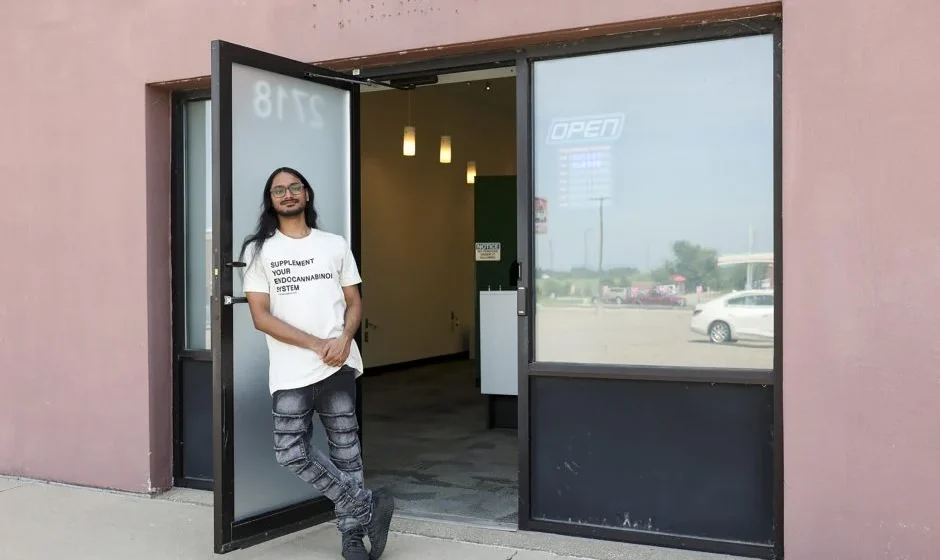
The denial of The Smoking Tree, a business owned by local entrepreneur Jacob Schlichter, came as a surprise to many, including city staff who had previously processed the application as a routine compliance matter. The vote represents an overt challenge to the 2023 Minnesota law that legalized recreational cannabis and established strict limits on the ability of local governments to prohibit licensed retailers within their borders.
I. Main Facts: A Vote Against the Grain
The central conflict revolves around the registration of The Smoking Tree, which was poised to become the first retail cannabis outlet in Albert Lea. Jacob Schlichter, the proprietor, had already navigated the rigorous state-level licensing process, becoming the first micro-retail cannabis applicant in Minnesota to pass a state inspection by the Office of Cannabis Management (OCM) in June.
Despite meeting all state and local criteria, the City Council majority—led by Mayor Rich Murray and Councilors Larry Baker, Rachel Christensen, and Keith Van Beek—voted down the registration. The move directly contradicts the advice of City Attorney Joel Holstad and City Manager Ian Rigg, both of whom cautioned that the city lacks the legal authority to deny a license to an applicant who has fulfilled all regulatory requirements.
Under Minnesota Statute 342.13, local governments are granted "limited authority" over cannabis businesses. While they can dictate zoning—determining how far a shop must be from schools, parks, or places of worship—they are explicitly barred from prohibiting the operation of a business that holds a state license and complies with local zoning. Furthermore, the law mandates that a city the size of Albert Lea must register at least two cannabis businesses based on its population (one for every 12,500 residents).
The denial leaves The Smoking Tree in a legal limbo. Schlichter, who had planned a "soft opening" for Tuesday, is now evaluating litigation options against the city. Meanwhile, the city faces the prospect of losing significant state funding and incurring massive legal fees to defend a position that its own attorney describes as "highly unlikely" to succeed in court.
II. Chronology: From Legislation to Local Gridlock
The path to Monday night’s confrontation began in May 2023, when Governor Tim Walz signed the bill legalizing adult-use cannabis in Minnesota. The legislation was designed to create a centralized state market while allowing cities some breathing room to establish local "reasonable" regulations.
May 2024: Establishing Local Rules
The Albert Lea City Council approved a local ordinance detailing how the city would handle cannabis registrations. The ordinance established a "first-come, first-served" system based on the time stamps of OCM licensure. This was intended to create an objective, administrative process that removed political bias from the registration of businesses.
June 2024: A Milestone for Schlichter
Jacob Schlichter received state-level recognition as the first micro-retailer in the state to pass the OCM’s inspection process. This gave him the "front of the line" status required by the city’s own ordinance.
July 18, 2024: Administrative Compliance
City staff confirmed that Schlichter had completed his local registration requirements. At this stage, the process was viewed by the city administration as a formality. The application met all zoning requirements and state standards.
July 2024: The Consent Agenda
The registration was placed on the City Council’s "consent agenda" for the Monday meeting. In municipal governance, the consent agenda is reserved for routine, non-controversial items that are typically passed in a single block vote without discussion.
Monday Night: The Rejection
The item was pulled from the consent agenda for individual discussion. During the meeting, the atmosphere shifted from administrative to ideological. Despite warnings from the City Manager regarding the financial penalties and from the City Attorney regarding the illegality of the move, the council majority opted to block the license.
III. Supporting Data: The Financial and Legal Stakes
The decision to deny the license is not merely a symbolic gesture; it carries specific, quantifiable risks for the taxpayers of Albert Lea. The city’s leadership was presented with three primary financial threats during the deliberations:
1. The Cost of Litigation
City Attorney Joel Holstad provided a sobering estimate of the legal battlefield ahead. He noted that a "legitimate defense" of the city’s decision would cost a minimum of $100,000. This figure only covers the city’s own legal fees and does not include potential damages or the plaintiff’s legal fees if the city loses, which Holstad suggested was the most likely outcome.
2. Local Government Aid (LGA) Penalties
Albert Lea is heavily dependent on state funding. The city receives more than $6 million annually in Local Government Aid (LGA), which accounts for approximately one-third of its total general fund revenue. City Manager Ian Rigg warned that the state could impose a 5% penalty on LGA for non-compliance with state law.
- Calculated Penalty: A 5% reduction in LGA would result in an immediate $300,000 loss to the city’s budget before any legal proceedings even begin.
3. Population-Based Mandates
The Minnesota Office of Cannabis Management (OCM) requires cities to allow a specific number of retailers based on population.
- Formula: 1 license per 12,500 residents.
- Albert Lea Population: Approximately 18,000.
- Requirement: The city is legally obligated to register at least two cannabis retail businesses. By denying the first, the city is in immediate violation of the statutory minimum.
IV. Official Responses: Principle vs. Pragmatism
The debate on the council floor highlighted a deep philosophical divide between those who prioritize fiscal and legal responsibility and those who view the issue as a "last stand" for municipal sovereignty.
The Opposition: A Stand for Local Control
Mayor Rich Murray and Councilor Larry Baker were the most vocal critics of the state’s mandate. Their arguments centered on the perceived overreach of the Minnesota Legislature.
"I do not like the way the state Legislature and the governor has rammed this down our throats with very little say in the process," Mayor Murray stated during the meeting. He expressed a personal and political desire for Albert Lea to host "zero" cannabis businesses, suggesting that the state’s primary motivation was revenue rather than public interest.
Councilor Larry Baker echoed these sentiments, framing the vote as a principled rejection of state and federal power creep. "We need to speak up, and this is just a point where I’m going to start speaking up," Baker said. He argued that if the council did not resist here, the state might eventually take away local control over other issues, such as residential zoning and high-rise developments. "It’s just a matter of principle," he added, dismissing the financial concerns as secondary to the preservation of local autonomy.
The Dissent: Legal Realism
Councilor Brian Anderson, who voted in favor of the registration, offered a more pragmatic perspective. He argued that the council was essentially engaging in "the illusion of choice."
"I think it’s up to me sitting up here to do the responsible thing and actually say that this is going to happen whether we want it to or not," Anderson remarked. He urged his colleagues to "embrace it and make the best of it" rather than inviting certain litigation.
The Administrative Warning
City Manager Ian Rigg and Attorney Joel Holstad were explicit in their professional guidance. Rigg noted that while he personally supported the idea of more local control, the current reality of the law left the city’s "hands tied." He reminded the council that the city had "orders" from the state and that the business in question had jumped through every hoop required by the city’s own May ordinance.
V. Implications: A Precedent for Minnesota’s Cannabis Market
The Albert Lea decision is likely to have ripples far beyond the city limits of Freeborn County. As the first city in Minnesota to explicitly deny a state-licensed micro-retailer, Albert Lea has become a test case for the enforcement mechanisms of the Office of Cannabis Management.
Potential for State Intervention
If the city continues its defiance, the State of Minnesota may be forced to sue the city to ensure the uniform application of state law. This would set a precedent for how the state handles other "holdout" cities that may attempt to use administrative delays or denials to bypass legalization.
Economic Impact on the Entrepreneur
For Jacob Schlichter, the denial represents a significant personal and financial blow. Having passed state inspections and prepared his storefront, he is now paying for a facility he cannot operate. "Whether or not you agree with cannabis, we can all agree that this is a bad use of our tax money," Schlichter said. "The law is the law." His reluctance to sue his own city is balanced against the reality that his livelihood is currently being blocked by a vote that his own city’s attorney called legally indefensible.
Long-term Fiscal Health
If the $300,000 LGA penalty is enacted and the city loses a $100,000+ lawsuit, the total cost to Albert Lea taxpayers could exceed $400,000 in the first year alone. For a city where LGA makes up a third of the budget, such a loss could lead to service cuts or property tax increases, ironically punishing the very residents the council majority claims to be protecting from state overreach.
The Future of The Smoking Tree
Schlichter has encouraged supporters to contact their council members to ask for a reconsideration. In many municipal settings, a failed vote can be brought back to the table if a member of the prevailing side moves for reconsideration. However, given the strong rhetoric from Baker and Murray, a shift in the 4-3 majority seems unlikely without significant external pressure or the filing of a formal lawsuit.
As Minnesota moves toward the full launch of its retail cannabis market in 2025, the situation in Albert Lea serves as a stark reminder of the friction between progressive state policies and conservative local governance. The eyes of the state’s burgeoning cannabis industry—and the regulators at the OCM—are now firmly fixed on Albert Lea to see who blinks first.