



























































WASHINGTON — A sprawling, high-stakes battle against Medicaid fraud in Minnesota has devolved into a humanitarian crisis, leaving thousands of the state’s most vulnerable residents—including children with autism, low-income seniors, and disabled citizens—trapped in a web of bureaucratic paralysis. While the Minnesota Department of Human Services (DHS) maintains its aggressive posture is necessary to safeguard taxpayer dollars, the downstream effects have manifested as a systemic failure of care, pushing families to the brink and forcing essential service providers to choose between financial ruin and abandoning their clients.
The Anatomy of a Systemic Breakdown
The current crisis, colloquially known as "Revalidation 2026," was born from federal pressure. The Centers for Medicare & Medicaid Services (CMS) identified certain Minnesota programs as "high-risk" for fraudulent billing, eventually deferring approximately $550 million in federal funding and threatening the total suspension of billions in future reimbursements.
In a frantic effort to restore compliance and secure federal dollars, the Minnesota DHS mandated an off-cycle, expedited revalidation of 5,600 providers across 13 high-risk service categories. The requirements were exhaustive: site visits, rigorous background checks, and the submission of extensive medical documentation to justify every claim.
However, the speed and complexity of the rollout have triggered a cascading failure. For families like the McGuires of Bloomington, the theoretical goal of "program integrity" has translated into a lived reality of interrupted therapies and mounting anxiety. Caroline McGuire, whose 6-year-old son Colin has cerebral palsy, describes the new requirements as a nightmare of red tape.

"It’s always been a far-from-perfect system, but now they have made it so much worse," McGuire said. "People with disabilities are paying the price, and it’s so much worse when it’s children."
Chronology of the Crisis
The turbulence did not happen overnight; it is the culmination of mounting federal scrutiny and a reactive state response.
- Pre-2026: Medicaid providers operate under established federal guidelines, with revalidations occurring every five years under the Affordable Care Act.
- Early 2026: Federal authorities signal that Minnesota’s "high-risk" Medicaid programs are under investigation for alleged fraudulent or aberrant billing, leading to the deferment of hundreds of millions of dollars in federal matching funds.
- January 2026: The Minnesota DHS initiates "Revalidation 2026," mandating that thousands of providers complete a massive, off-cycle audit process by the end of May to prevent the loss of nearly $2 billion in federal funding.
- May 2026: The deadline passes, leaving thousands of providers in a state of limbo. Many, despite complying, find themselves blocked by technical glitches or auditor errors.
- Summer 2026: The backlog at Acentra Health—the third-party agent handling authorizations—reaches a breaking point. Families report months-long delays in physical therapy, personal care assistance, and behavioral services.
- September 2026: State Senate Human Services Committee hearings highlight the extent of the damage, with providers testifying that they are forced to take out high-interest loans to cover payroll, while children remain on waitlists for life-altering care.
Supporting Data: The Scope of the Disruption
The statistics surrounding "Revalidation 2026" paint a grim picture of a state agency overwhelmed by its own mandate. As of September 8, 2026, the DHS reported that 3,587 providers had been successfully revalidated. However, 1,177 providers remained caught in the appeals process, and 695 providers simply opted not to revalidate, effectively disappearing from the system.
The impact on children and families is even more difficult to quantify, as the DHS admits it lacks a comprehensive assessment of how many patients have been abandoned. The data provided by advocacy groups and industry leaders, however, is alarming:

- Provider Exodus: Behavior Frontiers, a Coon Rapids-based provider, reported losing 34 staff members since May, resulting in 24 children being denied access to ongoing autism services.
- Authorization Backlog: Dr. Eric Larsson, Chairman of the Autism Treatment Association of Minnesota, testified that roughly 1,000 children are currently waiting for care due to the bottlenecks created by Acentra Health.
- Referral Efficacy: A July study from Georgetown University suggested that the "Revalidation 2026" effort was perhaps a blunt instrument. Of all the providers forced to revalidate, only 1% were referred to the state’s Office of Inspector General for further fraud investigation.
The "Bad Actor" Paradox
The irony of the situation is not lost on those in the disability advocacy community. While the state targets "bad actors"—such as the recent case of a group home director found to be managing operations from thousands of miles away in Liberia—the administrative dragnet has largely ensnared legitimate providers who serve the most vulnerable.
Paige Berland, co-owner of Minnesota Behavioralist Specialists, notes that a simple auditor error regarding her center’s revalidation prevented her from enrolling staff, which in turn locked out new clients. To stay afloat while awaiting approval, she and her partner have resorted to taking out commercial loans.
"You do what you need to do," Berland said, emphasizing that the survival of the business is synonymous with the survival of the services her patients require.
Official Responses and Political Accountability
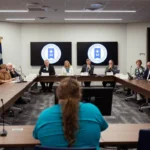
The Minnesota Department of Human Services finds itself in a precarious position. During a recent Senate Human Services Committee hearing, State Medicaid Director John Connolly offered an apology to the families and providers, acknowledging the "difficult moment" the agency is in.

However, the defense remains that these actions are necessitated by federal demands. The state is operating under the fear that failure to purge the system of "high-risk" elements will result in a complete withdrawal of federal funding—an outcome that would effectively end Medicaid in Minnesota as it currently exists.
Addyson Carpenter, a disability advocate and chair of the Minnesota Council on Disability, offers a more nuanced perspective on where the blame lies. Despite the personal struggle she and her adopted daughter Lydia have faced following a health crisis, Carpenter points the finger squarely at the federal level.
"The federal government is doing everything to hurt those with disabilities," Carpenter said.
Broader Implications: A Future in Jeopardy
The implications of this crisis extend far beyond the immediate financial strain on providers. By freezing the authorization of new providers until January 2027, the state has effectively capped the capacity of its disability services sector at a time when the need is growing.

Maren Christensen, executive director of the Multicultural Autism Action Network, warns that the human cost will be permanent. "There will be people who do not survive this," she stated. "And there are many states that have a lot more fraud than Minnesota."
The "Revalidation 2026" saga serves as a cautionary tale for federal-state healthcare partnerships. It highlights the dangers of using blanket administrative mandates to solve complex problems of program integrity. When the pursuit of "fraud" becomes untethered from the goal of "care," the result is not fiscal responsibility, but a systemic failure that leaves the most vulnerable members of society to suffer in silence.
As Minnesota moves into the winter months, the state faces an uphill battle to restore trust, clear the backlog of authorizations, and ensure that the children and seniors who rely on Medicaid are not forced to pay the price for bureaucratic inefficiency. For the McGuires, the Carpenters, and thousands of others, the promise of the Medicaid program is currently a hollow one—a system that has prioritized the policing of paper over the preservation of human life.