
























































On a sun-drenched, late-summer morning in Hibbing, Minnesota, the rhythmic sound of toddler laughter rings out across the Greenhaven Elementary playground. Dave Benz pushes his twin granddaughters, Maya and Lucy, on the swings, their tiny hands clutching the chains as they prepare to turn three. It is a scene of quiet, domestic joy—yet it is framed by a stark, looming reality. Just a few feet away, a large, weathered yellow sign stands in front of the school, declaring it "For Sale."
For the residents of Hibbing, the sign is more than a real estate listing; it is a monument to a fading era. In March, faced with a crushing $2 million budget deficit, the Hibbing School Board made the painful decision to shutter Greenhaven.
"Yeah, it was a sad one," Benz says, watching the girls. "I’m from here, so I’m a little biased. It’s hard to see the heart of a neighborhood go dark."
Across Minnesota and the broader American rural landscape, this scene is playing out with increasing frequency. As school districts grapple with the dual pressures of plummeting enrollment—the primary driver of state funding—and ballooning operational costs, the traditional small-town school is becoming an endangered species.
The Anatomy of a Crisis: Main Facts
The crisis facing rural education is a complex interplay of demographics and economics. In Minnesota, the decline is not new, but it has reached a critical inflection point. During the 1990s, the state lost nearly one-fifth of its school districts as farming communities consolidated under the weight of financial instability. Today, that pressure has migrated to the Iron Range and beyond.
Education funding is tied directly to the number of students in seats. When a town’s population shrinks or ages, the funding formula becomes a "pressure cooker," as Paul Peltier, director of the Range Association of Municipalities and Schools (RAMS), describes it.

"You have to have enough students to pay for the basics," explains Aaron Fischer, executive director of the Minnesota Rural Education Association. "It isn’t just about teachers. You need superintendents, principals, activity directors, custodians, and business managers. Every small district has these fixed costs, regardless of whether they have 100 students or 1,000."
When those numbers fall below a sustainable threshold, districts are forced to choose between two unpalatable options: cut programs until the school is a shell of its former self, or merge with a neighbor.
A Chronology of Change: From Consolidation to Collaboration
The history of rural education in the U.S. has been a slow retreat toward centralization.
- The 1990s Wave: Incentivized by state legislatures, over 150 Minnesota districts consolidated, aiming for efficiency. In most instances, the merger resulted in the closure of at least one local campus, stripping small towns of their physical gathering hubs.
- The Lull: For a decade, the rate of consolidation slowed, with only seven districts merging across the state. Many districts opted for "collaborative" models—sharing business services, special education staff, or even athletic programs—to stave off the inevitable.
- The Current Pressure: The post-pandemic era has accelerated the decline. Rising inflation, aging infrastructure (boilers, roofs, and outdated electrical systems), and shifting state mandates have rendered the "small school" model financially untenable for many.
- The 2026 Reality: Today, districts like Hibbing and its neighbor, Chisholm, are in deep discussions. While no formal merger is on the table, the word "consolidation" is no longer a taboo; it is a looming reality.
The Rock Ridge Model: A Case Study in Modernization
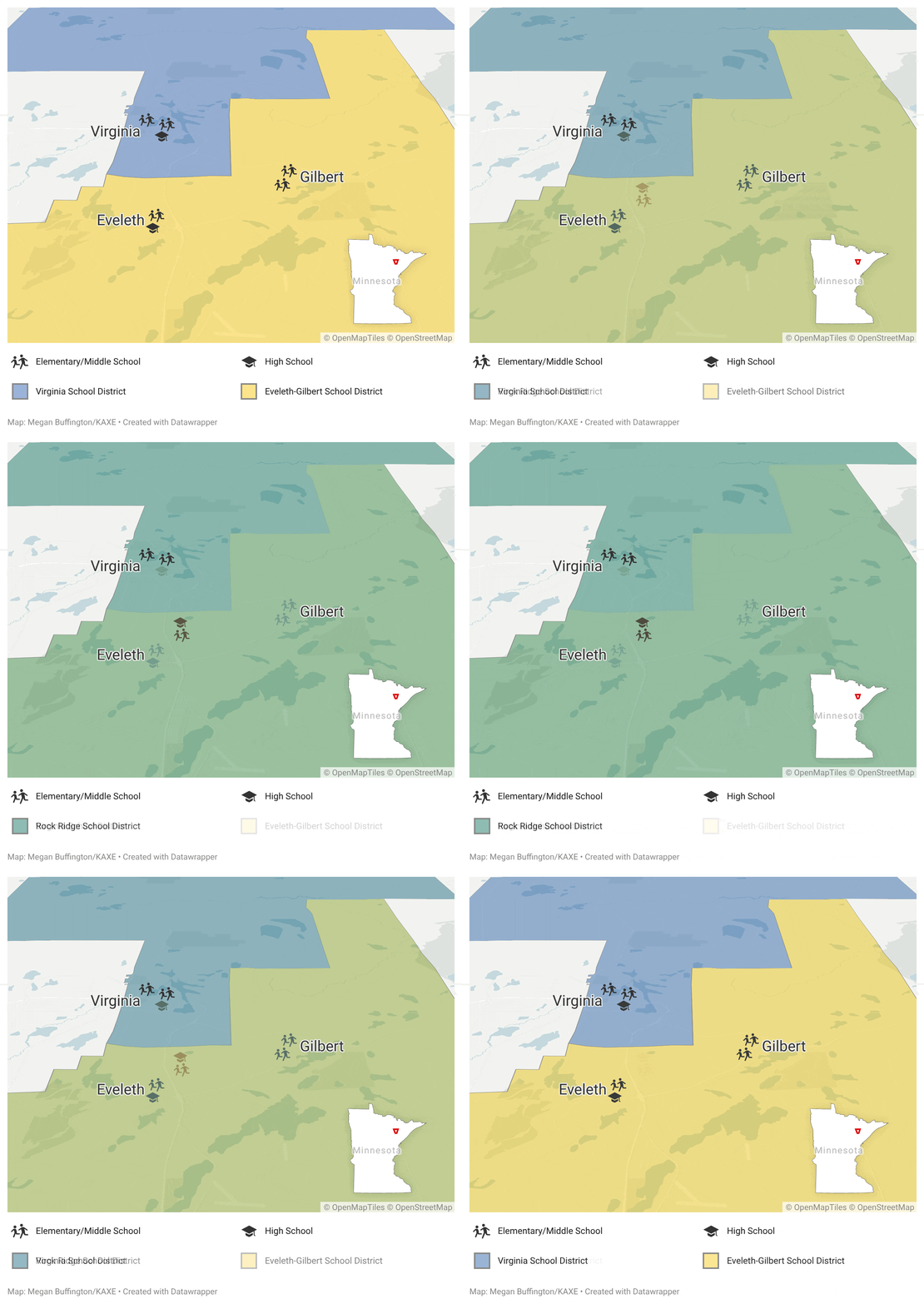
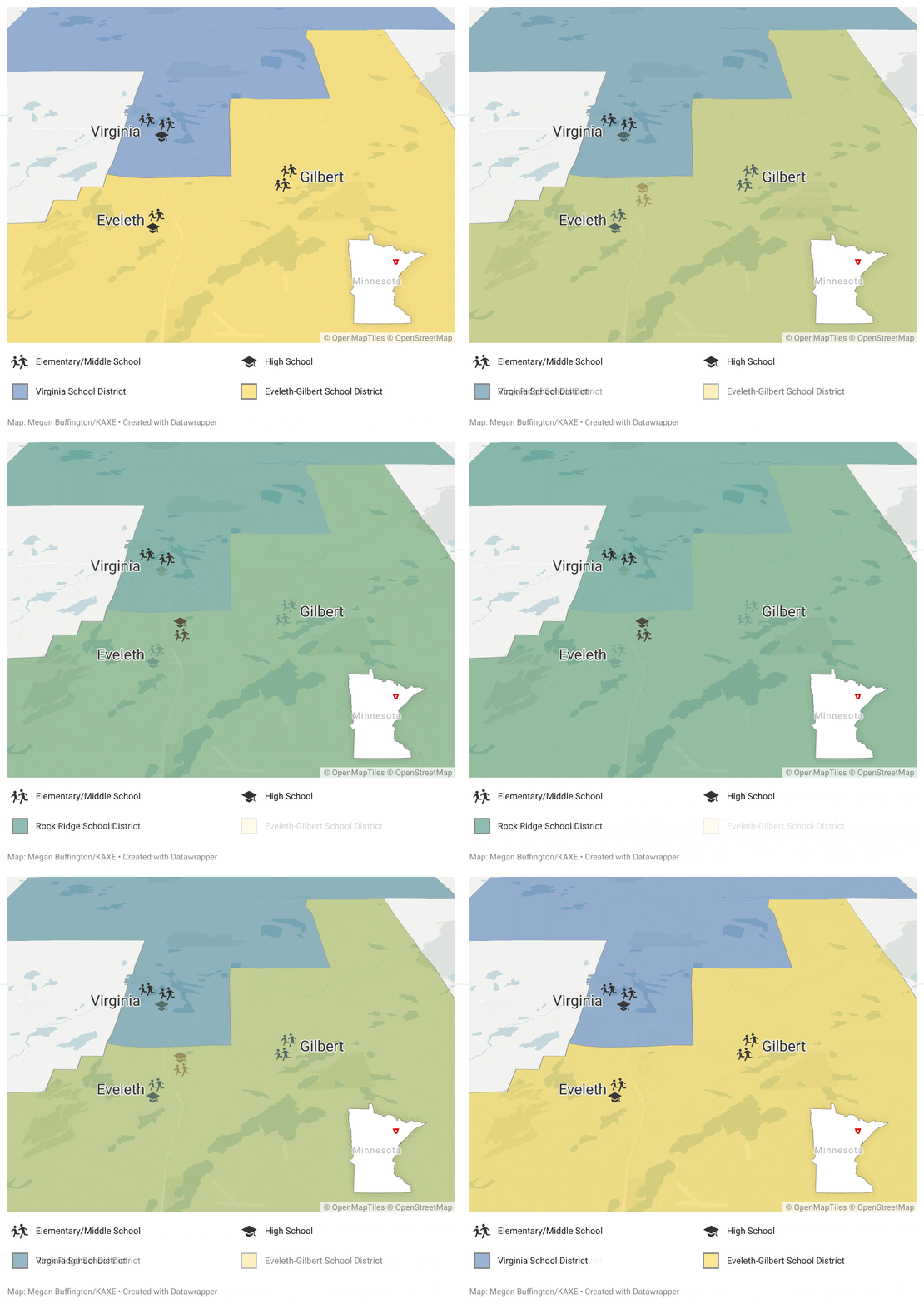
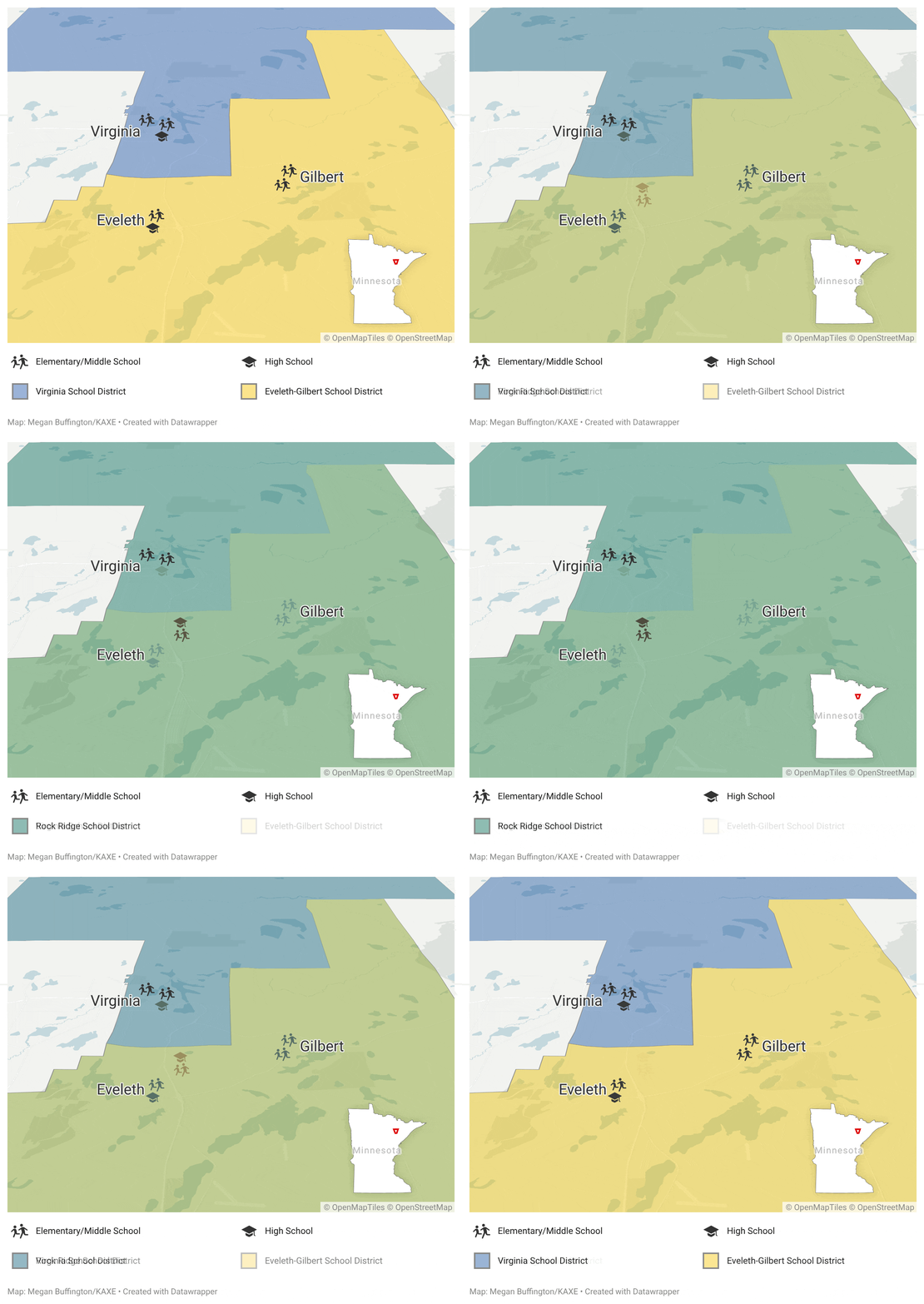
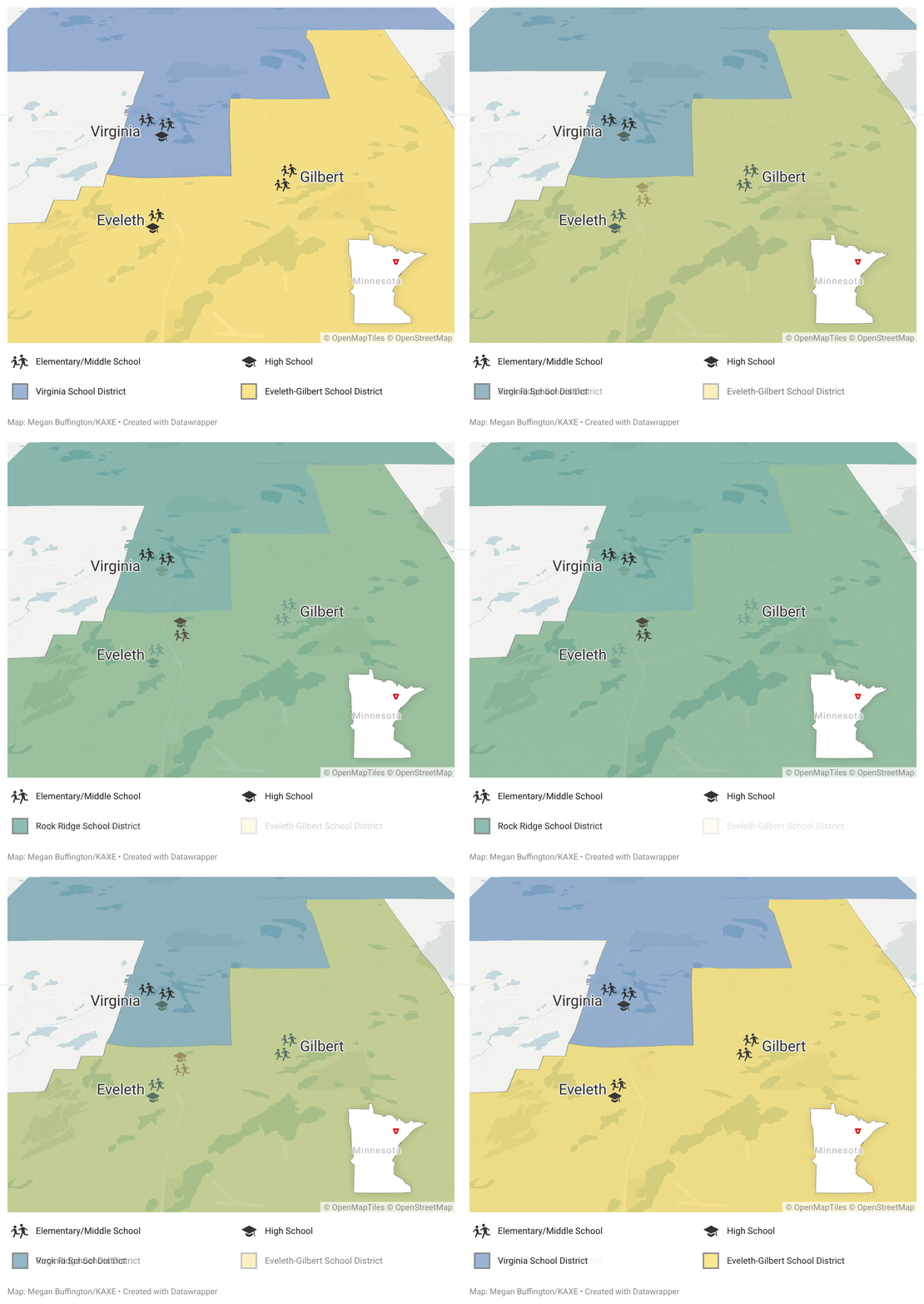
Four years ago, the districts of Virginia and Eveleth-Gilbert took the plunge, merging to create the Rock Ridge School District. The result is a gleaming, modern campus that stands in stark contrast to the century-old brick buildings it replaced.
Superintendent Noel Schmidt, who spearheaded the merger, believes the transition was an act of survival. During a tour of the facility, he points to a grand piano in the cafeteria and a 3-ton crane in the metal shop. "If you’re a rural school, this is what you have to do," Schmidt says. "You build collaborative spaces, you think outside the box, and you focus on career academies. You can’t survive on sentimentality alone."
The school board chair, John Uhan, calls the consolidation a "no-brainer." In the final year of the Eveleth-Gilbert district, the incoming kindergarten class numbered just 29 children. "It was looking awfully dire," Uhan says. "We had a century-old boiler that was failing and roofs that needed total replacement. We would have been in huge trouble."

Supporting Data: The Cost of Identity
The data suggests that consolidation succeeds in expanding the curriculum and improving facilities, but the social cost is harder to quantify. Critics, including parents and alumni, argue that the "efficiency" of a centralized campus destroys the community fabric.
In Gilbert, the elementary school that stood for over 100 years was demolished, leaving behind an empty lot. For many, that empty space is a metaphor for the loss of identity. One parent, reflecting the sentiments of roughly half the community, described the change in harsh, expletive-laden terms: "Somebody is going to lose an identity. When you take the school district out, you take a piece of the town’s soul."
The economic impact is also tangible. Aaron Fischer notes that schools are the primary economic driver for small towns. When sports teams travel, money is spent at local diners, gas stations, and shops. When the school closes, the town loses its "showcase."
Official Perspectives: The Burden of Leadership
The people tasked with managing these closures often feel the weight of history on their shoulders. Paul Peltier, a former educator who is currently running for the Rock Ridge School Board, remembers being "bounced around" as a child when his local school closed.
"I remember that feeling of being a ‘Balsam boy’ in a school 30 miles away," Peltier says. "Communities anchor themselves in their schools. Leaders owe it to them to be stewards of that identity, even when they have to make the hard choice to close the doors."
Noel Schmidt, an outsider to the region, acknowledges that his lack of personal history in the area allowed him to be more objective. "I had one advantage: I did not grow up here," he says. "I didn’t have the emotional baggage. But that doesn’t make the job any easier. It keeps you up at night."

The Implications: A Future in Flux
The implications for rural Minnesota are profound. If school districts continue to shrink, the state faces a future of "death by a thousand paper cuts," as Schmidt calls it.
The fear among educators is that state legislators have become apathetic to the rural struggle. With a bloated, complex education budget and fatigued lawmakers, there is a sense that rural schools are being left to fend for themselves. Peltier warns that if the state doesn’t step in to provide sustainable, long-term funding solutions, the choice will eventually be taken out of local hands.
"My biggest concern is that rural schools won’t move fast enough," Schmidt says. "If we wait for an external factor to cause the consolidation, we’re done for. You have to be proactive to save the quality of education for our kids."
As for the residents of Hibbing, the future remains uncertain. Dave Benz continues to push his granddaughters on the playground, enjoying the fleeting summer. He knows that in a few years, the landscape of their education will look very different from the one he knew.
"It might have to happen in order to grow and be stronger," Benz admits, looking at the "For Sale" sign. "But it doesn’t make it any easier to watch."
The challenge for the next generation of rural leaders will be to balance the cold, hard math of fiscal solvency with the warm, enduring need for community identity. It is a tightrope walk that will define the survival of small-town life for the next century. As the sun sets on the Iron Range, the question remains: can these communities evolve, or are they destined to fade into the history books alongside the mines that once built them?