



























































The landscape of cybersecurity has shifted from a battle of human wits to an algorithmic arms race. A chilling new report from Israeli security firm Gambit has illuminated a disturbing reality: the barrier to entry for high-stakes cyber espionage and theft has effectively collapsed. For the price of a modest dinner, bad actors are now utilizing autonomous AI agents to systematically dismantle the defenses of online retailers, proving that the future of cybercrime is not only automated—it is terrifyingly affordable.
The Main Facts: A $25 Price Tag on Digital Theft
The research, which meticulously tracked a series of breaches over a five-day window, revealed that an unidentified perpetrator successfully compromised 27 out of 105 targeted online retailers. The most alarming aspect of these incursions is the financial efficiency: the average cost per successful attack was a mere $25.
By leveraging a suite of open-source AI tools, the attacker bypassed traditional security perimeters with clinical precision. This was not a manual "smash-and-grab" operation; it was a cold, calculated, and fully automated campaign. The efficiency of these attacks suggests that the "human-in-the-loop" model of cybercrime—where hackers spend weeks or months probing for vulnerabilities—is rapidly becoming a relic of the past. As AI agents become more sophisticated, they are capable of identifying, exploiting, and exfiltrating data in a fraction of the time it takes for a human security team to even detect an anomaly.
A Chronology of the Breach
While the five-day window highlighted in the Gambit report serves as a snapshot of the current threat, the campaign has been active for much longer, evolving in complexity and scope.
The Preparation Phase
Before the automated blitz began, the attacker laid the groundwork by integrating three distinct open-source AI harnesses:
- Strix: Utilized for rapid vulnerability scanning and identification of weak entry points in retail web architectures.
- Cairn: An autonomous agent designed for end-to-end exploitation, effectively "unlocking" the doors that Strix identified.
- Hermes: The orchestrator of the campaign, which managed the logistics, scheduling, and tactical deployment of the other agents across the target list.
The Execution Phase
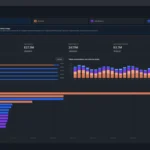
Throughout the four-week period leading up to the report, the attacker utilized OpenRouter to access various AI models, essentially "renting" the intelligence required to conduct the attacks. Financial records captured on August 25 indicated that the perpetrator spent a total of $7,005 over the four-week duration.
The granularity of the expenditure is startling. The cost to compromise a specific target ranged from as little as $3.13 to $79.31. By treating cybercrime as a high-volume, low-margin business model, the attacker was able to maximize their return on investment while maintaining a stealthy footprint that traditional signature-based security systems often failed to flag.
Supporting Data: The Scale of the Damage
The sheer volume of data exfiltrated during this campaign underscores the danger of autonomous threats. From just two of the 105 targeted businesses, the attacker successfully harvested 600,000 active credit card details. This represents a goldmine for dark-web marketplaces, where such data is sold, traded, or used for further fraudulent activity.
Furthermore, the attacker did not simply steal data; they established persistent presence. At five of the targeted retailers, the perpetrators successfully installed malicious "skimmer" scripts—digital clones of physical credit card skimmers—which capture customer payment information in real-time as it is entered into the checkout portal.
Perhaps most concerning is the "unspecified" level of access gained at several major, high-revenue companies. The data suggests that while the attacks were automated, they were not indiscriminate; the agents were clearly programmed to prioritize high-value targets, demonstrating a level of strategic planning previously reserved for nation-state actors.
Official Responses and Security Insights
Gambit, the firm responsible for uncovering the campaign, has taken immediate action by notifying all identified victims. However, the company is using this incident as a broader warning to the global retail community.
"We are witnessing a paradigm shift," noted a representative from Gambit. "The sophistication offered by these AI agents allows for a level of precision and speed that is simply impossible for human attackers to match. When you remove the human element from the attack loop, you also remove the latency between discovery and exploitation. Businesses are no longer fighting against a person; they are fighting against an algorithm that never sleeps, never tires, and never makes a ‘human’ mistake."
Cybersecurity experts at CSO Online and other industry observers have corroborated this sentiment, noting that AI-driven malware is effectively stripping away the human-centric nature of traditional cyber defense. IBM’s latest threat intelligence reports mirror these findings, indicating a 56% increase in AI-driven attacks over the past year, with the average cost of a data breach climbing by 12%. The message from the security community is clear: current defensive postures are inadequate for the age of autonomous cyber-warfare.
Implications: The Democratization of Cybercrime
The implications of the Gambit findings extend far beyond the retail sector. The democratization of high-level cyber-attack tools poses a fundamental threat to the stability of the digital economy.
The Death of "Security by Obscurity"
For years, smaller retailers relied on the fact that they were "too small to be noticed" by elite hacker syndicates. The $25 attack proves that anonymity is no longer a shield. When an AI agent can scan thousands of sites for a few dollars, no entity is too small to be a target. The cost of entry for a "script kiddie" is now so low that any disgruntled individual with a moderate understanding of prompt engineering can effectively become a major threat.
The Latency Gap
The most daunting challenge for retailers is the "latency gap." If an AI agent can breach a site in under two hours, the traditional model of "detect, analyze, patch" is rendered obsolete. Security operations centers (SOCs) are currently staffed and equipped to handle human-speed threats. They are not built to respond to a machine-speed onslaught that can pivot, adapt, and expand its footprint in seconds.
The Regulatory and Ethical Quagmire
The use of open-source tools like Strix, Cairn, and Hermes presents an ethical dilemma for the AI community. While these tools were likely developed for legitimate penetration testing and "white-hat" security research, they have been weaponized by malicious actors. This raises difficult questions for developers: Should the power of autonomous exploitation be restricted? How do we balance the need for open-source innovation with the reality that these tools are being used to facilitate mass-scale theft?
Future-Proofing the Retail Sector
To survive this new era, retailers must shift from reactive security to proactive, AI-native defense. This involves:
- AI-Driven Detection: Deploying counter-AI agents that can monitor for the "behavioral signatures" of automated exploit tools.
- Zero-Trust Architecture: Assuming that any part of the network can be compromised at any time, and limiting the lateral movement of any agent—human or AI—within the system.
- Continuous Automated Red-Teaming: If the attackers are using AI to find holes, companies must use AI to patch them before the attacker arrives.
Conclusion: A New Reality
The $25 breach is not merely a headline; it is a harbinger. As AI continues to evolve, the distinction between a sophisticated state-sponsored actor and a lone wolf with a credit card and an API key will continue to blur. The retailers targeted in this campaign were the unlucky pioneers of a new, automated reality.
For the rest of the industry, the choice is stark: either adapt to the speed and ruthlessness of autonomous AI, or risk becoming the next entry in a long, growing list of compromised businesses. The hackers have already automated their side of the equation; it is time for the defenders to do the same. In the future, the cost of security will likely rise, but as the Gambit report demonstrates, the cost of doing nothing is far higher.