













































Supreme Court Upholds Mail-In Voting Access, Bringing Relief to Election Officials Amidst Lingering Distrust

WASHINGTON D.C. – September 21, 2026 – In a pivotal decision that brought a collective sigh of relief to election administrators nationwide, the U.S. Supreme Court last Monday definitively blocked the Trump administration’s controversial attempts to impose new restrictions on mail-in ballots for the upcoming November elections. The ruling, a significant victory for voting access advocates and local election officials, effectively clears the path for millions of Americans to cast their votes by mail, preserving established systems that have been a cornerstone of electoral participation for decades in many states.
The High Court’s decision culminated months of intense legal battles and political rhetoric that had sown widespread confusion and uncertainty among voters and election personnel alike. With the midterm elections rapidly approaching, the ruling ensures that the existing, state-specific mail-in voting protocols will remain in place, preventing a last-minute overhaul that officials warned would have plunged the electoral process into chaos.
"It’s a relief and it’s palpable," stated Marybeth Kuznik, the seasoned elections director for Pennsylvania’s Fayette County, reflecting a sentiment echoed by her counterparts across the country. "I honestly don’t know how we could have complied with [the proposed Postal Service restrictions] at this point in the election cycle." Her candid assessment underscores the profound logistical challenges that would have arisen had the administration’s efforts succeeded.
However, despite the legal clarity, the protracted political and legal skirmishes have left an indelible mark. The administration’s relentless questioning of mail-in voting’s integrity and the ensuing chaotic legal battle have fueled voter anxiety, leading many to worry about the reliability and security of casting a ballot by mail. Consequently, election officials now face the crucial task of not only administering a smooth election but also actively reassuring a wary electorate.
The Court’s Ruling and Its Immediate Impact
The Supreme Court’s order was concise, declining to intervene in lower court injunctions that had halted the proposed changes to mail-in ballot processing. These changes, primarily pushed by the U.S. Postal Service under the influence of the Trump administration, sought to impose stricter, accelerated deadlines for ballot delivery and processing. Critics argued these new rules were not only logistically unfeasible but also politically motivated, designed to suppress votes in an election cycle where mail-in voting was expected to be particularly prevalent.
The immediate impact of the ruling is a restoration of predictability. Election offices, already stretched thin by the complexities of modern election administration and often operating on tight budgets, can now proceed with their established plans. This means that voters in states with widespread mail-in voting, or those who qualify for absentee ballots, can largely expect the same procedures they have grown accustomed to. The availability of mail-in voting, however, remains highly variable, ranging from states with universal mail-in ballot systems to those that require specific justifications for absentee voting.
This decision is especially significant given the high stakes of the upcoming elections and the increased reliance on alternative voting methods due to various factors, including public health considerations in recent election cycles. By upholding the status quo, the Supreme Court has affirmed the importance of maintaining stable and accessible voting procedures, particularly when changes would be disruptive in the critical weeks leading up to an election.
A Contentious History: The Administration’s Push to Restrict Mail Voting
The origins of this legal confrontation trace back several months, fueled by President Donald Trump’s vocal and persistent critiques of mail-in voting. Throughout the year, and even in previous election cycles, Trump repeatedly claimed, without substantial evidence, that mail-in voting was inherently susceptible to fraud and a "disaster" that undermined electoral integrity. These assertions often contradicted the findings of election security experts and even the practices within his own party, as many Republican-led states utilize and champion mail-in voting.
The administration’s efforts to tighten access often manifested through directives and policy changes within federal agencies, most notably the U.S. Postal Service (USPS). Proposed rules from the USPS aimed to significantly alter how election mail was handled, including suggestions for expedited return deadlines that election officials argued were unrealistic and unachievable within existing infrastructure and timelines. These proposals were met with immediate and widespread opposition, triggering a cascade of legal challenges from voting rights groups, state attorneys general, and even bipartisan groups of election administrators.
The rhetoric surrounding these proposed changes was often inflammatory. President Trump, despite casting his own ballot by mail in Florida, took to social media to denounce the process as a "Nation Destroying SCAM" and described America as the "laughing stock all over the World" because of it. Such strong condemnations, amplified by various media outlets, created a climate of suspicion around a voting method that millions of Americans have safely and securely utilized for years. This sustained campaign of doubt became a significant factor in the declining public trust in electoral processes, a concern that continues to plague election officials today.
Bipartisan Opposition: Election Officials Speak Out
A crucial element in the Supreme Court’s decision was the unified, bipartisan voice of election officials themselves. These frontline administrators, responsible for the practical execution of elections, found common ground in their shared concern over the proposed USPS rules. More than 80 election directors, including Pennsylvania’s Marybeth Kuznik, signed onto an influential amicus brief submitted to the Supreme Court. Their message was unequivocal: the new requirements were simply impossible to implement within the tight timeframe before the November election.
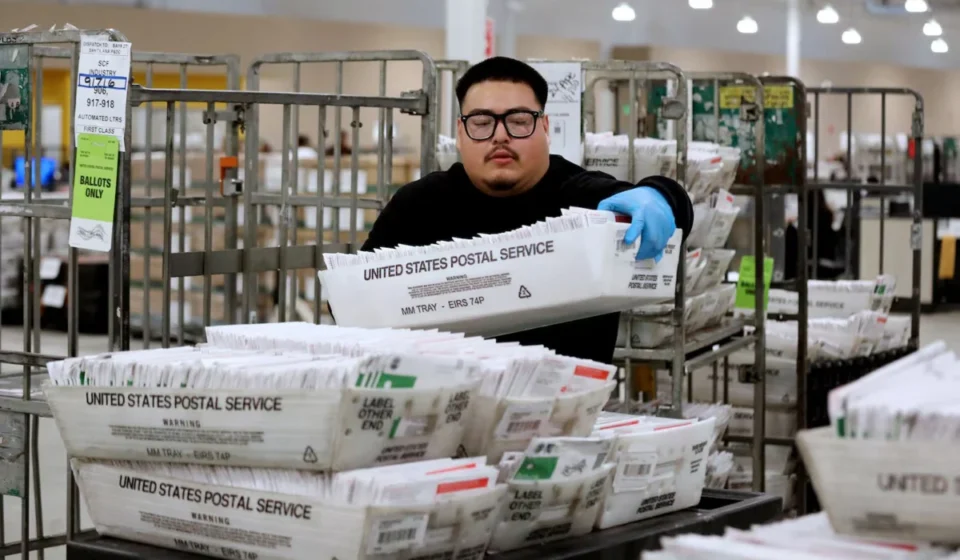
Their brief detailed the immense logistical undertaking involved in processing mail ballots, from printing and distributing millions of unique ballots to verifying signatures and managing return deadlines. Any fundamental change to these procedures, they argued, would necessitate significant technological upgrades, staff retraining, and public education campaigns – all requiring time and resources that were simply unavailable with less than 50 days until Election Day.
The opposition wasn’t limited to local administrators. Several high-ranking Republican secretaries of state, including officials from Kentucky, Georgia, and Kansas, also urged the Supreme Court to block the Trump administration’s plans. Their intervention underscored the non-partisan nature of election administration challenges. Regardless of political affiliation, election officials prioritize the smooth and fair execution of elections, and the proposed changes threatened that fundamental objective. Their pleas to the court highlighted the practical realities on the ground, emphasizing that election integrity is best served by stable, well-understood procedures, not last-minute overhauls. This broad, bipartisan consensus from those directly responsible for elections proved to be a powerful argument against the proposed changes.
Justice Kavanaugh’s Decisive Rationale
The influence of the election officials’ arguments was particularly evident in the concurring opinion penned by Supreme Court Justice Brett Kavanaugh. While Justice Kavanaugh indicated that he believed the proposed USPS rules might withstand legal scrutiny under normal circumstances, he found their application to the 2026 elections to be "arbitrary and capricious." His reasoning hinged precisely on the practical impossibilities highlighted by election administrators.
Kavanaugh wrote that "state and local election officials do not have sufficient time to reasonably implement the rule." This acknowledgment from a conservative justice, often seen as aligned with the administration’s broader judicial philosophy, served as a powerful validation of the concerns raised by administrators. It demonstrated that even those inclined to support executive actions could not ignore the undeniable logistical realities of election management. His opinion effectively prioritized the smooth functioning of the democratic process over the immediate implementation of new, potentially disruptive federal rules. This specific focus on the implementation timeline provided the critical legal leverage needed to preserve the existing mail-in voting framework for the upcoming election.
Rebuilding Trust Amidst Persistent Skepticism
With the legal battle resolved, election officials now pivot to an equally challenging task: reassuring a voting public that has been bombarded with conflicting messages. Despite the Supreme Court’s ruling, the administration’s consistent denigration of mail-in voting has created an environment of distrust that persists. Officials are observing fewer absentee ballot requests than anticipated in some areas, a trend they attribute to the confusion and fear sowed by the protracted debate.
"It has already caused all sorts of voter confusion, and even though the rule is not in place for this election, that’s not to say that there won’t be some voters that think that it is," explained Tammy Patrick, the chief program officer at the Election Center, a national nonprofit association for election administrators. Patrick, who filed an expert declaration in the Supreme Court cases challenging the Postal Service rules, emphasized the critical need for a consistent message: "So it’s going to be incumbent on all of us to make sure that we just keep up the mantra that nothing has changed as a result of the rule."

This communication challenge is significant. Election officials must actively counter misinformation and rebuild confidence, often with limited resources. Their strategy involves a multi-pronged approach: clear public messaging through traditional and social media, community outreach, and transparent explanations of the voting process. They are stressing that established procedures, including secure ballot drop boxes, signature verification, and timely processing, remain firmly in place. The core message is simple: the system is safe, secure, and ready for voters. As Patrick advises, the best thing voters can do is to submit their ballots as early as possible to ensure timely delivery and processing.
The Mechanics of Mail-In Voting: A State-by-State Tapestry
It is crucial to understand that "mail-in voting" is not a monolithic system across the United States; rather, it’s a diverse tapestry of state-specific laws and procedures. The Supreme Court’s decision essentially preserved this varied landscape, preventing a federal override that would have disrupted states regardless of their existing infrastructure.
Several states, such as Oregon, Washington, Colorado, Utah, and Hawaii, have long embraced universal mail-in voting, sending ballots automatically to all registered voters. These states have robust systems in place, including sophisticated signature verification processes, ballot tracking systems, and a network of secure drop boxes. For these states, mail-in voting is simply "voting," and their systems have been refined over decades to ensure security and efficiency. For example, federal data shows that roughly three-quarters of Arizona’s voters cast mail ballots in 2024, highlighting the deep integration of this method in certain states.
Conversely, other states maintain an "excuse-required" absentee voting system, where voters must provide a valid reason (such as illness, travel, or military service) to receive a mail-in ballot. Still others offer "no-excuse" absentee voting, allowing any registered voter to request a mail-in ballot without needing to provide a reason. The Supreme Court’s ruling ensures that these state-specific rules, whatever they may be, will govern the upcoming elections, avoiding a one-size-fits-all mandate that would have been deeply problematic for states accustomed to different methods. This diversity highlights the decentralized nature of American elections, where states retain significant autonomy in how they manage their polls.
Ensuring Security: Local Innovations and Best Practices
Despite the rhetoric questioning its security, mail-in voting, when properly administered, incorporates numerous safeguards designed to prevent fraud and ensure ballot integrity. Election officials like Dana Lewis, the recorder overseeing elections in Arizona’s Pinal County, are at the forefront of implementing and showcasing these robust measures. Lewis, a Republican, humorously notes her need for "six-inch heels" to pivot quickly in the topsy-turvy election season, but her dedication to security is serious.
Pinal County, like many others, has invested heavily in its drop box system, which serves as a secure alternative to the postal service for returning ballots. These drop boxes are often equipped with 24/7 video monitoring, GPS-locked ballot boxes, and strict chain-of-custody protocols to ensure that ballots are collected securely and regularly. These measures provide voters with tangible evidence of security, fostering confidence in the process.
Beyond drop boxes, common security features in mail-in voting systems include:
- Signature Verification: Most states require election officials to compare the signature on the returned ballot envelope with the voter’s signature on file. Discrepancies lead to a "cure" process, where voters are contacted to verify their identity.
- Barcodes and Tracking: Many ballots now include unique barcodes, allowing voters to track their ballot’s journey online, from when it’s sent to when it’s received and counted.
- Voter Rolls Maintenance: Election officials continuously update voter rolls to remove duplicate registrations, deceased voters, and those who have moved, minimizing the risk of improper ballot distribution.
- Criminal Penalties: Strict laws are in place, with severe criminal penalties for anyone attempting to commit voter fraud, providing a strong deterrent.
These layered security measures, implemented at the local and state levels, are what election officials point to when they urge voters to "trust the system." They emphasize that the integrity of mail-in voting relies on these established, well-practiced protocols, which the Supreme Court’s decision has now allowed to proceed undisturbed.
Declining Public Confidence: A Troubling Trend
Despite the operational readiness of election systems, the backdrop to this election is a troubling decline in public confidence in the nation’s electoral processes. The Supreme Court’s ruling arrived in parallel with a new poll from the University of California, San Diego, revealing a precipitous drop in trust. The survey found that just 55% of respondents trusted that their vote would be counted fairly, a significant decrease from 71% in 2024. Even more concerning, only 49% of Americans expected the upcoming election to be free and fair.
This sentiment is not isolated. A recent Pew Research Center survey mirrored these findings, indicating that 55% of respondents believed the upcoming election would be free and fair – an historic low for a question Pew has tracked over the past six years. This erosion of trust is a profound challenge for democratic institutions. While specific reasons for this decline are complex, political polarization, the spread of misinformation, and sustained attacks on the legitimacy of electoral processes by prominent figures undoubtedly play a significant role.
The implications of this declining confidence are far-reaching. A citizenry that distrusts its electoral system is less likely to participate, less likely to accept election outcomes, and potentially more susceptible to political instability. It places an added burden on election officials, who must not only administer complex elections but also actively work to restore faith in the foundational pillars of democracy. The Supreme Court’s decision, while ensuring procedural stability, cannot by itself mend the fractures in public trust that have emerged.
Looking Ahead: The Future of Election Administration
The Supreme Court’s decision to maintain the status quo for mail-in voting in 2026 offers a temporary reprieve but does not resolve the broader, underlying tensions surrounding election administration in the United States. The debate over voting methods, election security, and access is likely to continue, perhaps intensifying in future election cycles.
Election officials will remain at the forefront of this ongoing discourse. Their expertise, often overlooked in the heat of political debate, will be crucial in shaping future policies and informing the public. The experience of the past few years has highlighted the need for:
- Robust Funding: Adequate federal and state funding is essential for election offices to invest in secure technologies, train staff, and conduct public education campaigns.
- Clear Communication: Consistent, accurate, and non-partisan information from election authorities is vital to counter misinformation and build public trust.
- Bipartisan Collaboration: The success of election administration often hinges on cooperation across political divides, especially in navigating complex logistical challenges.
- Voter Education: Proactive efforts to educate voters about their state’s specific voting rules, deadlines, and security measures are paramount.
As the nation moves forward, the challenges of ensuring accessible, secure, and trustworthy elections will persist. The Supreme Court’s recent ruling provides a moment of stability, allowing election officials to focus on the immediate task at hand. However, the long-term health of American democracy will depend on sustained efforts to bolster public confidence, protect voting rights, and support the dedicated individuals who tirelessly work to uphold the integrity of the electoral process. The goal remains for every eligible citizen to cast their ballot confidently and for every legitimate vote to be counted fairly, reaffirming the bedrock principles of self-governance.
Dion Nissenbaum is Votebeat’s senior national reporter and is based in Houston. Contact Dion at [email protected].
Votebeat is a nonprofit news organization covering local election integrity and voting access. Sign up for their newsletters here.