





















































Beyond the Shire: How the Zephyr Theatre’s ‘The Hobbit’ Reimagines Myth for a Modern Era

In an era defined by rapid-fire digital content and a lingering post-pandemic search for meaning, there is a palpable public hunger for the mythic—a desire to be transported to faraway lands that mirror our own internal struggles. This trend is evident in the record-breaking success of recent cinematic epics, but on a more intimate, local level, it is currently finding a home in the rolling hills of Stillwater, Minnesota. The Zephyr Theatre’s bold, outdoor production of J.R.R. Tolkien’s The Hobbit does more than merely recount the journey of a reluctant burglar; it invites the audience to consider the necessity of community, the fluidity of gender in storytelling, and the enduring power of “neighborly” activism.
A Visionary’s "Why Now?"
At the helm of this production is Reed Sigmund, the Zephyr Theatre’s newly appointed artistic director. A seasoned veteran of the Children’s Theatre Company, Sigmund brings a wealth of experience to the task of translating Tolkien’s dense, expansive fantasy into a compact, outdoor performance. In the show’s program notes, Sigmund reflects on the fundamental question he asked himself during the development phase: "Why this show, why now?"
The answer, he suggests, lies in the character of Bilbo Baggins. Bilbo is the ultimate homebody—a creature of comfort who finds himself thrust into a high-stakes struggle that is, by all accounts, not his own. This transition from passive observer to active participant is, for Sigmund, the heartbeat of the production. It serves as an allegory for the spirit of community mobilization seen across the Twin Cities during events like the winter’s "Operation Metro Surge," where neighbors stepped up to address urgent, collective needs. The play posits that silence in the face of injustice is a choice, with one character poignantly noting, "A wrong that is silently seen will not fix itself."
Minimalist Magic: The Craft of the Production
While Peter Jackson’s film adaptation of The Hobbit spanned three lengthy features—often criticized for its bloated pacing and over-reliance on digital spectacle—playwright Greg Banks takes a radically different approach. His adaptation is minimalist, droll, and brisk, stripping the story down to its structural essentials.
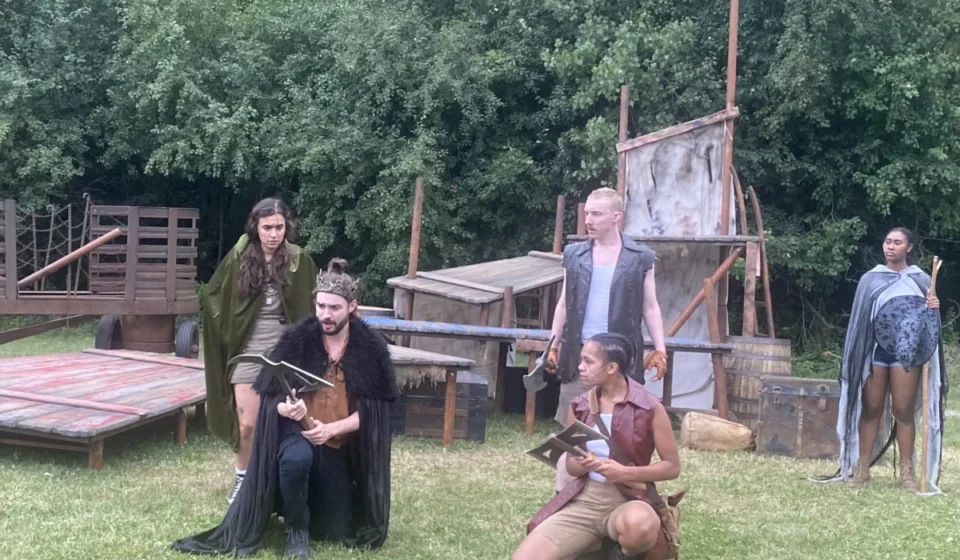
Under Sigmund’s playful direction, the production rejects the "big-budget" mentality. There are no actual horses on stage; instead, the cast creates the illusion of galloping through sheer physical commitment and clever sound design. This decision highlights the "ensemble spirit" that defines the production. With a cast of only five performers playing multiple roles, the theater relies on the audience’s imagination, effectively turning the performance into a collaborative act.
Costuming is similarly economical, utilizing emblematic pieces to signify shifts in character. The goblin masks are marvelously simple, and the iconic barrel-escape scene—a moment that required massive CGI resources in the films—is rendered here with nothing more than a handful of plain cylinders. It is a testament to the fact that when storytelling is strong, the trappings of a million-dollar budget are entirely secondary.
Reimagining Archetypes: Gender and Representation
Perhaps the most striking departure from the traditional Tolkien canon is the production’s casting. Bilbo Baggins and the wizard Gandalf are portrayed by Grace Hillmyer and Antonisia Collins, respectively, while the dwarf Balin is played by Anya Naylor.
This gender-swapping is not merely a stylistic flourish; it fundamentally alters the tone of the production. Collins brings a grounded, savvy calm to the role of Gandalf, while Hillmyer infuses Bilbo with a palpable, empathetic vulnerability. In one pivotal moment, Hillmyer declares, "I’m here because right now it’s the right time to do what’s right." By placing women in roles traditionally occupied by men in fantasy literature, the production creates space for a fresh dialogue about agency and heroism.
This creative choice also serves as a subtle, perhaps unintentional, contrast to other fantasy franchises currently embroiled in controversy. As public discourse continues to swirl around figures like J.K. Rowling, whose recent professional earnings have been pledged to anti-trans advocacy, many fans are actively seeking artistic experiences that feel more inclusive and welcoming. The Zephyr Theatre’s The Hobbit provides a vibrant, safe harbor for those looking to enjoy the fantasy genre without compromising their values.
The Ensemble at Work: Performance Highlights
The heavy lifting of this production falls on its small, versatile cast. Jeffrey Nolan, who balances the roles of the gruff dwarf Kili, the iconic Gollum, and the haughty dragon Smaug, serves as a masterclass in theatrical transformation. His Kili is abrasive yet vulnerable; his Gollum is an homage to the physical intensity established by Andy Serkis; and his Smaug is a delightful, impishly silly interpretation of the classic literary monster.

However, the production is not without its minor stumbling blocks. The musical choices—a collection of folk standards from artists like Peter, Paul and Mary, Simon and Garfunkel, and John Denver—feel somewhat disconnected from the narrative. While songs like "Puff the Magic Dragon" or "Country Roads" are charming in their own right, they occasionally clash with the high-fantasy stakes of Middle-earth. A tighter integration of the score, or perhaps a more curated selection, might have better served the production’s overall atmosphere.
A Setting That Defines the Experience
The production is staged at Aamodt’s Apple Farm in Stillwater, a venue that contributes significantly to the play’s charm. The site offers more than just a stage; it offers an experience. Patrons are encouraged to arrive early for apple picking or to explore the on-site establishments, including Saint Croix Vineyards and Thor’s Hard Cider.
The stage itself is situated away from the orchard’s bustling main entrance, overlooking a quiet, wooded area that perfectly evokes the rustic, adventurous spirit of Tolkien’s world. It is a quintessential Minnesota summer outing—a blend of local agricultural heritage and live, community-centered theater.
Implications for the Local Arts Scene
The success of the Zephyr Theatre’s current programming speaks to a broader shift in the Minneapolis-St. Paul theater ecosystem. There is a growing demand for "dinner and a show" experiences that go beyond the traditional intermission snack.
This trend is echoed at the Guthrie Theater, where the recent opening of Sean Sherman’s Indígena by Owamni has created a new cultural destination. After viewing a production of Noël Coward’s Private Lives—a sharp, witty, and occasionally dark exploration of domestic dynamics—audience members now have the option to discuss the performance over dishes like maple and sumac glazed venison skewers or smoked whitefish tostadas.
These intersections of culinary art and performance art suggest that theater-goers are increasingly looking for a holistic evening—a "complete package" that facilitates social connection and intellectual engagement. Whether it is the rustic charm of an apple orchard in Stillwater or the sophisticated, indigenous-forward cuisine at the Guthrie, these venues are proving that the future of theater lies in its ability to anchor itself within the wider community experience.
Performance Logistics and Final Thoughts
For those interested in catching the Zephyr Theatre’s production, performances continue through early August. The production runs on Thursday, July 30th and Friday, July 31st at 7 p.m.; Saturday, August 1st at 2 p.m. and 7 p.m.; and Sunday, August 2nd at 2 p.m.
The venue, located at 6428 Manning Ave N., Stillwater, offers various seating tiers, ranging from $42 for assigned chairs to $37 for "bring your own chair" options, with discounted pricing for children. It is a highly recommended excursion for families and fans of fantasy alike.
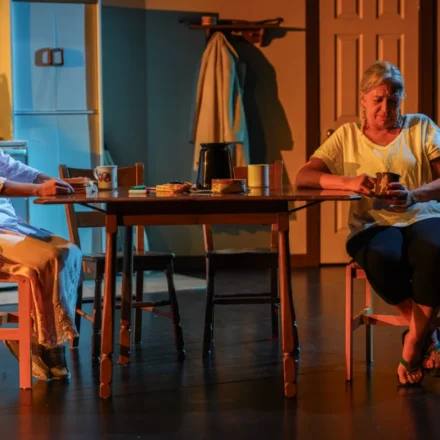
In the end, the Zephyr Theatre’s The Hobbit is a reminder that we do not need massive budgets or CGI-laden spectacles to be transported. We only need a compelling story, a commitment to inclusivity, and the courage to leave the comforts of our own "Hobbit holes" to see what the world—and our neighbors—can offer. As Bilbo learns, the world is a dangerous and wonderful place, and it is almost always better when you face it with a group of friends.