








































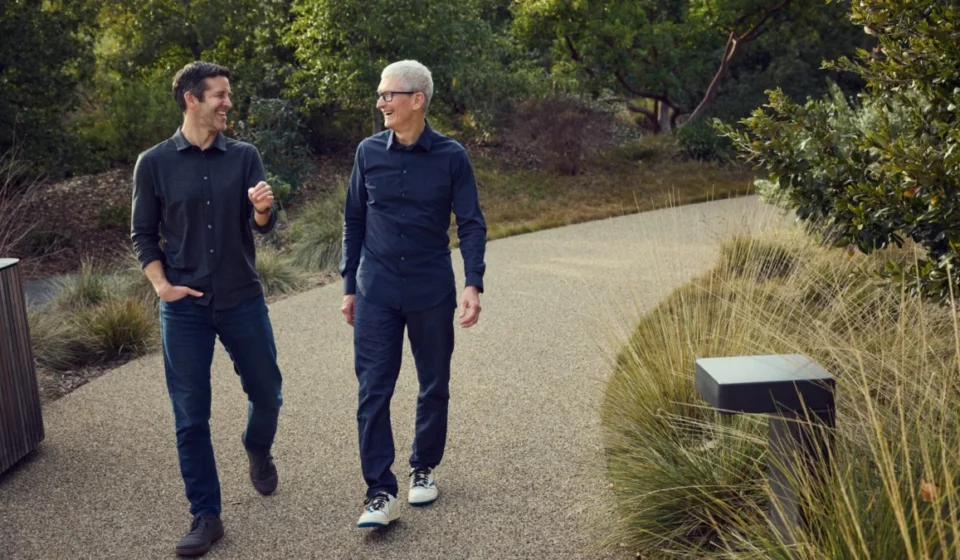
A New Era in Cupertino: John Ternus Takes the Reins as Apple Pivots Toward an AI-Driven Future

As the sun sets on the transformative tenure of Tim Cook, Apple stands at a pivotal crossroads. Tomorrow, the tech giant officially undergoes a "changing of the guard," with Tim Cook transitioning to Chairman of the Board and John Ternus stepping into the role of CEO. This succession marks more than just a shift in personnel; it signals the end of the "Operations Era" and the beginning of what many analysts expect to be a hardware-led, AI-infused renaissance for the world’s first $4 trillion corporation.
The Chronology of Transformation: From Jobs to Cook to Ternus
To understand where Apple is going, one must examine the distinct arcs of its leadership. When Steve Jobs, the quintessential visionary, handpicked Tim Cook to lead the company in 2011, the industry was skeptical. Critics argued that Cook, a logistics and operations specialist, lacked the "product soul" required to steer a company built on innovation.
Yet, history has been kind to the operational genius. Cook did not attempt to be a second Steve Jobs; instead, he built a global behemoth that redefined the company’s financial and ethical boundaries. Under his guidance, Apple moved from being a device-maker to a massive service provider, scaling from a $350 billion entity to a $4 trillion powerhouse. He steered the company through the global headwinds of the COVID-19 pandemic, successfully internalized chip production, and integrated essential services like Apple Pay and Apple Music into the daily lives of hundreds of millions.
Now, as the baton passes to John Ternus, the narrative shifts again. Ternus, a seasoned hardware engineering veteran, represents a return to the company’s roots. Having been groomed for this role over several years, he arrives as the company prepares to navigate the volatile, high-stakes waters of the Artificial Intelligence era.
Supporting Data: The Scale of the Apple Empire
The numbers behind the transition are staggering. Apple’s evolution under Cook was not merely in market capitalization, but in the fundamental shift of its revenue model.
- Financial Growth: The move from a $350 billion valuation to a $4 trillion valuation represents one of the most successful corporate growth strategies in history.
- The Power of Payments: Apple Pay has achieved a dominant 92% share among U.S. mobile wallet users, effectively displacing traditional cash and plastic-based payment systems in favor of a seamless, contactless ecosystem.
- Recurring Revenue: The transition to a service-based model ensures a predictable, monthly stream of income from hundreds of millions of users, insulating the company from the inherent volatility of hardware upgrade cycles.
- The Workforce Evolution: Ternus faces the challenge of managing a design department currently in a state of flux, following high-profile departures and the aggressive poaching of talent by competitors like OpenAI.
Defining Success: The "Product Guy" Mandate
One of the most persistent, albeit lazy, criticisms of Tim Cook was the refrain that he "wasn’t a product guy." This narrative ignored the massive success of the Apple Watch, the AirPods, the AirTag, and the architectural masterpiece that is the Vision Pro.
However, John Ternus is being presented to the public specifically as a "product guy." Colleagues describe him as collaborative, steady-handed, and obsessed with the minute details of product refinement. His challenge is unique: he must marry his hardware expertise with the urgent demand for AI integration.
The market expects a wave of AI-enabled products under his leadership, including rumors of a folding iPhone, a "20th-anniversary" glass iPhone slated for 2027, and a suite of smart home accessories that aim to turn the home into a fully integrated Apple ecosystem. There is a palpable pressure to prove that Apple has not lost its edge in the race for generative AI supremacy.
Official Stance and Internal Strategy
Apple has managed this transition with a surgical level of precision. By clearing the deck over the last few months—settling disputes with the European Union, making key adjustments to App Store fees, and signaling clear roadmaps for hardware innovation—Cook has provided Ternus with a clean slate.
The strategy is clear: Apple will pivot to become a "product innovation factory," with AI serving as the connective tissue that holds the hardware dream together. This will not be a passive transition. The ongoing, high-stakes litigation against OpenAI suggests that Apple intends to protect its ecosystem aggressively.
Cook’s presence on the executive board as Chairman ensures that his strategic and operational expertise remains available to Ternus, providing a safety net as the company maneuvers through politically charged waters and intensifying competition.
The Implications: Why "Stay Hungry, Stay Foolish" Matters More Than Ever
The broader implication of this change is that Apple is moving into a phase where the "measure of success" is once again in flux. Under Jobs, success was defined by revolution; under Cook, it was defined by scale and integration; under Ternus, it will be defined by the successful marriage of hardware and ambient AI.
We must avoid the trap of comparing Ternus to his predecessors. To judge him by the standards of the 2007 iPhone launch or the 2011 operational scale-up is to ignore the reality of the market in 2026 and beyond. Each era of Apple has faced its own unique "existential" threat, from the 1985 ousting of Jobs to the post-pandemic supply chain crises of the 2020s.
The true test for Ternus will not be whether he can "be" Steve Jobs or Tim Cook, but whether he can cultivate a culture that remains restless. In the world of technology, stagnation is the silent killer. As the company enters the Ternus era, the mantra "stay hungry, stay foolish" serves as a necessary reminder.
For the Apple faithful, the transition is a test of continuity. Can a company that has become a vast, global, and highly predictable financial machine recapture the "foolish" appetite for disruption that characterized its early days? Ternus appears to believe so. By doubling down on hardware and treating AI not as a product, but as an invisible, indispensable utility, he is betting that Apple’s future lies in the physical objects that consumers touch, wear, and carry every day.
As the board prepares for tomorrow’s change, the message to investors and consumers alike is one of continuity, not radical departure. The roadmap is set, the leadership is aligned, and the infrastructure is prepared. Now, it is up to John Ternus to determine what his own "revolutionary" contribution to the Apple legacy will be. Whether that takes the form of a foldable device, a new computing paradigm, or a fundamental shift in how we interact with our homes, the path forward is clear: Apple is not finished, and it is certainly not standing still.
The changing of the guard is complete. The next chapter of Apple’s story is about to be written, and if history is any guide, it will be a story that surprises even the most cynical of observers. In the end, the company’s greatest strength has never been its CEO, but its ability to evolve while remaining true to the core principle that the best way to predict the future is to build it yourself.