

















































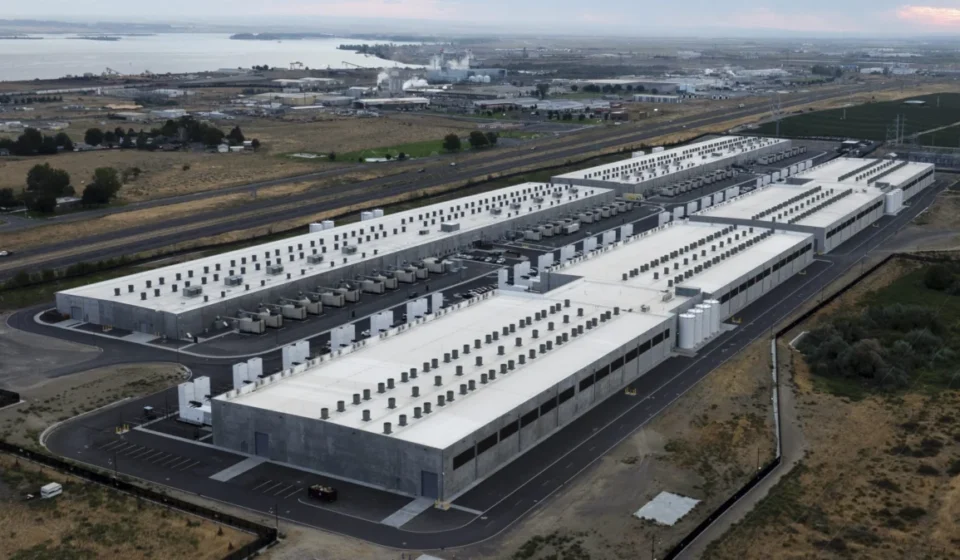

WASHINGTON D.C. – President Donald Trump’s recent characterization of communities resisting data center construction as desiring to be "backwards and poor" has ignited a fierce debate, placing several Minnesota Republicans in a precarious political position. What was once a localized land-use discussion has rapidly escalated into a defining issue for the 2026 midterm elections, revealing a significant disconnect between national political rhetoric and grassroots sentiment across the United States.
The President’s Unwavering Stance: "Golden Goose" and National Security
The controversy stems from President Trump’s robust defense of data centers, which he has lauded as a "Golden Goose" crucial for America’s economic future and national security. In a recent post on Truth Social, Trump emphatically declared, "The only reason that communities throughout the U.S.A. should not want Data Centers is if they want to end up being backwards and poor." His argument posits these facilities as indispensable cornerstones in the strategic artificial intelligence (AI) arms race against China, framing opposition as a threat to American innovation and global leadership.
This assertion underscores a broader narrative favored by proponents: that data centers are engines of progress, vital for technological advancement and job creation. The construction phase, in particular, often garners support from trade unions due to the significant, albeit temporary, employment opportunities it generates. This perspective aligns with a vision of robust digital infrastructure as a prerequisite for national competitiveness in an increasingly AI-driven world.
Public Sentiment: A Clear Rejection of the "Golden Goose"
However, public opinion surveys paint a starkly different picture, indicating a widespread skepticism that cuts across party lines. A recent Economist/YouGov Poll unveiled compelling data: over half of Americans surveyed perceive data centers as "bad," while only a mere 20% view them favorably. The opposition is particularly pronounced among Democrats, with 61% expressing negative sentiments about data center construction. While Republican respondents showed a more divided stance, a significant 39% still considered new data center development undesirable, compared to 31% who saw it as beneficial.
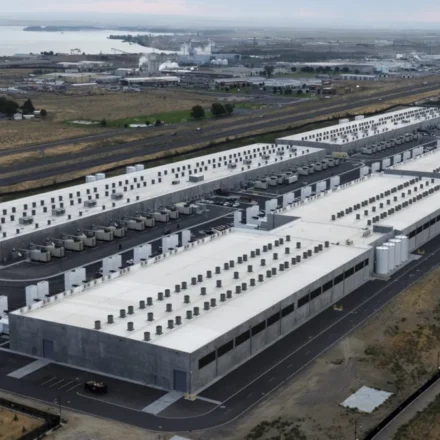
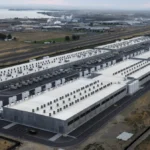
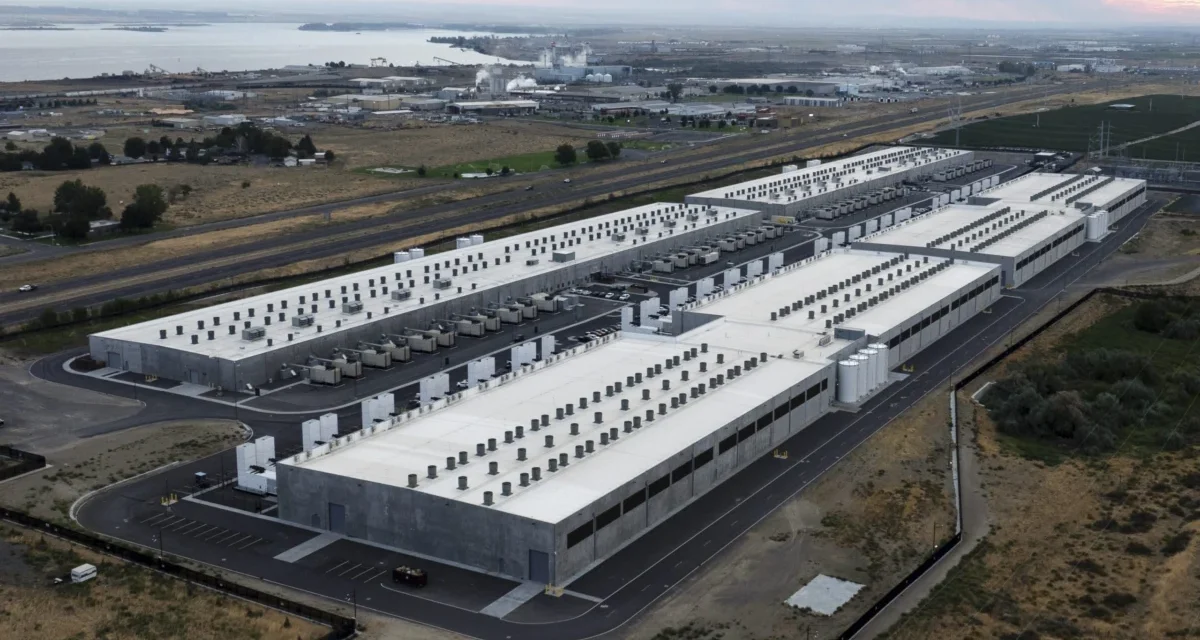
This growing backlash is rooted in tangible concerns that communities face when these massive facilities are proposed. Data centers are notorious for their voracious consumption of electricity and water, placing immense strain on local resources and infrastructure. Economists, including those at Brookings, have further dampened the "job creation" narrative by determining that the bulk of employment generated by data centers is concentrated in the short-term construction phase, with long-term operational jobs being comparatively few. This discrepancy between promised economic boons and actual community impact fuels much of the local resistance.
Minnesota Republicans Grapple with the Divide
President Trump’s unequivocal pronouncement has forced a moment of reckoning for Republicans, particularly in states like Minnesota, where numerous data center proposals are active in GOP-held congressional districts. The internal party division highlights the tension between national party loyalty and the imperative to address local constituent concerns.
Embracing the Trump Line:
Leading the charge in alignment with the President is Rep. Tom Emmer, R-6th District, a member of the U.S. House leadership. Emmer wasted no time in publicly endorsing Trump’s message, stating on X, "President Trump is absolutely spot on. Communist China and our adversaries would love it if the United States was asleep at the wheel and stopped innovating and developing AI and emerging tech. Thanks to President Trump’s work, the USA will be a digital LEADER!" Emmer’s district, which includes Monticello, a site of proposed data center development, reflects the national security and technological leadership arguments directly. His stance underscores a segment of the Republican party that prioritizes global competition and technological dominance, echoing the President’s vision without reservation.
Navigating a Nuanced Path: Local Control and Transparency:
Conversely, other Minnesota Republicans have adopted a more circumspect and nuanced approach, emphasizing local autonomy and transparency. They acknowledge the potential benefits of data centers but stress the critical importance of community self-determination.
Rep. Brad Finstad, R-1st District, whose southern Minnesota district encompasses proposed sites in Pine Island, Faribault, and North Mankato, articulated this balanced perspective. "The discussion around AI technology is one our country needs to have," Finstad stated. "Data centers, like those proposed in southern Minnesota, can play an important role in our economic future and national security, but the decision about whether a data center is right for a particular community should be made by the people and local leaders who know their communities best, not handed down by Washington through a blanket, one-size-fits-all approach that treats every community the same."
Finstad further emphasized the necessity of a comprehensive understanding of the projects’ impacts. He called for full transparency from companies regarding energy demands, environmental implications, true job creation figures, and potential tax benefits. This demand for clear, actionable information empowers local leaders and residents to make informed decisions rather than relying on broad, often generalized, assurances. The onus, he argued, rests on developers to be forthright about both short-term and long-term consequences.
State Senator Eric Pratt, a Republican vying for the seat of retiring Rep. Angie Craig, echoed Finstad’s call for a balanced approach. Pratt, while acknowledging the growing importance of domestic technology infrastructure and national security, firmly pushed back against any notion that local concerns should be dismissed. "Data centers are becoming an important part of our economy, our technology infrastructure, and our national security," Pratt said in a statement. "But that does not mean every proposed project belongs in every community, or that concerns from the people who live nearby should ever be brushed aside."
Pratt’s emphasis on local community engagement as central to the conversation reflects a pragmatic understanding of grassroots politics. While he does not support outright moratoriums on data center construction, he advocates for "resisting an all-or-nothing approach" and instead pursuing a deliberative process that respects local input. This cautious stance highlights the delicate tightrope many Republicans are walking, attempting to reconcile national party rhetoric with local anxieties.
The Democratic Counter-Offensive: Moratoriums and Accountability
The internal divisions within the GOP have created a fertile ground for Democratic challengers, who are seizing upon the data center issue with vigor, particularly in districts where proposals are contentious. Democrats are positioning themselves as champions of local communities, advocating for moratoriums, stricter regulations, and an end to non-disclosure agreements (NDAs) that shroud project details in secrecy.
Matt Little, the former Lakeville Mayor and Democratic rival to State Sen. Eric Pratt, has made data center accountability a cornerstone of his campaign. He has pledged to fight for moratoriums and bans on NDAs, condemning the practice of local officials signing agreements that prevent public scrutiny of development plans. This focus on transparency and public access to information directly addresses a key grievance among community activists.
Similarly, Jake Johnson, the Democratic challenger to Rep. Brad Finstad, has actively engaged with local opposition. Johnson joined a protest against a proposed data center in Pine Island in August, declaring, "I was proud to stand with the people of Pine Island to say that we don’t want this data center here until we know for sure that it will actually benefit our people and our communities." Johnson has also released a comprehensive "plan for stopping data center exploitation" in Minnesota, signaling a proactive and policy-driven approach to the issue. His plan likely delves into specific regulatory frameworks, environmental protections, and economic impact assessments.
Further north, Trina Swanson, a Democrat challenging Rep. Pete Stauber on the Iron Range, lives in close proximity to a proposed data center in Hermantown. Swanson has been a vocal critic of the lack of regulatory oversight, the extensive water usage, and the potential for increased energy costs for residents. Her condemnation extends to the NDAs signed by Hermantown officials, which she views as undermining public trust. "I want guardrails in place," Swanson asserted. "I want to understand how we’re going to prioritize our people over corporations like Google that paid zero dollars in federal taxes last year." Her remarks highlight the broader progressive critique of corporate power and the need for public interest to supersede corporate profits.
Legislative Battles and Lobbying Influence
The political intensity surrounding data centers is not confined to electoral campaigns; it has also played out in the Minnesota State Legislature. In 2025, lawmakers managed to approve a few regulations on the industry, a modest step towards addressing some concerns. However, more ambitious efforts to impose tougher rules, mandate comprehensive water permits, and ban local non-disclosure agreements faced significant headwinds and ultimately failed this year.
This legislative impasse can be attributed largely to robust lobbying efforts from industry groups, who argue that stringent regulations stifle innovation and deter investment. They often highlight the economic benefits and the state’s potential to become a digital hub. Interestingly, labor unions, particularly those representing construction workers, also played a role in opposing tougher regulations, prioritizing the short-term construction jobs that data center projects offer. This alliance of industry and certain labor factions underscores the complex political dynamics at play, where immediate economic gains can sometimes overshadow long-term environmental and community concerns.
Despite these setbacks, DFL State Senator Grant Hauschild, representing Hermantown, has continued to champion greater regulation. In a telling sign of the issue’s prominence, Hauschild’s first televised campaign ad focused squarely on data centers, touting his efforts to secure more stringent oversight. His direct message to voters – "I don’t work for data centers, I work for you" – encapsulates the populist appeal of standing up against large corporations and advocating for local residents.
The "Quiet Boom" in Data Center Advertising
The escalating political importance of data centers is further evidenced by a "quiet boom" in political advertising, as identified by AdImpact, a firm tracking trends in political ads. While Democratic campaigns have predominantly funded these ads, a notable 26% originate from Republican campaigns, with the majority of these GOP ads expressing opposition to local data center construction.
This advertising trend confirms that data centers are not merely a niche concern but a potent wedge issue capable of swaying voters. For Democrats, it offers an opportunity to contrast their community-first approach with what they portray as a corporate-friendly Republican stance. For Republicans, particularly those in swing districts or facing strong local opposition, it necessitates a careful navigation of their party’s national platform and the immediate concerns of their constituents. The fact that a significant portion of Republican ads are against data centers underscores the local pressure and the potential electoral cost of ignoring it.
Implications for the 2026 Midterms and Beyond
The debate over data centers is poised to be a significant factor in the 2026 midterm elections, particularly in states like Minnesota where local projects are numerous and public sentiment is galvanized. The issue highlights a broader tension between national economic and strategic imperatives and the principles of local control and environmental stewardship.
For the Republican Party, President Trump’s strong pro-data center stance has exposed an ideological fault line. While some, like Rep. Emmer, wholeheartedly embrace the "digital leader" narrative, others, like Reps. Finstad and State Sen. Pratt, are compelled to prioritize local concerns and advocate for transparency and community self-determination. This internal struggle could prove challenging in competitive districts, where candidates risk alienating either the party base or crucial swing voters.
Democrats, meanwhile, have found a potent issue to rally their base and appeal to independents. By advocating for moratoriums, stricter regulations, and greater transparency, they position themselves as defenders of local communities against powerful corporate interests. The ability to frame data centers as a symbol of corporate overreach and environmental neglect provides a clear contrast with their opponents.
Beyond the immediate electoral cycle, the data center debate signals a growing public awareness and demand for accountability from large technology companies. As AI and digital infrastructure continue to expand, the questions of resource consumption, environmental impact, job quality, and local autonomy will only intensify. The 2026 midterms may serve as an early indicator of how successfully politicians can bridge the gap between the promise of technological progress and the imperative of sustainable, community-centric development. The outcome in Minnesota, with its diverse political landscape and active data center proposals, will undoubtedly offer valuable insights into this evolving national conversation.