



























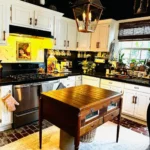


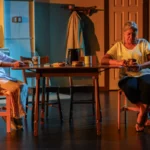











At Rocco’s Pub and Pizza in Goodview, Minnesota, a conspicuous void now occupies the wall space near the jukebox. A large, rectangular patch of discolored paint marks the former home of "Coming In" (1972), an idyllic landscape painting of ducks and marshlands by the late artist Ron Hunt. For decades, the piece served as a silent witness to the daily rhythms of the restaurant, a gift from the artist to founder Tom Barth. Today, that space is occupied by an official-looking plaque bearing the logos of both the restaurant and the Minnesota Marine Art Museum (MMAM).
The painting is not missing in the traditional sense; it is currently on "official loan" to the museum in Winona, accompanied by two tables and three booth seats from the establishment. This migration of local furniture and art is the centerpiece of Home(town), an ambitious, sprawling installation by Minneapolis-based artist Andy DuCett. By physically transplanting the mundane artifacts of local life into the sterile, curated environment of a museum, DuCett is conducting a profound, playful, and occasionally subversive investigation into the nature of community, history, and the power of institutions to define our sense of place.
The Geography of Memory: A Chronology of the Project
The conceptual roots of Home(town) extend well beyond the current exhibition. DuCett has long been fascinated by the friction between reality and institutional artifice. In 2024, as part of the MMAM’s Fluid: What Is Marine Art, and What Can It Be? exhibition, DuCett debuted "On Loan" (2019). The piece referenced a fictional entity, "The South London Museum of Maritime Kinetics," and featured a gilded landscape painting that rocked back and forth through a kinetic mechanism, mimicking the motion of a ship at sea.
That early experiment in institutional satire set the stage for the current endeavor. Home(town), which opened in late 2026, functions as a wider "codification" of Winona’s past, present, and future. Through the deliberate blurring of boundaries between real-world landmarks and fictionalized agencies, DuCett has invited the audience into a collective narrative.
The timeline of the exhibition’s development reflects a deep-seated collaboration with the local community. Throughout 2025 and 2026, DuCett worked with residents, local business owners, and fellow artists to gather the "found objects" that constitute the exhibition. By the time the gallery doors opened in the fall of 2026, the museum had been transformed into a map of the region, populated by the very items—from Zambonis to neon beer signs—that define the Winona experience.
Supporting Data: The Anatomy of an Installation
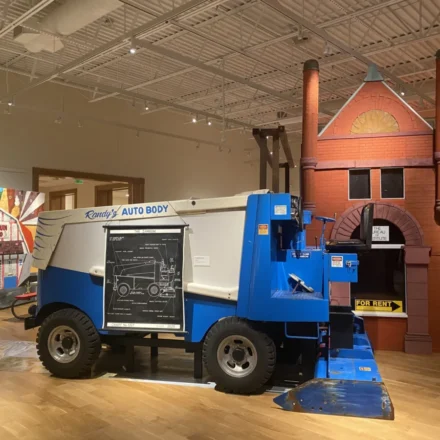
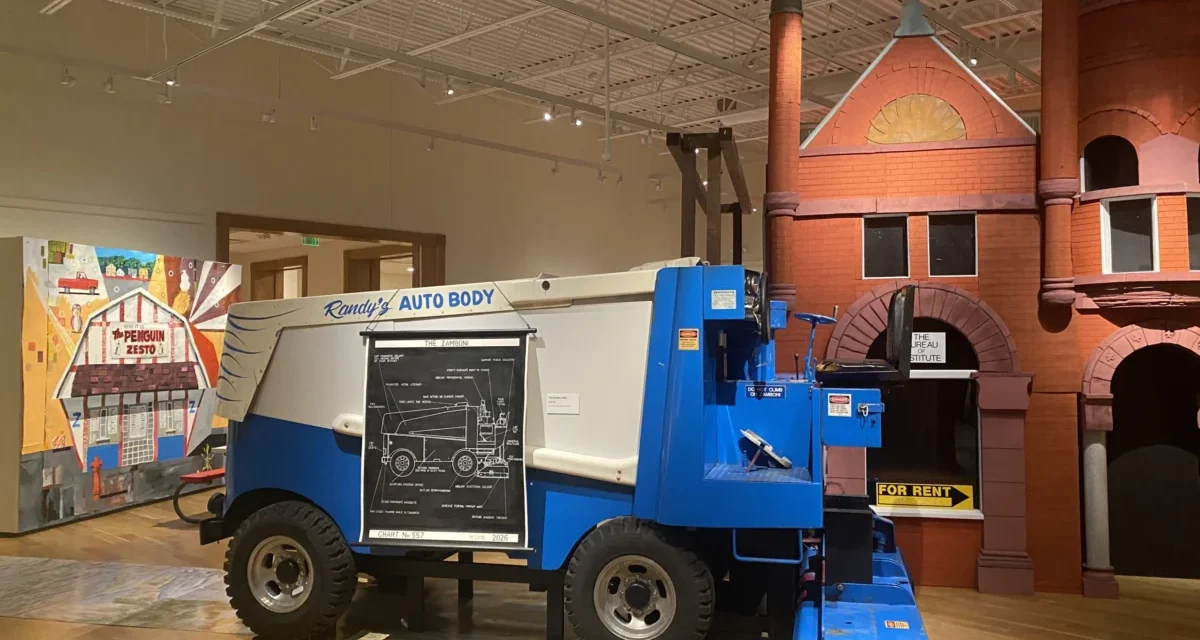
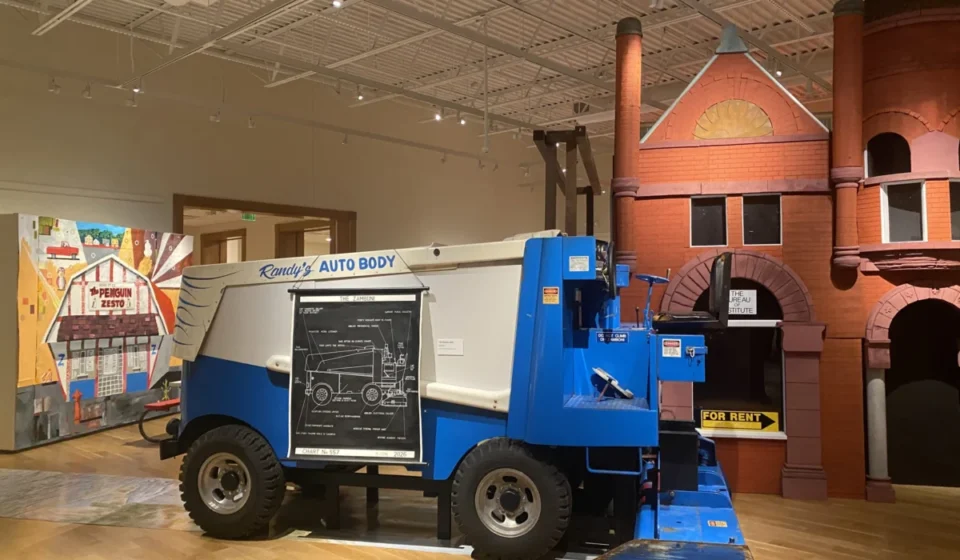
The Home(town) exhibition is a dense, multi-layered experience that resists easy categorization. Upon entering, visitors are greeted not by traditional gallery pedestals, but by an actual, functioning Zamboni. This heavy-duty machine, typically tasked with smoothing the ice at local hockey rinks, serves as the exhibition’s anchor.

The Zamboni as Political Manifesto
The machine is not a static display. It appears to be "polishing" or discharging a hand-drawn map by artist Allen Brewer, which illustrates a whimsical route from Winona to the headwaters of the Mississippi River at Lake Itasca. Even more striking is the collaborative work of artist Mark Dion, who applied a diagram to the side of the machine. The diagram identifies the Zamboni’s components as metaphors for transformative political actions. A tire is labeled "Overturn Citizens United," while other parts instruct viewers to "Abolish the Electoral College," "Codify Women’s Right to Choose," and "Enact Term Limits for SCOTUS."
The Bureau of Institute
Adjacent to the Zamboni sits a structure replicating the historic architecture of downtown Winona. Complete with a "For Rent" sign, the structure houses the "Bureau of Institute," a nonsensical, Kafkaesque agency that pokes fun at bureaucratic overreach while simultaneously hinting at the potential for future community-led projects. According to museum staff, this "building" will host rotating businesses throughout the exhibition’s run, ensuring the installation remains a living, breathing entity.
The Rocco’s Corner
Perhaps the most intimate section of the exhibit is the reconstruction of the Rocco’s Pub and Pizza corner. It is a faithful recreation of the restaurant’s aesthetic, complete with the glowing Old Style lanterns, a neon Miller Lite sign, and the original booth seats from the Goodview location. When sitting in these booths, the sensory experience is disorienting; one feels the urge to order a thin-crust pizza rather than contemplate the art on the walls. The presence of Hunt’s "Coming In" above the booth serves as a bridge between the local, lived-in reality of the pub and the elevated status of the museum.
Official Perspectives and Community Engagement
The Minnesota Marine Art Museum has historically focused on the traditional maritime arts—boats, seascapes, and oceanic exploration. Home(town) represents a strategic pivot for the institution, as it explores what "marine art" can mean in a river-bound, inland city like Winona.
By incorporating local institutions like the Winona Athletic Club—which is integrated into an upcoming participatory bingo game—and the multi-generational Penguin Zesto ice cream shop, the museum is signaling a commitment to local lore. Artist Carolyn Swiszcz contributed to this effort by creating a vibrant mural and a zine documenting the history of Penguin Zesto, including its iconic, long-gone giant ice cream sculpture.
These collaborations serve a specific function: they legitimize the mundane. By placing a local ice cream shop’s history alongside fine art, the exhibition suggests that the memories of a community are as worthy of preservation as any historical artifact.

Implications: Who Owns Our History?
The overarching question posed by Home(town) is one of ownership. Who has the authority to define a community’s history? When a painting is moved from a local pizza parlor to a museum, it undergoes a transformation of value. It ceases to be merely a decoration for hungry diners and becomes a "work of art."
DuCett’s work is a masterclass in "mythogeography"—a way of mapping a place through the stories, dreams, and memories of its inhabitants. By layering irony and satire over genuine affection for the region, DuCett challenges the viewer to look at their surroundings with fresh eyes. The "frantic energy" of the exhibit is a reflection of the frantic nature of modern identity in a rapidly changing world.
The installation is not just a tribute to Winona; it is an instruction manual for how to survive in it. It suggests that even in a world of declining local industry and shifting demographics, a community can reclaim its identity by curating its own stories. The "For Rent" signs and the "Bureau of Institute" serve as reminders that the future of the city is not a fixed point, but a blank space waiting for someone to claim it.
Conclusion
As Home(town) continues its run at the Minnesota Marine Art Museum, it serves as a powerful reminder of the intersection between art and daily life. Whether it is the rhythmic scraping of the Zamboni or the silent, displaced beauty of Ron Hunt’s ducks, the exhibition demands that we acknowledge the significance of the "everyday."
For those who wish to engage directly with the artist, Andy DuCett will host a "Meet the Artist" event on Saturday, Oct. 3, at 10:30 a.m. The event is part of the museum’s larger "Fall Look Weekend," providing a unique opportunity to discuss the future of the Bureau of Institute and the ongoing evolution of Winona’s cultural landscape. In a world that often ignores the local in favor of the global, Home(town) is a necessary, if slightly mad, return to the roots of what makes a place a home.