























































As Governor Tim Walz enters the final months of his administration, his Department of Natural Resources (DNR) has taken a decisive, albeit surgical, step in the decades-long conflict over the future of the Boundary Waters Canoe Area Wilderness (BWCAW). By moving to cancel a state mineral lease held by a subsidiary of Twin Metals Minnesota, the administration is not merely addressing a single plot of land—it is establishing a legal and procedural blueprint that will constrain the options available to future governors.
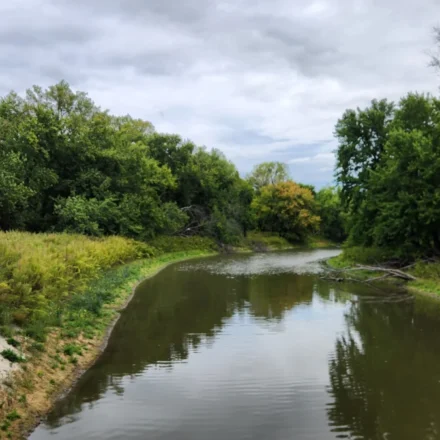
While the canceled lease represents a relatively small footprint of 242 acres near the Birch Lake Reservoir, the implications of the DNR’s decision resonate far beyond the rocky terrain of northeastern Minnesota. It serves as a test case for how the state can leverage its administrative authority to protect the watershed from nonferrous mining, even as political winds in Washington and St. Paul shift.
The Core Conflict: A Blueprint for Preservation
The DNR’s decision to cancel the lease in November follows an aggressive strategy initiated by the Walz administration, including a high-profile executive order aimed at shielding the BWCAW watershed from copper-nickel mining. While neither the executive order nor the lease cancellation serves as a terminal blow to the mining industry’s aspirations in the region, they act as critical "guardrails."
By exercising its right to terminate a lease that has remained dormant—or at least un-developed—the state is signaling that the era of speculative mineral holding may be coming to an end. This action provides a template for future administrations: if a company fails to move from the exploration phase to active development or fails to generate the promised royalties within a specified timeframe, the state has the legal justification to rescind those rights.
For environmental advocates, this is the opening move in a long-term strategic game. With other leases scheduled for review in 2035, 2036, 2037, and 2043, the DNR’s recent move suggests that the state is prepared to play the long game, slowly eroding the mining industry’s land-holding portfolio through administrative attrition.
Chronology of the Dispute: A Decades-Long Struggle
The struggle over mining in the Rainy River watershed is not a recent phenomenon. For decades, global mining interests have viewed the Duluth Complex—a massive copper-nickel-platinum group metal deposit—as a potential economic engine for the Iron Range.
- The Exploration Phase: Since the late 20th century, various companies have circled the Boundary Waters, acquiring mineral leases through state auctions. Many of these leases were obtained with the hope that technological advancements or shifts in political climate would eventually permit large-scale extraction.
- The Federal Back-and-Forth: The project has been subject to intense federal scrutiny, with administrations oscillating between support and opposition. The Trump administration famously overturned federal protections that had been put in place during the Obama years, attempting to breathe new life into the Twin Metals project.
- The State’s Pivot: Under Governor Walz, the state has taken a more restrictive stance. The recent executive order banning copper-nickel mining in the watershed was a direct response to the perceived threat that mining runoff poses to the pristine waters of the Boundary Waters.
- The November 2024 Action: The DNR’s move to cancel the specific 242-acre lease near Babbitt represents the transition from broad executive policy to specific, actionable administrative law. By citing the company’s failure to meet development milestones, the state has shifted the burden of proof back onto the leaseholders.
Supporting Data: Understanding the Land and the Leases
To understand why this specific lease cancellation is significant, one must distinguish between active project sites and speculative holdings.
The 242 acres in question are located near the Birch Lake Reservoir. Crucially, Twin Metals has clarified that this specific tract was not part of its primary, current development plans. This has led some critics of the DNR’s move to label it a "symbolic gesture" rather than a substantive barrier to mining. However, such a perspective ignores the administrative reality of land management.
If the state allows dormant leases to remain in perpetuity, it essentially grants mining companies a "right of first refusal" on public land for decades. By cancelling the lease, the DNR is clearing the board. Furthermore, the state’s mineral lease system is governed by a "put up or shut up" clause. Applicants are granted rights on the condition that they eventually develop the land or pay significant royalties. When these conditions are not met, the state has a fiduciary duty to evaluate whether the lease continues to serve the public interest.
Official Responses: A Clash of Philosophies
The response to the DNR’s decision highlights the deep divide between environmental protectionists and those prioritizing the economic revitalization of the Iron Range.
The Environmental Perspective
Chris Knopf, executive director of the Friends of the Boundary Waters, views the cancellation as a pivotal moment. "Canceling this lease is a crucial first step," Knopf stated. "It sets a precedent that could lead to the state canceling Twin Metals’ remaining state leases in the coming years." For Knopf and his allies, the move is a necessary check against a company that has spent years attempting to navigate the complex web of state and federal regulations.
The Corporate Stance
Twin Metals Minnesota, meanwhile, has expressed deep disappointment, framing the decision as an infringement on the constitutional purpose of School Trust Lands. In a formal statement, the company noted, "We have invested considerable resources into exploring the minerals associated with this site. The canceled lease is also located on School Trust Lands, which are established in the Minnesota Constitution to fund every K-12 school district in the state and are intended to maximize revenue generation over the long term."
Twin Metals emphasizes that they have spent 16 years conducting geological, environmental, and engineering studies. They argue that the state’s decision is not just an environmental policy choice, but a financial one that potentially deprives Minnesota’s public schools of future royalty revenue.
Implications: School Trust Lands and the Ballot Box
The debate has taken on a new dimension due to the upcoming ballot initiative regarding School Trust Lands. These lands are specifically managed to generate revenue for the state’s permanent school fund. Because mining, timber, and other extractive industries are traditional sources of income for these lands, the question of whether to prioritize environmental protection or revenue generation is currently front-and-center for Minnesota voters.
Twin Metals’ argument that the lease cancellation hurts schools is strategically designed to resonate with voters who are concerned about education funding. However, the state’s position is that the "long-term" health of the fund relies on a balanced approach—one that does not risk the environmental destruction of one of the state’s most valuable natural assets, the Boundary Waters.
As the state moves forward, the implications are clear:
- Legal Precedent: The DNR has established that it will enforce development timelines rigorously. Any company holding a lease that remains dormant beyond its reasonable development period is now at risk of losing that asset.
- The "Watershed" Defense: The state’s willingness to use its executive powers to protect the watershed suggests that future environmental reviews will be significantly more stringent.
- The Political Transition: By setting these precedents now, Governor Walz is effectively "locking in" a protective framework. His successor will inherit a state policy that is significantly more hostile to mining in the Boundary Waters than it was ten years ago.
Conclusion: A Delicate Balance
The cancellation of the 242-acre lease near Birch Lake is a microcosm of the larger struggle for Minnesota’s future. It pits the economic promise of the Iron Range against the ecological imperative of preserving the Boundary Waters.
While Twin Metals remains committed to its goal of developing an underground mine, the path forward has become significantly more treacherous. The DNR’s actions demonstrate that the state’s regulatory apparatus is no longer a passive observer in the mining process. Instead, it is an active participant, capable of using both executive mandates and contractual enforcement to shape the landscape of northern Minnesota.
As voters weigh in on the constitutional status of School Trust Lands and the state prepares for a change in leadership, the future of the Boundary Waters remains, as it has for decades, in a state of high-stakes flux. One thing is certain: the administrative barriers to mining have never been higher, and the precedent set by the Walz administration will serve as the baseline for all future debates on the matter. The "long game" continues, and the battle over the Birch Lake reservoir is merely the latest chapter in a story that defines the state’s relationship with its most precious natural resource.