




















































For over four decades, the Minnesota State Grant Program has stood as the bedrock of higher education access in the North Star State. Designed to be the "great equalizer," it has provided thousands of students—many from low-income families and diverse backgrounds—with the financial leverage necessary to pursue degrees and escape the cycle of poverty. However, this critical safety net is currently fraying. As the state grapples with a persistent $131 million budget shortfall, thousands of students are facing the harsh reality of diminished support, leaving many to wonder if the promise of an affordable education is being quietly retracted.
The Human Cost of Fiscal Policy
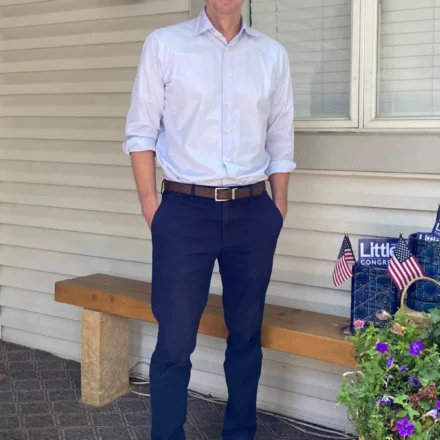
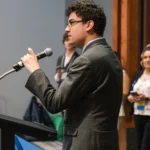
Nineteen-year-old Aaron Eischen is the face of this systemic uncertainty. A student at Dakota County Technical College, Eischen is currently juggling a rigorous course load in graphic design with the demanding shifts of a job at Sam’s Club. For Eischen, the state grant wasn’t just a bonus; it was a cornerstone of his financial planning. Last year, he received approximately $2,900 in aid, which, when combined with federal Pell Grants and state work-study programs, allowed him to pursue his dream without the crushing weight of excessive student debt.
"Stripping away that aid would be devastating to a lot of students," Eischen says. He is not alone in his anxiety. Across Minnesota, tens of thousands of students are bracing for the fallout of a $131 million deficit that the state legislature failed to bridge during the most recent session. It marks the fourth consecutive fiscal year that the program has faced a significant shortfall, exposing deep-seated structural issues and a lack of bipartisan consensus on how to ensure the program’s long-term survival.
A Chronology of Crisis: How the Deficit Grew
The current crisis is not a sudden accident but the culmination of several converging pressures. Historically, the State Grant Program functioned reliably, but recent years have seen a massive surge in demand. Since 2023, the Office of Higher Education has processed an influx of nearly 27,000 additional applications.
This surge is largely driven by two factors: a rebound in college enrollment and changes to the federal Pell Grant formula. Because Minnesota’s state aid eligibility is tied directly to the federal Pell Grant, any expansion at the federal level triggers a ripple effect, increasing the number of students who qualify for—and the amount of money needed by—the state program.
The financial timeline is stark:

- 2023-24 Academic Year: The Office of Higher Education was forced to pivot, covering a $9 million deficit by shifting internal funds.
- 2024-25 Fiscal Year: A mounting shortfall prompted the state to eliminate grant eligibility entirely for over 8,400 students.
- Spring 2025: Legislators scrambled to close a $239 million hole. They injected $44.4 million in new funding but forced further austerity measures, including reducing the number of college credits the program would cover.
- Current Fiscal Year: Despite those measures, costs have again outpaced resources, resulting in the current $131 million deficit.
Supporting Data: The Scale of the Impact
The numbers paint a bleak picture of the upcoming academic year. State officials estimate that approximately 80% of current grant recipients will see their aid levels cut. Data indicates that about one-third of all recipients are projected to lose $1,000 or more from an average award that was already modest at $2,927. Even more concerning, between 17,000 and 20,000 students could find themselves completely ineligible for the grant, effectively losing their primary bridge to higher education.
The demographics of the impacted population underscore the equity concerns. More than half of the grant recipients in the 2025 fiscal year come from families earning less than $40,000 annually, and nearly half identify as students of color. These are the students for whom a few hundred dollars can mean the difference between remaining in school and dropping out.
Official Responses and Political Gridlock
The legislative reaction has been characterized by finger-pointing and a failure to reach a comprehensive agreement. Sen. Zach Duckworth (R-Lakeville) has characterized the program as "hobbling along," arguing that without drastic structural changes, the cycle of deficits will continue indefinitely.
Governor Tim Walz proposed a recalibration of how student financial need is calculated to save roughly $38 million. However, the proposal faced sharp criticism from legislators like Rep. Jessica Hanson (DFL-Burnsville), who argued that such a move would be equivalent to "pulling out the rug from underneath poor students."
Other proposals have further divided the aisle. Republicans have suggested restricting the "North Star Promise" program—a newer initiative that covers remaining tuition costs for students—in order to redirect funds back into the general grant pool. Democrats, meanwhile, have defended the North Star program as vital for reducing equity barriers, with some suggesting that the real solution lies in reducing aid to private for-profit institutions, a proposal that has failed to gain traction.
Meghan Flores, who oversees financial aid programs for the Office of Higher Education, admits the difficulty of the situation. "It’s very difficult when we know there are capable, smart, talented students in our communities that want to go to our colleges, and that have legitimate need for help… and we don’t have enough dollars to give."

Implications for the Future
The long-term implications of this funding gap are profound. A 2024 state report revealed that nearly 40% of Minnesota undergraduates struggle to afford basic necessities like food, housing, and healthcare. When financial aid is cut, these students are the first to feel the impact.
Scott Olson, chancellor of the Minnesota State system, which serves the vast majority of these students, warns that the shortfall will have a "big effect" on overall affordability. "You see people raising tuition, and then that puts the pressure on financial aid," Olson notes. When the state fails to fully fund higher education, the costs are pushed onto the institutions, which then raise tuition, further inflating the cost that the state must eventually subsidize.
BG Tucker, executive director of the nonprofit College Possible Minnesota, emphasizes the moral and economic stakes. "How can you say we’re going to open the door, but you might not be able to afford it?" she asks. "That feels like a disingenuous offer."
Conclusion: A System in Need of Rethinking
As Aaron Eischen continues his studies, he remains a vocal advocate for his peers. He recently learned his own aid would decrease by only $215—a relief, yet a reminder of how fragile his academic path remains. His work with the student organization LeadMN involves constant meetings with lawmakers, pleading for a sustainable funding model.
The state is currently studying ways to redesign its financial aid system to ensure long-term sustainability, but any legislative change remains a distant prospect. For now, thousands of students are left in a state of suspended animation, waiting to see if their state government will honor its long-standing commitment to their future. As the gap between the promise of education and the reality of funding widens, the risk is not just a temporary budget deficit—it is the potential loss of a generation of talent that the state can ill afford to alienate. Whether the legislature will move past partisan friction to address these structural failures remains the defining question for the future of higher education in Minnesota.