




















































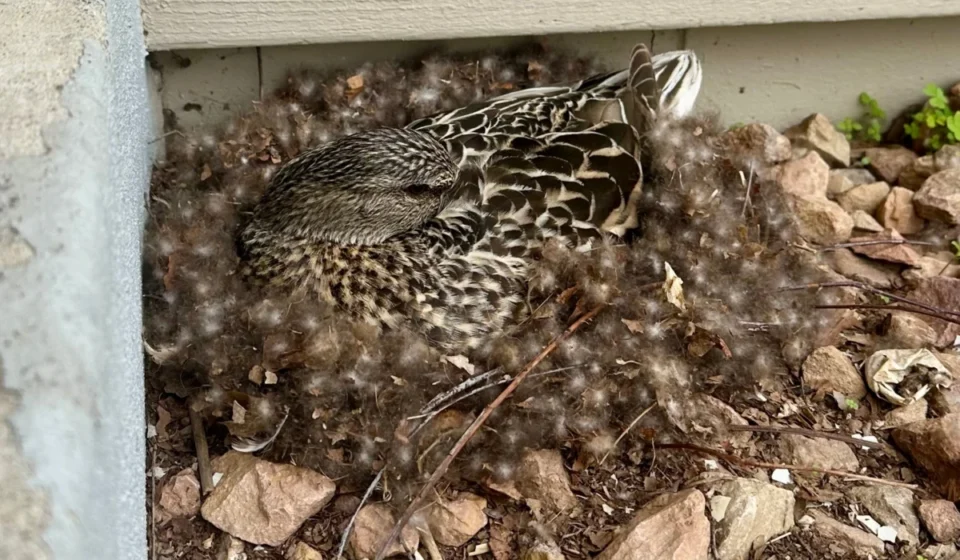

As the frost of winter recedes and the vibrancy of spring takes hold, the suburbs of the Midwest and beyond undergo a quiet transformation. For homeowners, this season brings more than just the first blooms of tulips or the return of migrating songbirds; it marks the beginning of a delicate, often high-stakes period of coexistence between humans and the animal kingdom.
In a quiet, tree-lined suburb of Eagan, Minnesota, Caitlin Deal has experienced this firsthand for four consecutive years. Every spring, a female mallard—affectionately dubbed "Martha" by the family—returns to the same spot behind a shrub near their front door to build her nest. For the Deal family, the presence of the duck has become a seasonal milestone, offering a profound, up-close education in natural history for Deal’s young son, Owen, whose very first word was, fittingly, "duck."
While the image of a duck nesting on a suburban porch is charming, it serves as a microcosm for a broader, nationwide phenomenon. From urban centers to rural fringes, wildlife—ranging from small songbirds and rabbits to deer, elk, and even alligators—are increasingly selecting human-occupied spaces to bear their young. As human development continues to encroach on natural habitats, understanding how to navigate these interactions safely and ethically has become an essential skill for the modern homeowner.
The Seasonal Surge: Why Animals Choose Our Backyards
The arrival of spring triggers a biological imperative across the animal kingdom. Whether it is the warming soil or the availability of early-season forage, the vernal equinox signals that it is time for reproduction. However, the definition of an "ideal" nesting site is often subjective. To a mallard, a dense bush near a porch offers protection from predators; to a white-tailed deer, the seclusion of an air-conditioning unit in a quiet yard provides a perfect nursery for a vulnerable fawn.
Experts note that this trend is not necessarily an indication of animals losing their fear of humans, but rather an adaptation to the changing landscape. "Spring is when wildlife—everything from birds to deer—bear their young, often in locations that provide protection from the elements or larger predators," says Brittney Yohannes, a spokesperson for the Wildlife Rehabilitation Center of Minnesota (WRCM).
For the Deal family, the experience has been one of mutual respect. "It feels nice that she trusts that area, that she trusts us to be able to come back year after year," Deal explains. By modifying their own behavior—such as keeping their dog, Piper, strictly on a leash to avoid startling the nesting mother—the family has successfully navigated the month-long incubation period, allowing Martha to raise her ducklings until they toddle away around Mother’s Day.
Chronology of a Nesting Season
The cycle of a typical suburban nesting season generally follows a predictable pattern, though it varies by species:

- Early Spring (March–April): Birds, rabbits, and small mammals begin scouting locations. This is the period of "site selection." Homeowners often notice increased activity in sheds, under decks, or in thick landscaping.
- Mid-Spring (April–May): Egg-laying and incubation occur. During this time, the parent—usually the female—is most sedentary and vulnerable. For species like mallards, this lasts approximately 28 to 30 days.
- Late Spring (May–June): Hatching and the "fledging" or "weaning" period. This is the time of highest activity, where parents are constantly foraging and bringing food back to the nest.
- Early Summer (July): The young leave the nest, and the site is vacated.
The critical takeaway for homeowners is the ephemeral nature of these residents. As Yohannes emphasizes, "One of the best pieces of advice I can give is just understanding that that period of coexisting with this nest or this family will be temporary."
Supporting Data: When to Intervene and When to Wait
A common mistake made by well-intentioned citizens is "rescuing" animals that do not need saving. A classic example involves deer fawns. A fawn curled up in a garden bed may appear abandoned, but it is almost certainly under the watchful, if distant, eye of its mother.
"That is to protect the fawn—to leave it there, sometimes hours at a time—but the doe will come back," explains Beth Quillian, a spokesperson for the Oregon Department of Fish and Wildlife. "It is natural and normal."
Wildlife experts suggest that the "leave it alone" approach should be the default. In the case of rabbits—among the most common species to nest in residential lawns—the WRCM recommends a simple, non-invasive solution: place a laundry basket over the nest during the day to prevent pets from disturbing it, and remove the basket at dusk to allow the mother to return and feed her young.
Official Guidance: Navigating Legal and Physical Risks
While coexisting is often a fun and educational experience, it is not without risks. Wildlife, by definition, is unpredictable.
The Aggressive Protectors
Not all nesting animals are as docile as the mallards in Eagan. Conservationists warn that species like Canada geese and swans are notoriously territorial. John Coluccy, a representative from the conservation group Ducks Unlimited, notes that these birds "protect their reproductive investment very vigorously." A goose can easily knock an adult to the ground, causing significant injury. Similarly, in regions where elk or deer are common, mothers can become dangerous if they feel their offspring are threatened.
Alligator Caution
In the southeastern United States, particularly Florida, the nesting season brings unique challenges. Female alligators build large nests of vegetation near water sources, including man-made retention ponds. Because they guard these nests fiercely, the Florida Fish and Wildlife Conservation Commission advises keeping dogs on leashes and strictly away from any shoreline where a mound of vegetation might be located.

Legal Protections
It is also vital to remember that in the United States, most native birds are protected under the Migratory Bird Treaty Act. Removing a nest that contains eggs or chicks can be a federal offense. Homeowners who find a nest in an inconvenient location—such as a dryer vent or a porch light—should consult their local wildlife agency before taking any action.
Implications: Building a "Safety Net" for Wildlife
When wildlife takes up residence in spots that are genuinely incompatible with human activity—such as inside a boat or beneath the foundation of a home—there are humane ways to encourage them to move. Tami Vogel, executive director of the Wildlife Rehabilitation Center of Minnesota, suggests using light and noise to make the location "unattractive" to the parent, rather than trapping the animals.
"Installing a shop lamp to flood the area with light will often cause a mother to move her young within a couple of days," Vogel says. This approach allows the family to relocate naturally, without the trauma of physical handling or the risk of family separation.
The broader implication of these interactions is the development of a "wildlife-literate" society. By educating the public on how to distinguish between a truly injured animal and one that is simply "wilding," centers like the one in Minnesota act as a vital safety net.
"We want them to know we’re here as a safety net," Vogel explains, noting that the goal is for neighbors to share these lessons. When one family successfully hosts a litter of rabbits or a brood of ducks, they become local experts, passing that wisdom on to others.
Conclusion: The Value of Coexistence
As our communities continue to expand, the opportunity for human-wildlife interaction will only increase. While it requires patience, caution, and occasionally a bit of inconvenience, the rewards of watching a new generation of wildlife emerge in our own backyards are immense.
For Caitlin Deal and her son, the mallard nest has become a source of wonder and a lesson in patience. By respecting the boundaries of the natural world, we do more than just avoid conflicts; we preserve the fragile connection between our lives and the ecosystems that surround us. In the end, the most profound lesson of the nesting season is that nature doesn’t need us to "manage" it—it simply needs us to give it the space to exist alongside us.