

























































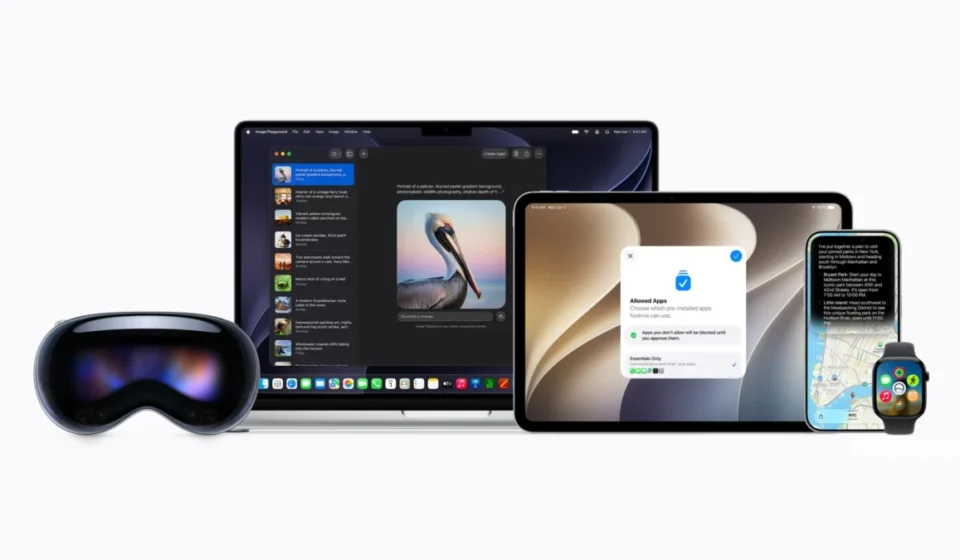

As the global tech community turns its eyes toward Apple’s latest hardware cycle, the real story for millions of existing users is unfolding today on their current devices. The international rollout of iOS 27 marks a definitive pivot for Apple, moving away from incremental updates and toward a fully integrated, AI-driven ecosystem. As part of the broader 27-series OS family, this release isn’t just a patch; it is a fundamental reimagining of how users interact with their mobile hardware.
For those hesitant to initiate the download, the evidence is compelling. From performance benchmarks that breathe new life into older handsets to deep-learning integrations that change the way we manage time and data, iOS 27 is a significant milestone in software engineering.
Main Facts: The Core Pillars of iOS 27
At its heart, iOS 27 is built on three core pillars: Efficiency, Intelligence, and Control.
The update brings a noticeable shift in how the OS handles system resources. By optimizing background processes and leveraging new architecture, Apple has achieved a reported 30% increase in app launch speeds. Furthermore, the integration of Apple Intelligence—the company’s proprietary generative AI—is no longer a theoretical feature but a functional suite of tools designed to assist in daily tasks, from drafting shortcuts to automating Safari extensions.
Crucially, this release also prioritizes security and family safety, introducing a robust suite of parental controls and automated credential management that makes digital hygiene significantly easier for the average user.
Chronology: The Road to the Intelligent Hub
The journey to iOS 27 began with a strategic shift in Apple’s internal development focus late last year.
- Early Development: Throughout the winter, rumors swirled regarding a "smarter" Siri, as Apple’s internal teams raced to counter the rapid advancement of Large Language Models (LLMs) in the consumer space.
- The Beta Phase: By mid-year, the public beta program confirmed that Apple was not just tweaking the UI, but rebuilding the OS intelligence layer from the ground up. Users reported that the early builds were surprisingly stable, signaling a shift in Apple’s quality control philosophy.
- The Global Rollout: Today, at 10:00 AM PDT, the gates opened. The simultaneous release across the 27-series OS family ensures that Apple’s ecosystem—from iPhone to iPad and Mac—remains unified, a key competitive advantage in a market increasingly fragmented by competing AI standards.
Supporting Data: By the Numbers
The performance gains in iOS 27 are not merely anecdotal; they are backed by significant architectural overhauls:
- App Launch Latency: Through refined memory management, apps now initialize up to 30% faster than under iOS 26.
- Connectivity Throughput: AirDrop transfers, a staple of the Apple ecosystem, have seen a near-doubling in speed, drastically reducing the time required to move high-resolution video files between devices.
- The "Handoff" Efficiency: The new eSIM Handoff feature allows for seamless switching across two devices. In testing, the activation latency upon unlocking a secondary device is negligible, effectively turning two iPhones into a singular, flexible workstation.
- The "Unread" Reality: While the Mail app has been optimized for faster indexing and search accuracy, the sheer volume of digital noise remains a hurdle. Even with improved Spotlight suggestions, the update serves as a reminder that tools can only go so far in managing human habits.
Official Responses and Strategic Context
Apple has positioned iOS 27 as the operating system for the "Intelligent Personal Hub." While the company remains typically tight-lipped regarding specific technical bottlenecks, their public-facing narrative emphasizes a "privacy-first" approach to AI.
Apple Intelligence is designed to process as much data as possible on-device, minimizing the need for cloud-based round-trips. This is a pointed rebuttal to competitors who rely on massive, centralized server farms. However, this strategy comes with trade-offs. The company has acknowledged that certain AI-driven features—specifically those involving advanced linguistic processing—will face regional availability limitations, most notably within the European Union due to ongoing regulatory scrutiny regarding the Digital Markets Act (DMA).
Regarding the visual evolution of the OS, Apple continues to stand by "Liquid Glass" as its primary aesthetic language. With the 20th anniversary of the iPhone glass design approaching, Apple has doubled down on this look by refining contrast ratios and introducing user-defined transparency sliders, signaling that they intend to maintain a consistent visual identity even as the underlying tech becomes exponentially more complex.
Implications: A New Era for Users
The Evolution of Productivity
The most significant shift for the end user is the democratization of automation. Previously, "Shortcuts" were a tool for power users. Now, with natural language processing, a user can simply describe a task—e.g., "Create a shortcut that saves my receipt photos to a specific folder and alerts me if a budget limit is reached"—and Apple Intelligence will construct the logic chain.
Safari, too, has been elevated from a browser to an intelligent agent. The ability for the browser to monitor a webpage for changes and the automated grouping of tabs based on topic allows users to manage "digital clutter" with minimal cognitive load.
Digital Safety and Parental Control
Perhaps the most mature aspect of iOS 27 is its focus on the "protected user." The overhaul of parental controls is comprehensive. The "Ask to Browse" and "Ask to Buy" features are no longer mere suggestions but hardened, system-level gates. Furthermore, the integration of vision-intelligence to identify and blur nudity, gore, or violence before it reaches a minor’s screen is a significant ethical commitment by the company.
The Future of Credentials
The Passwords app has evolved from a simple vault into an active security participant. By autonomously navigating to websites to rotate weak or compromised passwords, Apple is effectively automating the most tedious and dangerous part of internet security for the average person.
Conclusion: Should You Upgrade?
The decision to update an operating system is often fraught with anxiety over potential bugs or battery drain. However, iOS 27 presents a compelling case for immediate adoption.
The performance improvements alone make the upgrade worthwhile for those with older handsets, while the AI integrations provide a glimpse into the future of personal computing. The system is designed to act as a proactive assistant rather than a reactive tool. While users in the EU may find themselves with a slightly curtailed feature set, the broader benefits—from security to system responsiveness—remain universal.
As we look toward the future, it is clear that Apple is moving away from the era of static smartphones. With iOS 27, the iPhone has evolved into a dynamic, intelligent hub that understands context, manages security, and anticipates user intent. For those who rely on their devices for both professional productivity and personal safety, this update is not just recommended; it is essential.
The software is live. The architecture is sound. The only question left is whether you are ready to let your device do more of the thinking for you.