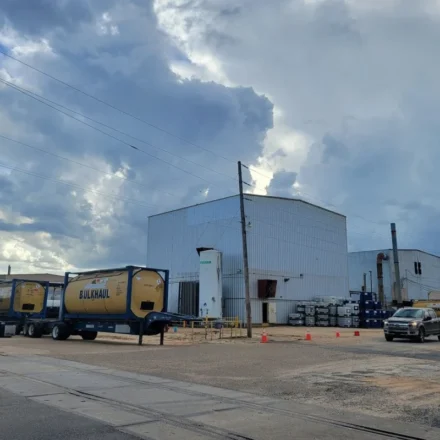























































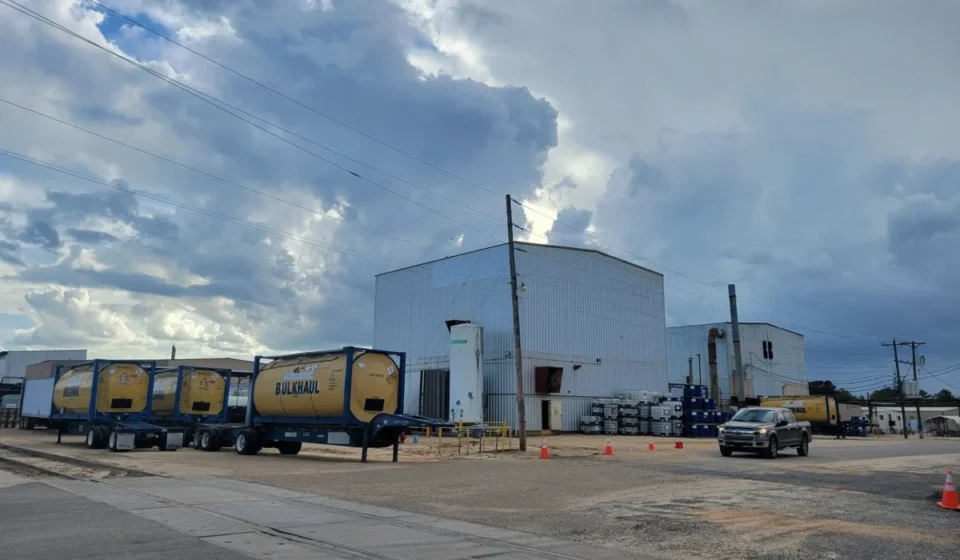

In the quiet, forested landscapes of southeast Mississippi, the 20,000 residents of Wayne County live in a setting that appears, at first glance, to be a quintessential portrait of American agricultural tranquility. Yet, this region hides a toxic secret that has thrust it into the center of a national health debate. Wayne County is home to a Sipcam Agro facility that processes paraquat, a highly toxic herbicide. It is currently the largest single emitter of this chemical in the United States, and emerging data suggests a harrowing correlation: Wayne County ranks in the top 7% of all U.S. counties for Parkinson’s disease deaths between 2018 and 2024.
As global scrutiny intensifies, paraquat—a chemical so lethal that the Environmental Protection Agency (EPA) famously warns "one sip can kill"—remains a cornerstone of modern industrial farming. While over 70 countries, including the entire European Union, have banned the substance, its use in the U.S. continues to climb, casting a long, neurodegenerative shadow over rural communities.
A Legacy of Toxicity: The History of Paraquat
The history of paraquat is one of industrial convenience clashing with biological reality. Developed and brought to market in the 1960s by a predecessor of Syngenta, paraquat dichloride—commonly marketed as Gramoxone—was hailed as a revolutionary tool for clearing large tracts of land without the manual labor of tilling.
The chemical’s rise in the 21st century has been largely fueled by the unintended consequences of herbicide resistance. As weeds evolved to survive glyphosate (the active ingredient in Roundup), farmers turned to the cheaper, more potent, and more dangerous paraquat. Between 2006 and 2017, U.S. usage of the chemical more than tripled.
This rise in usage is intrinsically linked to the "Cancer Alley" region of Louisiana. For decades, massive shipments of paraquat concentrate have been imported through the Port of New Orleans, largely facilitated by Syngenta. From there, the chemical is transported up the Mississippi River to be reformulated at various facilities. While Syngenta recently announced it would cease production of paraquat by the end of June, industry experts warn this is not a victory for public health. Instead, it creates a market vacuum, with smaller facilities—like the one in Wayne County—poised to ramp up operations to fill the void.
Chronology of Exposure and Escalation
The trajectory of the Sipcam Agro plant in Waynesboro serves as a cautionary tale of regulatory failure and industrial expansion.
- 2015: The Waynesboro facility opens, beginning its role in the herbicide supply chain.
- 2018–2022: Under the ownership of Odom Industries, the plant reports paraquat air emissions rising from approximately 500 pounds annually to 1,500 pounds by 2022.
- 2023: Sipcam Agro takes over the facility and announces an expansion, bolstered by tax credits from the Mississippi Development Authority. Airborne emissions jump significantly.
- 2024: Emissions reach an alarming 47,000 pounds, a massive spike attributed to "fugitive emissions"—unintentional leaks during industrial processing.
- 2025: The cumulative total of paraquat released into the atmosphere by the plant over just two years (2023–2024) reaches 81,667 pounds.
This volume is staggering; it is enough herbicide to treat a tract of land larger than the city of Atlanta. Despite these numbers, the facility continues to operate, and current reports suggest they are applying for permits to increase emissions of other regulated pollutants, such as lead and ozone.
The Human Cost: Parkinson’s and Beyond
The link between paraquat and Parkinson’s disease is supported by decades of scientific inquiry. When inhaled or ingested, paraquat is known to travel to the brain, where it selectively destroys the neurons responsible for producing dopamine—the fundamental mechanism of Parkinson’s.
Ashton Pearson Sr., a lifelong resident of Mississippi and a former mechanical engineer, provides a human face to this statistic. Diagnosed with Parkinson’s in 2013 at age 58, Pearson spent his youth working on farms where he used spray rigs to apply herbicides. While he cannot definitively prove his exposure was to paraquat, he reflects on his peers with a grim certainty: "We’re all dying off."
Pearson’s frustration is directed at the lack of basic industrial safeguards. Having helped build coal-fired power plants in his career, he recalls strict requirements for scrubbers to capture fly ash. "We weren’t allowed to just run that up the chimney and disperse it into the environment," he says. The fact that a chemical as toxic as paraquat is emitted into the air with fewer safeguards than coal dust is, in his view, a failure of moral and regulatory responsibility.

The impact extends beyond Parkinson’s. Research has linked long-term exposure to thyroid cancer and childhood leukemia. Furthermore, local residents like Jannette Holifield, whose husband Martin Montelongo died at 63 after working at the plant, suspect that the chemical’s respiratory effects—such as lung scarring—are shortening the lives of the people who live in its shadow.
Regulatory Labyrinth and Official Responses
One of the most profound revelations in this crisis is the lack of federal regulation regarding paraquat as an "air pollutant." While the EPA regulates the chemical’s use in fields, it does not set maximum emission standards for the facilities that process it.
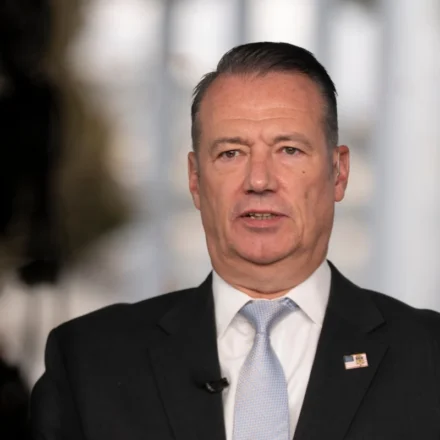
Jan Schaefer, Director of Communications for the Mississippi Department of Environmental Quality (MDEQ), confirmed that the agency is aware of the facility and has an open enforcement action regarding alleged air violations. However, Schaefer noted that because paraquat is not classified as a "hazardous air pollutant," the MDEQ’s hands are often tied. The agency maintains that leaks are "evaluated as additional information is obtained," a stance that critics argue is insufficient given the scale of the emissions.
Meanwhile, the political landscape is shifting. In January, the EPA announced a "reassessment" of paraquat’s safety. While some view this as progress, others are wary of the "revolving door" between industry and government. Kelsey Barnes, a senior advisor to U.S. Department of Agriculture Secretary Brooke Rollins, previously served as a government relations manager for Syngenta. Furthermore, language buried in recent versions of the Farm Bill threatens to preempt state-level efforts to ban or regulate chemicals like paraquat, potentially stripping local communities of their last line of defense.
Implications for the Future
The situation in Wayne County is a microcosm of a larger, systemic crisis. As of this year, 13 states have introduced legislation to restrict or ban paraquat, signaling a growing grassroots realization that the herbicide’s cost to human health far outweighs its agricultural utility. Studies, including a 2023 analysis, suggest that ending paraquat use would not reduce agricultural productivity, effectively debunking the argument that the chemical is a necessary evil for food security.
The implications for public health are profound. As Kimberly Terrell, a research scientist with the Environmental Integrity Project, points out, "County-wide data is often too broad to show the effects of point-source emissions." The true prevalence of Parkinson’s in communities like Waynesboro may be masked by socioeconomic factors and the long latency period of the disease.
Moreover, there is a clear environmental justice component at play. In Wayne County, as in many other industrial hubs, the households closest to the plants are disproportionately low-income and Black. These communities are already contending with lower life expectancies, and the added burden of toxic air emissions exacerbates existing health disparities.
The scientific consensus is tightening. With a 2024 study in the International Journal of Epidemiology reaffirming the dangers, and growing evidence that paraquat may vaporize more easily than previously thought, the window for regulatory inertia is closing. As Andi Fristedt of the Parkinson’s Foundation aptly states, "There are so many public health risks that we don’t understand, or that require really complicated solutions. This isn’t one of those."
For the residents of Wayne County, the plea is simple: stop the emissions, ban the chemical, and prioritize the lives of citizens over the convenience of industrial agriculture. Until then, the silent, invisible fallout continues to settle over the fields and homes of Mississippi, leaving a legacy of illness that may take generations to fully account for.