




































The American classroom has long been viewed as a sanctuary—a neutral space where the stresses of the outside world are meant to be secondary to the pursuit of knowledge. However, for thousands of students and educators across the Twin Cities, that sanctuary has been breached. As federal agents intensify operations in Minnesota, targeting schools, bus stops, and daycare centers, the state’s education system is grappling with an unprecedented crisis that is dismantling the traditional structure of learning and deepening historic inequities.
While the COVID-19 pandemic forced a universal, albeit difficult, transition to remote learning in 2020, the current displacement of students is far more selective and devastating. Today, the choice to stay home is not a public health mandate, but a desperate survival tactic for immigrant families living under the shadow of deportation.
The New Reality: A Tale of Two Classrooms
The impact of this enforcement campaign is not uniform, creating a stark, visible divide in school attendance. In some districts, schools have revived remote learning options, but these emergency measures are failing to bridge the widening gap between students who can safely attend in person and those forced into isolation.
John Horton, an educator with 18 years of experience at the Barack and Michelle Obama Montessori school in St. Paul, describes a classroom that has remained largely intact. "My classroom has 28 kids normally, and I have 28 kids still here," Horton says. "I have a very good relationship with a lot of the families, and they really wanted to stay in person as a community. For young children, that predictability is really important."
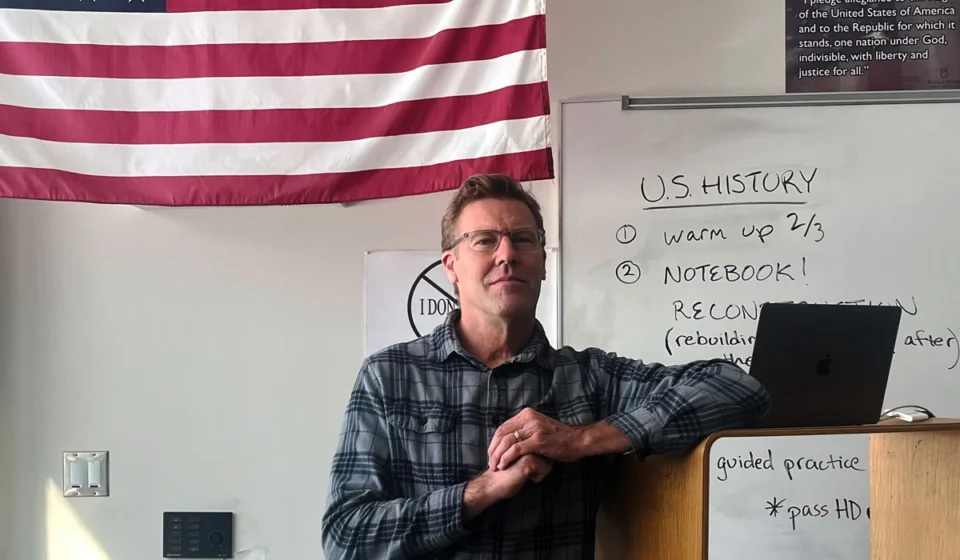
However, just across the city at the diverse Como High School, the reality is drastically different. Eric Erickson, a 31-year veteran teacher, paints a picture of a system fraying at the edges. In his advanced, college-level government courses, attendance remains high, hovering around 95%. But in his co-taught U.S. history classes, attendance drops to 30%. For his English-learner cohorts, the situation is even more dire, with many classes seeing less than half of their students present.
"The students who are not here tend to be students with brown skin and black skin," Erickson notes. "In many ways, this division along race and ethnicity makes this version of virtual learning feel a lot more like battles we thought we had overcome in the Civil Rights Movement."
A Chronology of Escalation
The current tension follows a series of federal actions that have left the Twin Cities in a state of high alert.
- Early 2026: Federal enforcement agencies ramped up operations in the Twin Cities, targeting areas previously considered "sensitive locations."
- January 7, 2026: The fatal shooting of Renee Good served as a flashpoint for the community, leading to widespread protests and school closures across Minneapolis for two days.
- Mid-January 2026: Student-led protests converged on the Minnesota State Capitol, as students from various public, private, and charter schools organized to demand human rights and safety.
- February 2026: As the enforcement surge hit its ninth week, school districts and the local teachers union took the extraordinary step of suing the federal government, arguing that the targeting of educational spaces is fundamentally disrupting the right to a public education.
Supporting Data: The Cost of Absence
The loss of in-person instruction is not merely a logistical challenge; it is an academic catastrophe. Students who are forced into remote learning are missing the essential peer-to-peer interaction and teacher-led guidance that form the foundation of their development.
Erickson explains the pedagogical loss: "They’re living in isolation with their family and social media as connectors, as opposed to the support of peer-to-peer and caring adult interaction. We are still their teachers. We are pushing out lessons, videos, documents, and assignments to students in their homes. But there’s no substitute."
Data from the affected schools suggests that the "digital divide" is being exacerbated by a "safety divide." While school districts have attempted to reassign staff to virtual programs, the teachers report that these programs are often ill-equipped to handle the trauma-informed needs of students who are currently witnessing immigration raids or living in constant fear of a knock at the door.
The Psychological Toll on Educators and Students
The emotional weight of this crisis is borne by the educators, who find themselves acting as both protectors and mentors. For teachers like Horton, the job description now includes co-regulating with students who are experiencing genuine trauma.

"You have to show them what calm, caring, and compassion looks like," Horton says. "It’s almost like you’re teaching as you’re feeling, which is tough." He recounts instances where he has received calls from parents at 6:50 a.m. regarding enforcement actions at their homes, forcing him to balance his own fear with the need to provide a sense of normalcy and joy for the students who do make it to class.
Erickson, who prides himself on maintaining an objective, non-partisan classroom, admits that the human cost has made it difficult to remain detached. "Seeing the harm to our students and families has caused me to choke up more than once in class while listening and guiding discussion on these matters," he admits.
Despite the fear, students are finding ways to express themselves. In Horton’s classroom, students have channeled their anxiety into advocacy, creating art with messages like "ICE out" and "Leave our friends alone." They have even organized a classroom food shelf and are collecting change for local nonprofits, turning their fear into an exercise in community building.
Implications for the Future of Public Education
The implications of the federal surge go beyond current attendance numbers. By targeting schools and transit points, the federal government is effectively signaling that educational institutions are not off-limits. This threatens to create a permanent class of students who are systematically excluded from the benefits of in-person, high-quality public education.
Legal and Systemic Challenges
The lawsuit filed by Minnesota school districts and the teachers union highlights the constitutional tension between federal immigration enforcement and the state’s obligation to provide a public education. Legal experts point to the "equal protection" clause, arguing that by making it impossible for specific groups of students to attend school, the federal government is effectively denying them their right to an education.
The Erosion of Trust
Perhaps the most damaging long-term impact is the erosion of trust between immigrant communities and the institutions that are supposed to serve them. When schools, which are designed to be the bedrock of community stability, become sites of fear, the long-term engagement of these families in the educational process is jeopardized.
A Call for Human Decency
As the school year progresses, the resilience of the teachers and the students is being tested. Both Horton and Erickson agree that the current situation is unsustainable. They argue that education requires a degree of peace and predictability that is currently missing from the Twin Cities landscape.
"We saw a highly organized, peaceful student protest," Erickson recalls of the January rally. "They were articulate messages—positive and hopeful in tone—while also criticizing the overreach of the federal government."
Ultimately, the story of the Twin Cities schools in early 2026 is a testament to the fact that while policies are made in federal offices, their consequences are felt in the desks of classrooms. Whether or not these students can return to a stable environment depends on whether the federal government chooses to respect the sanctuary of the classroom, or whether it continues to allow enforcement to take precedence over the future of the next generation.
For now, the educators in St. Paul and Minneapolis continue to show up, holding the line for their students, and hoping that their voices—and those of their students—will be heard above the noise of the federal surge.