






















































In the quiet, pine-forested landscape of Wayne County, Mississippi, a silent public health crisis is unfolding. Home to approximately 20,000 residents, the county is geographically defined by sprawling timberlands and agricultural fields. However, recent data has cast a grim light on the region, revealing that Wayne County ranks in the top 7% of all U.S. counties for Parkinson’s disease-related deaths between 2018 and 2024.
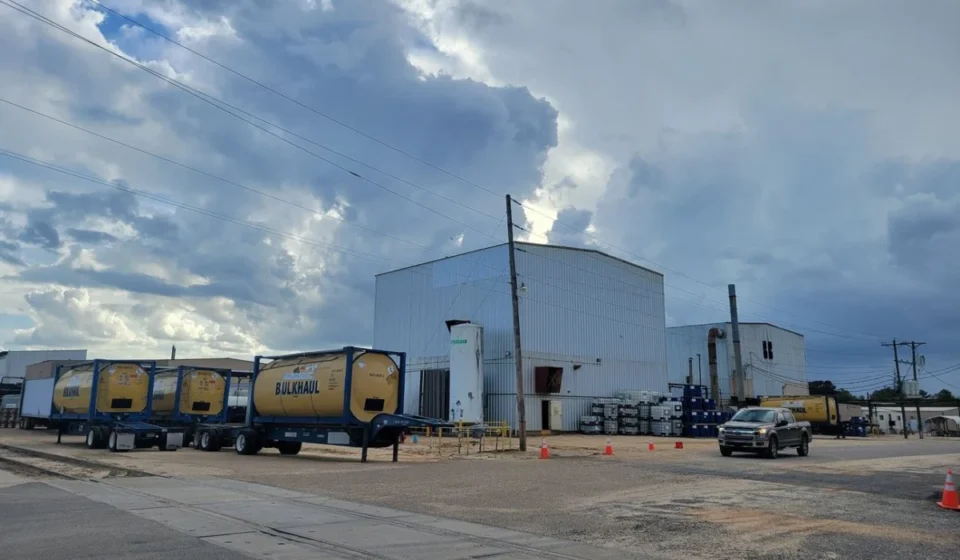
At the center of this tragedy sits a Sipcam Agro facility, which serves as the largest single emitter of paraquat—a highly toxic, synthetic herbicide—in the United States. While the world grapples with the rapid rise of incurable neurodegenerative diseases, residents of Waynesboro are living in the shadow of a chemical giant, breathing air permeated by a substance that health experts and international regulators have long warned is fundamentally incompatible with human safety.
A Legacy of Toxicity: What is Paraquat?
Paraquat, also known as paraquat dichloride and marketed globally under trade names like Gramoxone, is a potent, broad-spectrum herbicide first introduced in the 1960s. Designed to kill green plant tissue on contact, it has become a staple of industrial agriculture, particularly for clearing massive tracts of soybean, corn, and cotton fields. Because it is cheap and highly effective, its use in the United States has more than tripled between 2006 and 2017—a surge largely fueled by the emergence of weeds resistant to glyphosate, commonly known as Roundup.
The EPA’s own warnings are stark: "One sip can kill." The chemical is so acutely toxic that it has been banned in over 70 countries, including China, Brazil, and every nation within the European Union. Despite its lethal reputation, its usage in the U.S. remains robust, even as the scientific consensus linking it to Parkinson’s disease grows increasingly undeniable.
A Chronology of Neglect and Expansion
The history of paraquat is one of corporate obfuscation and delayed regulatory action.
- 1950s: Researchers from Imperial Chemical Industries (a predecessor to Syngenta) first documented the substance’s adverse effects on brain tissue and the nervous system.
- 1960s: Paraquat is brought to the mass market.
- 2006–2016: A massive surge in usage occurs. Shipments through the Port of New Orleans skyrocketed from 14 in 2006 to 144 in 2016, as the chemical became the industry standard for rapid land clearing.
- 2018–2023: Awareness of the link between paraquat and Parkinson’s intensifies. In Mississippi, the Odom Industries facility, which would later be acquired by Sipcam Agro, began seeing a steady rise in "fugitive" air emissions.
- 2023–2024: Under the ownership of Sipcam Agro, and supported by tax credits from the Mississippi Development Authority, the Waynesboro facility’s emissions soared to over 47,000 pounds of paraquat per year.
- March 2025: Syngenta announces it will cease the production of paraquat, citing competition from generic manufacturers. However, this move does not signal the end of the chemical’s presence in the U.S.; instead, it creates a market vacuum being filled by independent facilities like the one in Wayne County.
Supporting Data: The Cost of Proximity
The health statistics in Wayne County are chilling. While the national Parkinson’s mortality rate is approximately 11.5 per 100,000 people, the rate in Wayne County sits at a staggering 21.5.
Scientific studies underscore the mechanism of this devastation. When inhaled or ingested, paraquat travels to the brain, systematically destroying the neurons responsible for dopamine production. A rigorous 2024 study published in the International Journal of Epidemiology confirmed that farmworkers who mix or apply paraquat are 2.5 times more likely to develop Parkinson’s than their counterparts who do not.
Crucially, the danger is not limited to those who handle the chemical. Research indicates that individuals living within 1,600 feet of an application site face a 91% higher risk of developing the disease. The emissions from the Waynesboro plant, reported as "fugitive" or unintentional leaks, effectively turn the surrounding community into a testing ground for chronic, low-level exposure.
Ashton Pearson Sr., a retired mechanical engineer and a lifelong Mississippi resident diagnosed with Parkinson’s in 2013, recalls his youth spent working in agricultural fields. "There is absolutely no doubt in my mind that we’re all victims of our environment," Pearson says. He observes that his childhood friends are "all dying off," and he expresses disbelief that a modern facility would be permitted to vent toxic substances directly into the atmosphere without rigorous scrubbing technology.

The Regulatory Gap: Why Hasn’t it Been Banned?
The most striking aspect of the paraquat crisis is the lack of federal regulation regarding its air emissions. While the EPA classifies paraquat as a toxic chemical, it does not categorize it as a "hazardous air pollutant," meaning there is no legal ceiling for how much of the substance a plant can release into the air surrounding a town.
The Mississippi Department of Environmental Quality (MDEQ) has acknowledged that they are aware of the facility and have "open enforcement actions" related to air violations. However, the agency’s hands are tied by the lack of federal standards. When asked about the 47,000 pounds of paraquat released in 2024, the agency noted that it only regulates chemicals officially classified as hazardous air pollutants—a bureaucratic hurdle that leaves thousands of residents vulnerable.
Meanwhile, the "revolving door" between the chemical industry and federal oversight continues to stall progress. Advocacy groups have pointed out that current advisors within the U.S. Department of Agriculture have direct ties to former Syngenta management. Furthermore, proposed language in the Farm Bill threatens to preempt state-level bans, effectively stripping individual states of their right to protect their own citizens from chemicals the federal government refuses to regulate.
The Human Toll and Future Implications
The impact on local families is profound. Jannette Holifield, who lives less than a mile from the Sipcam Agro plant, lost her husband, Martin Montelongo, in 2025. Montelongo, who spent years working at the facility mixing chemicals, suffered from a persistent, worsening cough—a symptom consistent with the lung scarring known to be caused by paraquat exposure.
"The most important thing is pushing the EPA to ban paraquat," says Andi Fristedt of the Parkinson’s Foundation. "They could end paraquat use tomorrow."
The irony is that, according to a 2023 study, the cessation of paraquat usage would not result in a significant drop in agricultural productivity. The chemical is a convenience, not a necessity. Yet, for the residents of Wayne County, the continued operation of the Sipcam plant represents a life-altering threat.
As eight states, including New York, Iowa, and Illinois, move toward legislative bans, the pressure on the federal government is mounting. The MAHA (Make America Healthy Again) movement has increasingly highlighted paraquat as a quintessential example of the chemical threats that have been ignored for too long.
However, until federal law catches up with the scientific reality, the smoke stacks in Waynesboro will continue to vent, and the community will continue to pay the price. The case of Wayne County is a clarion call for a fundamental reevaluation of how the United States regulates industrial agriculture, proving that when profit is prioritized over the basic right to clean air and neurological health, the most vulnerable communities are the ones that suffer the most.
The story of paraquat is not merely one of agricultural science; it is a story of environmental justice, corporate accountability, and the urgent, unmet need for a public health policy that values human life above the convenience of an industrial chemical.