











































The hallways of Minnesota’s public schools, once defined by the rhythmic bell and the bustle of students, have taken on a haunting, fractured character. In the ninth week of a sustained federal enforcement surge, the state’s education system is grappling with an unprecedented crisis: a de facto segregation of learning caused by fear. As federal agents intensify operations at bus stops, daycare centers, and school perimeters, the classroom has become a battleground where the right to an education is increasingly contingent upon one’s immigration status.
While the pandemic-era lockdowns of 2020 forced a universal shift to digital instruction—creating a shared, albeit difficult, experience for all students—the current reality is starkly different. Today, schools are operating in a state of chaotic bifurcation. Some students remain in classrooms, sustained by the hope of normalcy, while others are effectively shuttered in their homes, paralyzed by the threat of detention or family separation. This is not a uniform remote learning initiative; it is an emergency survival strategy that is deepening existing fissures of inequity and forcing educators to confront the limits of their profession.
A Chronology of Uncertainty: From Pandemic to Present
To understand the current tension, one must look back at the resilience forged during the COVID-19 pandemic. In 2020, teachers, students, and administrators were thrust into a digital frontier overnight. The goal was collective survival—maintaining the thread of human connection despite the physical distance.
However, the current crisis began in early 2026, marked by a sharp escalation in federal enforcement activities throughout the Twin Cities. By mid-January, the atmosphere had darkened significantly following the death of Renee Good—a flashpoint that led to school shutdowns and widespread civil unrest.
- January 7, 2026: Escalation of federal activity near schools and transit hubs leads to immediate absenteeism as families fear for their safety.
- January 14, 2026: Students across St. Paul, including those from public, private, and charter institutions, stage a massive, peaceful protest at the State Capitol to demand protection from federal overreach.
- February 2026: School districts and the local teachers’ union file a lawsuit against the federal government, marking a formal legal challenge to the targeting of educational spaces.
The Divided Classroom: Evidence of Growing Inequity
The impact of this enforcement surge is not felt equally. Educators report a growing chasm between student populations, largely defined by race, ethnicity, and socioeconomic background.
John Horton, an 18-year veteran teacher at Barack and Michelle Obama Montessori in St. Paul, provides a snapshot of a school working overtime to maintain community. In his classroom of 28 first-to-third graders, attendance has remained remarkably stable. Horton credits this to the school’s deep-rooted relationships with families and the implementation of "community watch" initiatives, where volunteers ensure safe passage to school. For these children, the school remains a sanctuary—a place of joy, art, and the essential predictability that childhood demands.
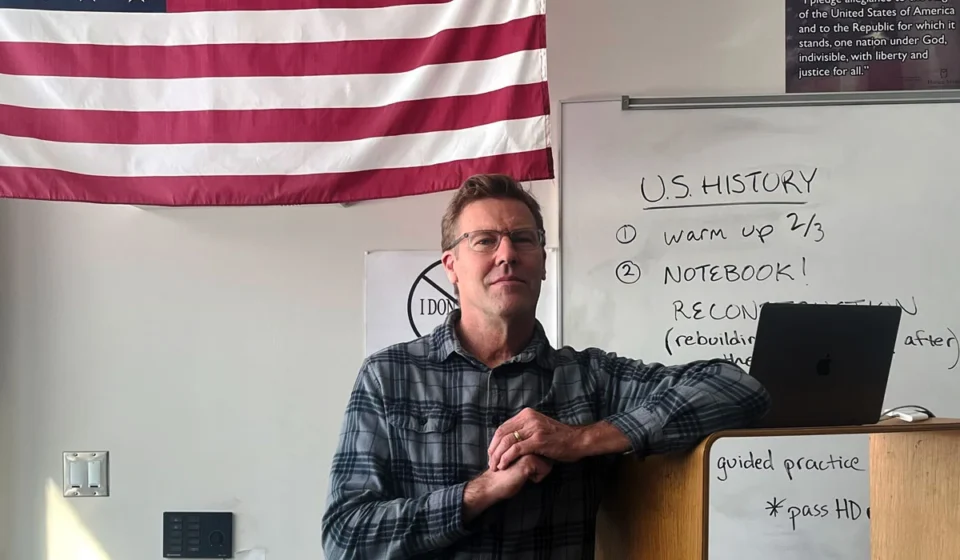
Conversely, at the more diverse Como High School, 31-year veteran Eric Erickson paints a more somber picture. In his advanced-level government courses, which attract a more affluent or established demographic, attendance remains near 95%. However, in his U.S. history classes, which serve a broader mix of students, and particularly in his English-learner cohorts, attendance has plummeted. Some classes report fewer than 50% of students physically present.
"The students who are not here tend to be students with brown skin and black skin," Erickson notes. "In many ways, this division makes this version of virtual learning feel more like the battles we thought we had overcome during the Civil Rights Movement."
The Instructional Gap: A Hollow Substitute
The pivot to virtual learning in 2026 lacks the infrastructure and the spirit of the pandemic years. Teachers are now effectively running two school systems simultaneously. Some instructors have been reassigned to strictly remote programs, attempting to support students who have never engaged with digital learning before.
For those who are absent, the experience is one of profound isolation. They are missing the critical peer-to-peer interactions that define the academic experience. While teachers continue to push lessons, videos, and documents to students’ homes, they are acutely aware that "there is no substitute" for the live, collaborative environment. The result is a widening "opportunity gap" that threatens to leave a generation of immigrant and minority students behind, as they miss out on the critical discourse and social development that occurs within the walls of a school.

Official Responses and the Legal Battle
The tension has transcended the classroom, forcing a confrontation between local districts and federal authorities. School boards and teachers’ unions in Minnesota have moved to litigate, arguing that federal operations are not merely disruptive, but an unconstitutional interference with the right to public education.
The core of the legal argument rests on the chilling effect that enforcement has on parental behavior. When parents fear that dropping a child off at a bus stop or walking them to school could lead to an encounter with federal agents, they opt to keep their children at home. This mass absenteeism, the districts argue, is a direct result of federal policies that disregard the "sanctuary" status historically afforded to schools.
Meanwhile, at the state level, lawmakers and community leaders are scrambling to provide resources. Relief efforts, led by groups such as the PTA and local nonprofits, have shifted from academic support to humanitarian aid, providing food, legal resources, and transportation assistance to families in crisis.
Implications: The Psychological Toll on Educators and Students
Perhaps the most invisible, yet damaging, impact is the mental health toll. Teachers find themselves in a precarious position: they are tasked with maintaining a sense of order while feeling deeply shaken by the traumatic reports arriving from their students.
"I’m trying to be a really good role model," says Horton, reflecting on the difficulty of maintaining composure when students share stories of federal agents knocking on their doors at dawn. "It’s almost like you’re teaching as you’re feeling, which is tough."
For the students, the classroom has become a space where they process the injustice they see outside. Whether it is a kindergartner drawing a sign that says "ICE Out" or an AP government student analyzing the failure of the system of "checks and balances," the students are learning lessons that go far beyond the curriculum. They are witnessing firsthand the fragility of democracy and the power of civic action.
Erickson, who admits to choking up while guiding class discussions on current events, notes that this is no longer a matter of neutral instruction. "They see injustice. They observe an overreach of federal power," he says. "They wonder if it’s their time and place to exercise their First Amendment rights."
Conclusion: A Community in Transition
As Minnesota moves through this crisis, the definition of a "school" is being rewritten. It is no longer just a building where children learn arithmetic and history; it has become a critical node in a network of community protection. Teachers like Horton and Erickson, alongside their students and families, are demonstrating a profound resilience.
However, the question remains: at what cost? While the community has found ways to organize, share resources, and offer emotional support, the structural damage to the education system is mounting. The long-term implications for these students—not just in terms of test scores, but in terms of their trust in institutions and their sense of belonging—are yet to be fully realized.
For now, the focus remains on the next day. Every student who makes it to the classroom is a victory for the community; every student left in isolation is a reminder of the work that remains. The "emergency" has entered its ninth week, and for those inside the classroom, there is no sign of a return to the quiet, predictable life that defined the schools of the past. There is only the daily, arduous work of holding the community together in the face of an uncertain, and often hostile, reality.