





















































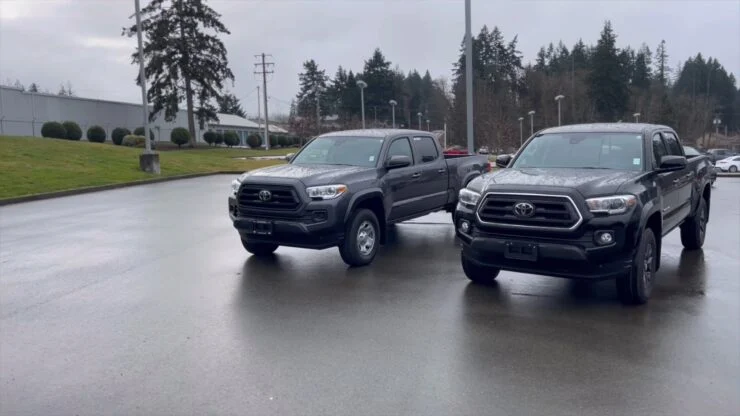

The midsize pickup truck segment remains one of the most fiercely contested arenas in the North American automotive market. At the center of this battleground sits the Toyota Tacoma, a vehicle that has long commanded dominant market share through a reputation for durability, high resale value, and rugged capability. For the 2026 model year, Toyota continues to offer a sprawling lineup designed to capture every tier of buyer, from commercial fleet operators to extreme off-road enthusiasts.
However, for the budget-conscious consumer or the pragmatic business owner, the decision-making process begins at the entry point of the lineup: the Tacoma SR and the Tacoma SR5.
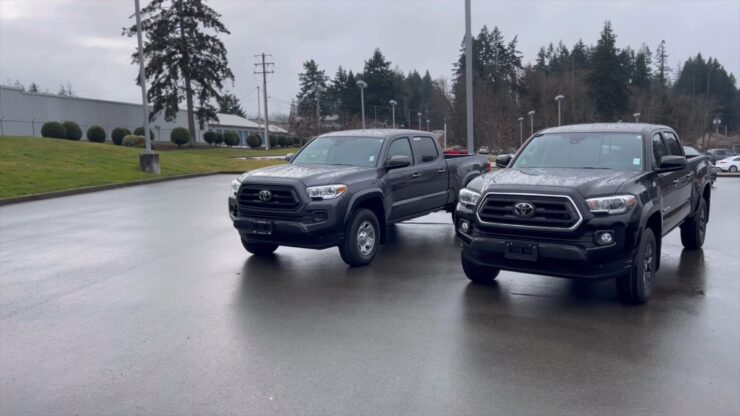
While the entry-level SR presents an attractive starting price of $32,445, a closer inspection reveals that the financial gap between the SR and the step-up SR5 represents a profound divergence in mechanical capability, ride comfort, and daily livability. This analysis explores the core distinctions between these two critical trims, tracing their historical contexts, engineering differences, and broader market implications.
Main Facts: The Core Distinctions Between SR and SR5
At first glance, the 2026 Toyota Tacoma SR and SR5 appear to share the same DNA. Both are built on the high-strength TNGA-F global truck platform, both utilize a 2.4-liter turbocharged inline-four engine, and both offer modern driver-assistance technologies. However, Toyota has carefully engineered distinct boundaries between the two trims to target entirely different buyer profiles.
Powertrain Disparity
The most significant difference lies under the hood. While both trucks use the i-FORCE 2.4-liter turbocharged engine, their power outputs are far from equal when paired with the standard eight-speed automatic transmission:
- Tacoma SR (Automatic): Produces 228 horsepower and 243 lb-ft of torque.
- Tacoma SR5 (Automatic): Produces 278 horsepower and 317 lb-ft of torque.
This represents a substantial deficit for the base SR, which loses 50 horsepower and 74 lb-ft of torque compared to its sibling. This power reduction is not a physical difference in the engine block, but rather a deliberate software detune designed by Toyota to optimize fleet fuel economy and segment the market.
An intriguing exception exists for manual-transmission enthusiasts. Toyota offers a six-speed manual gearbox on select SR configurations. When equipped with the manual, the SR’s engine is tuned to deliver 270 horsepower and 310 lb-ft of torque, narrowing the performance gap to the SR5 almost entirely.
Chassis and Suspension Engineering
The mechanical divergence continues to the rear axle. The fourth-generation Tacoma introduced a modern multi-link coil-spring rear suspension to replace the traditional leaf-spring setup. However, this upgrade is not applied universally:
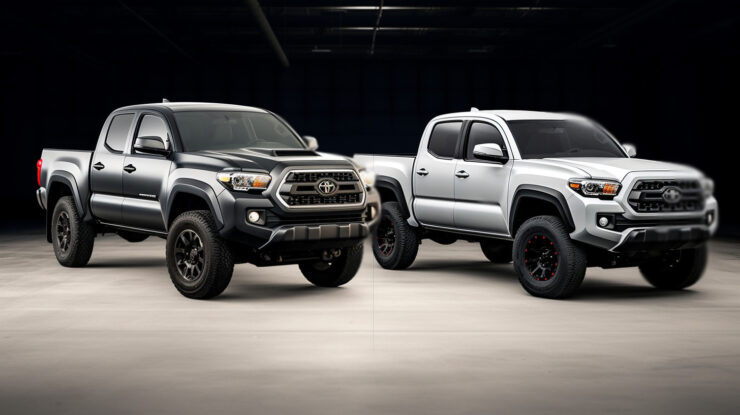
- Tacoma SR: Retains traditional leaf springs across its configurations. This setup is highly durable and well-suited for carrying heavy payloads day in and day out, but it results in a stiffer, busier ride when the truck bed is empty.
- Tacoma SR5 (Double Cab): Receives the coil-spring multi-link rear suspension. This design dramatically improves ride quality, reducing the typical "hop" and vibrations associated with body-on-frame pickups when traveling over broken pavement or highway expansion joints.
Cabin Configurations and Utility
The trims also differ in how they accommodate passengers and cargo. The SR is heavily oriented toward the "work truck" market, offered in both the utility-focused XtraCab (a two-door, two-seat configuration with a six-foot bed and secure interior cargo space behind the front seats) and the passenger-friendly Double Cab (four proper doors and a rear bench seat).
The SR5 can also be configured in these formats, but choosing the Double Cab on the SR5 unlocks the coil-spring suspension and interior amenities that transition the vehicle from a commercial implement to a viable family vehicle.
Chronology: The Historical Trajectory of Toyota’s Midsize Trim Structure
To understand why the SR5 occupies its current position in the Tacoma hierarchy, one must look at the historical evolution of Toyota’s light-truck branding. The "SR5" moniker carries deep heritage that dates back half a century, long before the Tacoma nameplate was introduced in 1995.
[1970s-1980s] ------------------> [1995] ------------------------> [2020s-Present]
SR5 Badge:                        Tacoma Introduced:               Trim Proliferation:
Stands for "Sport Rally 5-Speed"  SR5 transitions to a mid-tier    SR5 becomes the entry-retail tier;
A premium, sporty option. volume-seller above base trims. TRD and Trailhunter dominate high end.- 1970s–1980s: The Genesis of "Sport Rally 5-Speed":
In the 1970s, Toyota introduced the "SR5" designation on its Hilux pickups and Corolla models. The letters stood for "Sport Rally," and the "5" denoted the inclusion of a highly desirable five-speed manual transmission at a time when four-speed manuals and three-speed automatics were the industry standard. During this era, owning an SR5 meant you had purchased a premium, sporty, and highly optioned vehicle. It featured upgraded instrumentation (including a tachometer), chrome accents, and more comfortable bucket seats. - 1995: The Launch of the Tacoma:
When Toyota launched the first-generation Tacoma in the North American market in 1995, the brand restructured its trims. The SR5 transitioned from being a sporty top-tier option to the volume-selling, mid-grade trim. It represented the sweet spot for the average retail consumer, offering a balance of passenger comfort and truck capability. - The 2000s to Present: Trim Proliferation:
Over the last two decades, the midsize truck market shifted from basic utility vehicles to lifestyle and adventure platforms. To capitalize on this, Toyota expanded the Tacoma lineup upward, introducing specialized trims such as the TRD Sport, TRD Off-Road, Limited, TRD Pro, and most recently, the overland-ready Trailhunter.
As these premium, highly specialized trims proliferated—with top-tier models commanding prices near or exceeding $60,000—the SR5 was pushed downward in the hierarchy. Today, the SR5 serves as the entry point for everyday retail buyers, while the SR has been repositioned as a dedicated, low-cost fleet and work vehicle.
Supporting Data: Detailed Engineering & Specifications
The operational differences between the SR and SR5 are best understood by examining their technical specifications side-by-side. The table below outlines the critical mechanical, dimensional, and standard equipment variations for the 2026 model year.
| Specification / Feature | 2026 Toyota Tacoma SR | 2026 Toyota Tacoma SR5 |
|---|---|---|
| Base Starting MSRP | $32,445 | Variable (Typically $3,000–$4,000 higher) |
| Engine Type | 2.4-Liter Turbocharged Inline-4 | 2.4-Liter Turbocharged Inline-4 |
| Horsepower (Automatic) | 228 hp @ 6,000 RPM | 278 hp @ 6,000 RPM |
| Torque (Automatic) | 243 lb-ft @ 1,700 RPM | 317 lb-ft @ 1,700 RPM |
| Horsepower (6-Speed Manual) | 270 hp @ 5,400 RPM (Select Configs) | N/A (Manual not widely offered on SR5) |
| Torque (6-Speed Manual) | 310 lb-ft @ 1,800 RPM | N/A |
| Rear Suspension | Leaf Springs | Multi-Link Coil Springs (Double Cab) |
| Standard Wheels | 17-inch Steel Wheels | 17-inch Alloy Wheels |
| Ignition / Key System | Traditional Keyed Ignition | Smart Key System w/ Push-Button Start |
| Infotainment System | 8-inch Touchscreen | 8-inch Touchscreen (Upgradable) |
| Smartphone Integration | Wireless Apple CarPlay & Android Auto | Wireless Apple CarPlay & Android Auto |
| Standard Safety Suite | Toyota Safety Sense 3.0 | Toyota Safety Sense 3.0 |
| Maximum Towing Capacity | Up to 6,500 lbs (Configuration dependent) | Up to 6,500 lbs (Configuration dependent) |
Towing and Payload Dynamics
While both trims list a maximum towing capacity of 6,500 pounds when properly equipped, the real-world experience of towing with these vehicles differs significantly.
The SR5’s additional 74 lb-ft of torque is highly beneficial when pulling heavy loads. Peak torque on both models is achieved low in the rev range (1,700 to 1,800 RPM), but the SR5’s higher output means the transmission does not need to downshift as frequently on highway inclines. This reduces cabin noise, engine strain, and transmission wear during towing operations.
Furthermore, buyers must account for payload calculations. Tongue weight (typically 10% to 15% of the total trailer weight) directly subtracts from the vehicle’s payload capacity. A loaded trailer, combined with multiple passengers and gear in the cabin, can quickly approach the payload limits of both trucks.
Official Responses & Market Positioning Strategy
Toyota’s product planning decisions reflect a sophisticated understanding of fleet economics and retail consumer psychology. Representatives from the automaker have consistently emphasized that the Tacoma’s multi-trim strategy is designed to leave "no buyer behind."
The Rationale Behind the Detuned SR Engine
Industry analysts point out that offering a lower-output version of the 2.4-liter engine in the SR is a calculated business move. By limiting the horsepower and torque on the base model, Toyota achieves several objectives:
- Component Longevity: For fleet operators (such as telecom companies, government agencies, and construction firms), extreme performance is secondary to durability. A lower-stressed engine operating under lower boost pressures typically experiences less thermal and mechanical wear over hundreds of thousands of miles.
- Corporate Average Fuel Economy (CAFE): Detuning the engine allows Toyota to optimize the fuel maps specifically for fleet operations, helping the manufacturer meet stringent federal efficiency standards.
- Market Segmentation: It prevents "cannibalization." If the entry-level SR offered the exact same performance and mechanical refinement as the more expensive models, fewer retail buyers would step up to the higher-margin SR5 or TRD trims.
Expert Industry Perspective
Automotive retail experts note that dealership inventory strategies reflect this positioning. Dealerships rarely stock bare-bones SR models on the front line; those are typically ordered in bulk by fleet clients.
When an SR does arrive on a dealership lot for retail sale, it is often priced as a "loss leader" to draw traffic. Experts caution retail buyers to look closely at the window sticker, as port-installed options and dealer markups can easily push a base SR’s price into the territory of a standard SR5, erasing the financial advantage of the lower trim.
Implications: Consumer Value, Fleet Operations, and Long-Term Ownership
The decision between the Tacoma SR and SR5 carries long-term financial and practical implications that extend far beyond the initial purchase price.
                     Is the Tacoma a daily driver?
                               |
              +----------------+----------------+
              | YES                             | NO (Work/Fleet Only)
              v                                 v
     Choose the Tacoma SR5             Choose the Tacoma SR
     - 278 hp / 317 lb-ft torque       - 228 hp / 243 lb-ft torque
     - Coil-spring rear suspension     - Leaf-spring suspension (durable)
     - Smart key & alloy wheels        - Steel wheels & keyed ignition
For the Retail Consumer and Daily Driver
For the buyer whose truck must serve as a commuter vehicle, family transport, and weekend adventure machine, the SR5 is overwhelmingly the more practical choice.
- The Comfort Factor: The coil-spring rear suspension on the SR5 Double Cab completely alters the driving dynamics of the vehicle. It mitigates the stiff, unrefined ride quality that has historically plagued midsize trucks, making long-distance road trips far less fatiguing.
- Daily Conveniences: Features like push-button start, smart key entry, and alloy wheels are often dismissed as non-essential during a brief test drive. However, over a typical five-to-seven-year ownership cycle, the daily convenience of not having to fumble for keys or look at basic steel wheels significantly impacts owner satisfaction and pride of ownership.
- Resale Value: Historically, the SR5 trim commands a much broader audience on the secondary market than the fleet-spec SR. When it comes time to trade in or sell privately, the SR5’s stronger engine and enhanced features generally translate to faster sales and higher retained value.
For the Commercial Fleet and Utility Buyer
Conversely, for the contractor, landscaper, or fleet manager, the SR represents an exceptionally engineered tool.
- Reduced Complexity: In a work truck, every additional electronic feature is a potential point of failure. The traditional keyed ignition, steel wheels, and lack of complex cabin amenities mean lower maintenance costs and less downtime.
- The Utility of the XtraCab: The SR XtraCab configuration maximizes bed length (six feet) while eliminating the rear seats, providing a highly secure, weather-proof storage area inside the cabin for expensive tools, diagnostic equipment, or safety gear.
- Cost-Efficiency: When purchasing vehicles in volume, a $3,000 to $4,000 price difference per unit translates into tens of thousands of dollars saved across a fleet.
The Verdict
The 2026 Toyota Tacoma SR is an honest, durable, and highly capable workhorse designed to be used as a tool. The Tacoma SR5, by contrast, is a versatile, modern vehicle engineered to handle the dual demands of professional and personal life. For the vast majority of private buyers, the SR5’s extra power, superior ride quality, and daily conveniences easily justify the step up in price.