














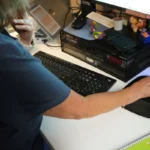

































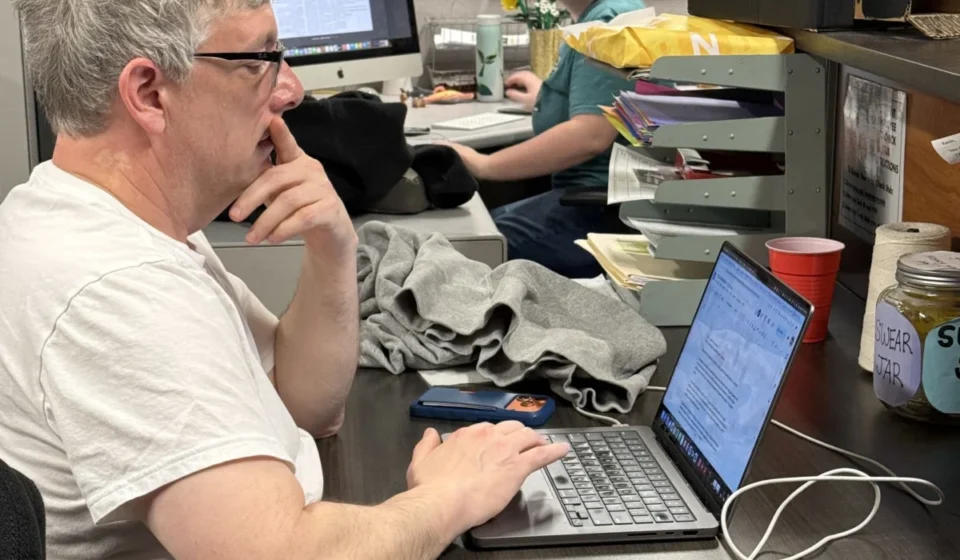

MANKATO, Minn. — One hour before the Monday night print deadline, the newsroom of The Reporter, the student newspaper at Minnesota State University (MSU) in Mankato, is a study in controlled chaos. For editor-in-chief Anahi Zuniga, the atmosphere is familiar—a rhythmic dance of copy editing, layout adjustments, and last-minute fact-checking. While the clock ticks toward the 9 p.m. cutoff, Zuniga remains unflappable.
"Everyone should be done in the next half hour," she says, glancing at her monitors. "It’s sometimes a close call, but that’s the nature of the beast."
Across the room, the mechanical hum of computers and the quiet concentration of staff members reflect a tradition that has survived for over a century. Once the final files are uploaded and sent to the downtown press, the physical paper—featuring a front-page deep dive into a proposed 7% tuition hike—will be ready for distribution on campus by Tuesday morning. For Zuniga, seeing those digital pages transition into a physical artifact is more than just a job; it is an act of preservation. "It’s a satisfying feeling," she reflects. "It keeps history alive."
The Chronology of a Deadline: From Newsroom to Newsstand
The life cycle of a student newspaper is a relentless, high-stakes marathon. At The Reporter, the process is a microcosm of professional journalism. Early in the week, editors meet to brainstorm story ideas, often debating the merits of campus policies, local government decisions, or student body events. By midweek, reporters are in the field, conducting interviews and digging through public records.
As Monday arrives, the focus shifts to production. Photos are processed, headlines are tightened, and layout editors ensure the visual flow of the page guides the reader effectively. The final hours are marked by intense scrutiny. Professional guidance is provided by advisors like Robb Murray, an editor at the local Mankato Free Press, who drops in to proof copy, offering a vital link between the classroom and the industry.
Once the "all clear" is given, the files travel to the press. The next morning, students across the MSU campus interact with the result. They pick up copies in hallways and cafes, engaging with information that affects their daily lives—from tuition updates to campus safety initiatives. But for the staff of The Reporter, the moment the paper hits the stands, the cycle immediately resets. The post-deadline meeting in Zuniga’s office is already underway, with the team planning the next edition, securing assignments, and mapping out the following week’s coverage.
The State of Student Media: Resilience Amidst Industry Decline
While The Reporter maintains a twice-weekly print schedule, it exists within a media ecosystem that is arguably in the midst of its most volatile transformation since the invention of the printing press. Across Minnesota and the United States, the newspaper industry has faced significant contractions. As advertising revenue shifts to digital platforms and readership habits change, the student press has not been immune to these tremors.
However, the landscape is not one of universal collapse, but rather of radical adaptation. The Minnesota college media scene currently represents a diverse spectrum of survival strategies:
- The Digital Pivot: Many institutions, such as the University of Minnesota’s Minnesota Daily, have moved entirely to digital-first models, abandoning the expense of physical printing to focus on daily web updates.
- Magazine and Hybrid Formats: Institutions like Bemidji State University have transitioned their Northern Student from a weekly newspaper to a quarterly magazine, focusing on long-form storytelling rather than daily news cycles.
- The "Slow" Press: Others, such as The Winonan at Winona State University, continue to publish every other week, serving as a reliable, if less frequent, touchstone for the campus community.
- The Disappearing Act: Some campuses, including Minneapolis College, currently lack a student-run publication entirely, though efforts are often underway by student government bodies to resurrect the tradition.
Even in the absence of formal journalism departments—a growing trend as universities streamline their academic offerings—these papers persist. They survive on a mixture of institutional support, student passion, and the persistent, human need to document the campus experience.

Expert Perspectives: Why Journalism Education Still Matters
The survival of these papers is about more than just ink and paper; it is about the fundamental development of the next generation of communicators. Doug Westerman, an advisor at Winona State University, notes that while the medium may shift, the core competencies required of a journalist remain constant.
"You still have to check sources, you still need to do research, whether it’s going on a printed page or going on a post," Westerman says. He emphasizes that the "natural attrition" of college—where students graduate and leave the paper—is a constant challenge. Yet, he views the process of mentoring these students as one of the most rewarding aspects of his career. When employers call asking for references, Westerman is quick to tout the grit and technical skills his students have honed in the newsroom.
The sentiment is echoed by industry veterans who cut their teeth in these very rooms. Myron Medcalf, a prominent ESPN writer and Star Tribune columnist, served as the first African-American editor-in-chief of The Reporter in 2003. During a recent celebration marking the paper’s 100th anniversary, Medcalf reflected on the formative nature of the student newsroom.
"I learned the ins and outs of actually being on deadline, the accuracy that’s necessary in your reporting, the fact that you are communicating to an audience that’s much bigger than you are," Medcalf said. "It’s not about you. It’s about the people who are going to pick up your story and read it."
Implications: The Written Word as a Living Archive
As Zuniga prepares to graduate, she looks back at her time at The Reporter as a transformative experience. "I wasn’t very confident with who I was when I first enrolled here," she admits. "I feel so sure of myself now and who I want to be after graduation. I can use my words as a way to express what I feel and think is necessary."
This empowerment is a hallmark of the student newspaper experience. It provides a laboratory where students can hold power to account, learn the ethical nuances of reporting, and discover their own voice.
However, the broader implication of these papers surviving is the preservation of institutional history. As Medcalf noted during his keynote address, "One-hundred years from now, all of us are gone and what we will have left is what we contributed to this world. A big part of that… will be the written word. It’ll be the archives from the MSU Reporter and all of these publications."
In an era of "fake news," ephemeral social media posts, and disappearing local news coverage, student newspapers function as the "memory" of the university. They document the 7% tuition hikes, the campus protests, the administrative scandals, and the student triumphs. They ensure that when future researchers or alumni look back at the 2020s, they will find a record that goes beyond official university press releases.
Ultimately, the student press remains a vital, if occasionally fragile, pillar of academic life. Whether they are printed on newsprint or published in a digital feed, these papers provide the critical service of connection. They turn a collection of students into a community, and a series of events into a coherent history. For Zuniga and her team, the late nights, the stress of the deadline, and the pursuit of the truth are all part of a larger mission: keeping the pulse of the campus beating for another century.