






















































This article was originally published by The Daily Yonder.
In the quiet corners of rural Minnesota, a silent health crisis is unfolding. Lung cancer, the leading cause of cancer-related deaths in the United States, disproportionately impacts rural populations, where access to preventative care is often hindered by geography, limited resources, and the deep-seated stigma surrounding tobacco use. However, a pioneering research initiative spearheaded by the University of Minnesota’s Masonic Cancer Center is shifting the paradigm, aiming to turn the tide through a radical, clinic-wide approach to early detection.
The Vital Stakes: Why Early Detection Matters
The math of lung cancer is stark. When detected at its earliest stages, the survival rate for lung cancer patients can reach an impressive 80% to 90%. Yet, despite these promising statistics, the reality on the ground is sobering: less than 20% of eligible Minnesotans currently undergo the recommended lung cancer screenings.
Dr. Abbie Begnaud, a pulmonologist and associate professor at the University of Minnesota Medical School, has made it her professional mission to close this gap. Working in tandem with the Minnesota Cancer Clinical Trials Network, Dr. Begnaud is leading an effort to empower rural primary care providers to become the frontline defense against late-stage diagnoses.
"Anybody with lungs can get lung cancer," Dr. Begnaud told The Daily Yonder. "The problem is that the screening rates are unacceptably low, and in rural areas, those barriers to access—whether they are logistical or psychological—are magnified."
The Geography of Risk: A Statistical Disparity
The urgency of this initiative is underscored by recent data from the U.S. Surgeon General, which paints a clear picture of the rural-urban divide regarding tobacco use. While national smoking rates have trended downward over the last few decades, rural areas remain trapped in a cycle of higher consumption and lower cessation success.
Key Data Points:
- Smoking Prevalence: As of 2024, approximately 15.4% of rural adults smoke cigarettes, compared to just 10.1% of their urban counterparts.
- Intensity of Use: Rural smokers tend to smoke more heavily, averaging 15 or more cigarettes per day.
- Generational Patterns: Youth in rural areas are statistically more likely to begin smoking at an earlier age and to transition into daily smoking habits more quickly.
- Regional Vulnerability: Residents in the Midwest and Southeast are 40% more likely to smoke than those in the Northeast or West, according to the Surgeon General.
The data also reveals a darker reality: even when rural residents attempt to quit, their outcomes are consistently worse than those living in metropolitan hubs. The "quit ratio"—the percentage of people who have ever smoked who have since quit—is significantly lower in rural counties. This systemic disparity creates a population at high risk for developing lung cancer, yet these same individuals are the least likely to navigate the complex medical system required to catch the disease early.
The Pilot Program: A "Whole-of-Office" Approach
For years, the standard of care for lung cancer screening has relied heavily on the patient to take the initiative. A doctor might mention screening, hand a patient a pamphlet, and leave it to the individual to navigate the scheduling process with an imaging center—often located hours away. For a rural patient, this "self-referral" model is a significant hurdle.
Dr. Begnaud’s pilot program, which recently concluded its first phase across six primary care clinics in rural Minnesota, flipped the script. Instead of placing the burden on the patient, the program engaged the entire clinic staff.
The Workflow Transformation:
- Systematic Identification: Front-desk staff and nurses were trained to flag patients aged 50 and older with a history of heavy smoking during check-in.
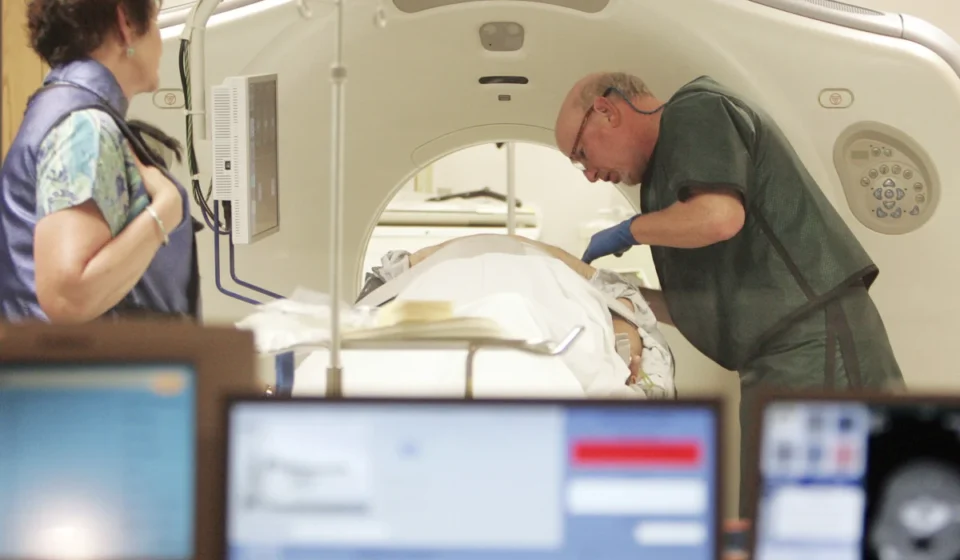
- Eligibility Assessment: The staff assisted patients in determining if they qualified for a low-dose CT scan, removing the confusion surrounding insurance coverage and clinical guidelines.
- Real-Time Scheduling: Instead of sending patients home with a flyer, the clinic staff facilitated the scheduling of the appointment while the patient was still in the office.
By integrating these steps into the routine clinical workflow, the team effectively bypassed the logistical "friction" that often causes patients to delay or skip their screenings. The result was a 30% increase in screening orders for eligible patients—a significant victory for a short-term pilot project.
Overcoming the Psychological Barrier: Confronting Stigma
While logistical hurdles are significant, Dr. Begnaud notes that there is an equally potent barrier that is often ignored: shame. Decades of aggressive public health messaging regarding the dangers of smoking have undoubtedly lowered national smoking rates, but they have also inadvertently fostered a culture of blame.
"All the public service announcements and warnings have decreased the smoking rate, but they have also led to stigma and shame around cigarette smoking," Dr. Begnaud explained. "People who have smoked or continue to smoke are certainly aware that it’s bad for their health, and they know that everyone else is thinking about it. I think they internalize these messages of blame."
This internalized stigma often keeps patients from seeking care. They may fear judgment from their healthcare providers or feel that their diagnosis is a "self-inflicted" punishment. Dr. Begnaud argues that to successfully increase screening, the medical community must decouple the act of screening from the act of smoking.
"It’s really important to get people to be open to screening to try to decouple the kind of shame or blame that goes along with it," she said. "When we provide a judgment-free, proactive environment, patients are much more likely to engage with their health."
Official Response and Future Implications
The success of the pilot program has provided a proof-of-concept that is now being readied for a statewide expansion. Dr. Begnaud is optimistic, though she remains grounded in the realities of clinical research.
"What we really wanted to see was: Is this approach feasible? Is this doable in clinics? And largely, the answer to that is yes," she noted. While the small sample size of the pilot means that researchers are cautious about claiming a definitive increase in total screening completion rates, the data clearly shows that the "whole-of-office" approach is sustainable and effective at generating orders.
As the program moves toward larger trials, the implications are profound. If this model can be successfully implemented across Minnesota and potentially replicated in other rural regions of the U.S., it could fundamentally alter the landscape of lung cancer mortality. By moving the responsibility from the patient to the health system, the initiative promises to save thousands of lives that would otherwise be lost to late-stage, incurable diagnoses.
A Motivation Rooted in Clinical Reality
For Dr. Begnaud, the push for systemic change is not just an academic exercise; it is a moral imperative. As a pulmonologist who spends her days treating patients, she is constantly confronted by the human cost of current screening gaps.
"My clinical work as a lung specialist motivates me," she said. "Every time I see somebody who comes to me who should have been screened and wasn’t, and now they have a stage 3 or a stage 4 lung cancer, it motivates me to get up and work harder tomorrow."
The research project represents more than just a procedural change; it represents a promise to rural communities that their health is a priority. In a landscape often defined by what is lost, this initiative is a beacon of what can be gained when healthcare systems adapt to meet the needs of the people they serve. As Dr. Begnaud aptly put it, "There’s still a lot of work to do," but for the first time, there is a clear, proven path forward.