
























































London’s Streets Become the New Frontier: Baidu, Lyft, and the Race for Robotaxi Dominance

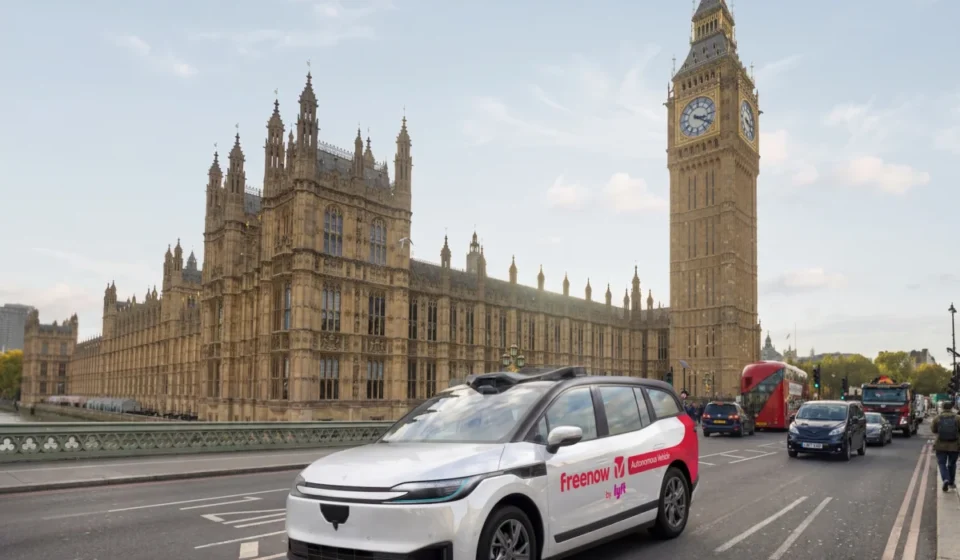
The quiet, historic streets of London’s borough of Brent have become the latest laboratory for the future of urban mobility. This week, Chinese technology powerhouse Baidu officially commenced testing its autonomous vehicle (AV) fleet on UK soil. The initiative, carried out in strategic partnership with ride-hailing giant Lyft and its European subsidiary, Freenow, marks a pivotal shift in the global robotaxi race. As major tech players scramble to secure a foothold in the European market, London is rapidly emerging as the world’s most intense testing ground for the integration of self-driving technology into dense, complex urban environments.
The Main Facts: A Tripartite Strategy
The testing program, which initiated on Tuesday, is not a pilot for public consumption—yet. Each vehicle currently navigating Brent is equipped with human safety operators behind the wheel, a mandatory safeguard required by UK regulators to ensure that the AI systems can handle the idiosyncrasies of British traffic, from unpredictable weather to the city’s labyrinthine road layouts.
This move follows a strategic alliance formed nearly a year ago between Baidu and Lyft. The partnership centers on the deployment of the Apollo Go RT6, a purpose-built, Level 4 autonomous vehicle engineered by Baidu specifically for ride-hailing operations. By leveraging the existing infrastructure and massive user base of Freenow—the German multi-mobility app acquired by Lyft for $197 million in 2025—the consortium aims to leapfrog competitors by integrating autonomous transit directly into a platform that millions of Europeans already trust for their daily commute.
Chronology: From Acquisition to Autonomous Integration
The trajectory leading to this week’s testing phase has been marked by rapid consolidation and aggressive investment.
- April 2025: Lyft completes its acquisition of Freenow, signaling a massive pivot toward European expansion and positioning itself to challenge Uber’s dominance in the region.
- Late 2025: Baidu and Lyft announce their formal strategic partnership, outlining a roadmap to bring the Apollo Go RT6 robotaxis to European markets.
- April 2026: Waymo begins active testing in London with human safety operators, setting the stage for a high-stakes competitive environment.
- June 2026: Uber and Wayve confirm their intent to launch a joint robotaxi service in London, publishing an interest list for early adopters.
- July 2026: Baidu officially begins road tests in the London borough of Brent, marking the first time its specific AV technology has been deployed at scale within the UK.
- 2027 (Projected): Targeted launch for public access to the robotaxi service, contingent upon regulatory approval and successful safety milestones.
The London Battleground: Supporting Data and Industry Context
London is currently the focal point of a "robotaxi showdown." Unlike the sprawling, grid-patterned cities of the American Sun Belt—where companies like Waymo and Cruise cut their teeth—London presents a uniquely challenging environment. Narrow roads, centuries-old urban planning, and high-density pedestrian traffic make the city an ideal stress test for AI navigation systems.
The current landscape is defined by a "hybrid network" approach. Major players, including Lyft and Uber, have explicitly stated that they do not intend to replace human drivers overnight. Instead, the strategy involves a phased integration where robotaxis operate alongside traditional taxis and private-hire vehicles. This approach serves two purposes: it mitigates political backlash from taxi unions and provides a safety net for situations where the AI may struggle, such as extreme weather or construction detours.
Key Competitors and Their Strategies
- Waymo: Focused on high-fidelity mapping and its proven, proprietary hardware suite. Waymo’s testing in London serves as a baseline for the city’s regulatory standards.
- Uber & Wayve: Relying on Wayve’s "AV 2.0" approach, which utilizes end-to-end deep learning. Unlike competitors who rely heavily on high-definition mapping, Wayve’s tech is designed to be more adaptable to changing urban landscapes.
- Baidu/Lyft/Freenow: Benefitting from the "purpose-built" advantage. The Apollo Go RT6 is not a retrofitted consumer vehicle; it is a vehicle designed from the ground up for ride-hailing, featuring modular interiors and lower per-unit production costs that could potentially undercut the pricing models of its rivals.
Regulatory Landscape and Official Responses
The UK government has taken a proactive, if cautious, stance toward autonomous vehicles. The Centre for Connected and Autonomous Vehicles (CCAV) and Transport for London (TfL) are currently engaged in intensive discussions with all testing participants. In May, the government launched an open application process for an AV pilot program, inviting companies to test vehicles under strict oversight. This is part of a broader effort to codify autonomous vehicle laws in the UK, aiming to create a framework that balances innovation with public safety.
Thomas Zimmermann, CEO of Freenow by Lyft, addressed the industry shift in a recent statement, emphasizing the necessity of a collaborative transition:
"As a platform with deep roots in the taxi industry, our priority is ensuring that autonomous technology supports the professional drivers who keep London moving. We are building a hybrid future where technology and human expertise work in tandem to optimize the city’s transport capacity."
This sentiment is echoed by government officials who stress that any rollout will be contingent on the technology demonstrating a safety record that significantly exceeds that of human drivers.
Implications: The Future of Urban Mobility
The implications of the Baidu-Lyft partnership extend far beyond the streets of Brent. If successful, the deployment of the Apollo Go RT6 in London could serve as a blueprint for the mass adoption of autonomous transit across the European Union.
Economic Impact
The transition to robotaxis is expected to fundamentally alter the unit economics of ride-hailing. Currently, the largest expense for any ride-hailing company is the driver. By removing the human operator, companies anticipate a drastic reduction in the cost per mile, which could eventually make robotaxi services cheaper than private car ownership, potentially reducing the number of vehicles on the road and lowering urban congestion.
Ethical and Labor Concerns
However, the shift is not without controversy. Labor unions representing London’s black-cab drivers and private-hire workers have expressed concerns regarding job security. The promise that autonomous vehicles will "support" human drivers is viewed with skepticism by critics who argue that the eventual, full-scale automation of the industry is inevitable and that current hybrid models are merely a transitional phase to pacify the workforce.
The Technological Hurdle
Technologically, the London tests are designed to solve the "edge case" problem. While AVs can navigate predictable scenarios with high reliability, the real challenge lies in the "long tail" of driving—the rare, unexpected events that require human-level intuition. Baidu’s data collection in London will be crucial for training its neural networks to understand the unique "traffic culture" of the UK, which differs significantly from the traffic patterns observed in Beijing or Phoenix.
Conclusion: A Long Road Ahead
As Baidu, Lyft, and their competitors continue to gather data on the streets of London, the timeline for a truly driverless future remains fluid. While 2027 is the stated goal for public access, the reality of the rollout will be dictated by the robustness of the technology and the political appetite for change.
London is not just testing cars; it is testing the social and regulatory contract between the public, the government, and the tech giants that aim to redefine the city. For now, the sight of a vehicle navigating Brent with a safety operator behind the wheel is a reminder that while the future of mobility is autonomous, the path to reaching it remains firmly in human hands.
Disclaimer: This article contains affiliate links. When you purchase through links in our articles, we may earn a small commission. This does not affect our editorial independence.