



















































In a quiet, fenced-off grove in rural Vermont, a team of scientists is performing a deliberate, calculated act of destruction. Dressed in field gear, Gus Goodwin—the director of science and technology advancement for The Nature Conservancy in Vermont—kneels before a young American elm. With the precision of a surgeon, he marks a spot 12 inches from the ground, drills a shallow, downward-angled hole, and uses a pipette to inject a precise, lethal dose of Ophiostoma spores—the fungus responsible for the Dutch elm disease (DED) that has decimated one of North America’s most iconic species.
This is not an act of malice; it is a desperate, clinical gamble. By infecting nearly 5,300 saplings, researchers hope to identify the rare genetic outliers capable of resisting a pathogen that has claimed tens of millions of trees over the last century. It is the most ambitious effort yet to restore the American elm to its former glory, transforming a landscape of loss into a laboratory of resilience.
The Cultural and Ecological Weight of the Elm
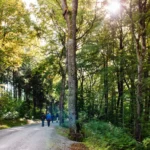
To understand why scientists are willing to sacrifice thousands of trees to save the species, one must look at the history of the American elm (Ulmus americana). For generations, the tree was the backbone of the American landscape. With its signature vase-like shape and towering, arching canopy, the elm provided a cathedral-like aesthetic to Main Streets, town squares, and river valleys from the Canadian Maritimes to East Texas.
Beyond its beauty, the elm is an ecological powerhouse. It is uniquely shade-tolerant and flood-tolerant, making it an essential component of healthy riparian zones. These trees serve as natural sponges, mitigating the impact of increasingly frequent and catastrophic flooding—a growing concern for states like Vermont, which has faced multiple "100-year" flood events in just the past few years. Studies suggest that restoring these floodplains could prevent as much as $1 billion in property damage over the next century.
Furthermore, the species supports a specialized ecosystem. Creatures like the double-toothed prominent moth have evolved in such tight symbiosis with the elm that their larvae mimic the serrated edges of the leaf for camouflage. When the elm disappears, the rug is effectively pulled out from under an entire web of biodiversity.

A Century of Plague: A Chronology of Decline
The downfall of the American elm began in the early 20th century, a victim of global commerce.
- 1910–1922: The fungus Ophiostoma ulmi is observed in northern Europe, with Dutch scientists officially describing it in 1922. It is believed to have originated in Asia and arrived in North America via timber imports.
- 1935: With the disease spreading rapidly, President Franklin Delano Roosevelt authorizes $2.5 million to combat the blight. The strategy, however, relies on mass culling, which inadvertently accelerates the spread through interconnected root systems.
- 1940s: The outbreak intensifies. As resources are diverted to World War II, a more virulent strain, Ophiostoma novo-ulmi, enters the country, sparking an epidemic that would kill up to 100 million trees.
- 1970s: The devastation hits urban centers. Minneapolis alone begins removing 20,000 elms annually. Cities like New Haven, once known as the "Elm City," lose nearly their entire canopy.
- 2003–Present: Federal agencies and conservation groups ramp up modern efforts to breed for resistance, shifting away from simple culling toward genetic selection and controlled inoculation.
The Science of Resistance: Why Breeding is the Only Way
In the modern era of gene editing, the struggle to save the elm remains stubbornly analog. Unlike the American chestnut, which has faced similar challenges, the elm does not have a single, identifiable genetic "switch" that confers immunity. Resistance appears to be a complex, polygenic trait, making CRISPR and other high-tech interventions moot for the time being.
"We are doing little more than what Gregor Mendel did with his peas," says Leila Wilson, a research ecologist with the U.S. Forest Service. "It is crossbreeding, pure and simple."
The process is grueling. Historically, the odds of finding a tree with natural tolerance are roughly one in 100,000. Early attempts in the 1960s at Cornell University tested 21,000 seedlings, resulting in only 16 survivors—many of which failed to pass their resistance to the next generation.
However, current researchers are benefiting from the "cruel natural selection" that has occurred over the last 80 years. Because so many trees have already died, those remaining in the wild are more likely to possess genuine biological tolerance rather than mere luck. By collecting cuttings from "survivor trees" like the Rainbow Beach elm in Massachusetts, scientists are cross-pollinating these hardy specimens to create a new generation of "super trees."

Official Perspectives and Expert Insight
The project has garnered cautious optimism from the forestry community. Alden "Denny" Townsend, a pioneer in forest genetics who helped develop the "Valley Forge" and "New Harmony" cultivars in the 1990s, views the current work as a necessary evolution.
"Mistakes were made in the early days," Townsend admits, referencing the reliance on limited genetic stock that produced clones susceptible to wind damage or other secondary stressors. "Diversity is the key. You cannot just replicate one ‘perfect’ tree; you need a robust, genetically diverse population to withstand the evolving pressures of the environment."
Christian Marks, who spearheaded the Connecticut River floodplain research, emphasizes the rigor of the new testing protocols. "A survival rate of 90 percent isn’t enough," he says. "We need trees that can survive multiple exposures over a 150-year lifespan. This is the playoffs. It’s what we’ve been preparing for."
Ethical and Practical Implications
The project is not without its critics—or at least, its skeptics. Some question the financial investment required to restore a species that may never return to its former dominance. However, the scientific community argues that the cost of inaction is far higher.
"There is a moral injury to extinction," says Goodwin. "This is a way to try to repair that."

Furthermore, planners have learned the hard way about the dangers of monocultures. The total loss of the elm, and the subsequent threats to species like the ash (targeted by the emerald ash borer), have changed urban forestry. "We learned not to plant a monoculture," says arborist Doug Still. "The goal is not to replace every tree with an elm, but to reintroduce the species as a healthy, contributing member of a diverse forest."
The Benson Tree: A Symbol of Hope
At the Benson, Vermont, test site, the results are beginning to emerge. Some saplings are already brown and leafless, their vascular systems clogged by the fungus. Others remain vibrant and green. The researchers track these responses with meticulous care, knowing that for every tree that turns yellow and dies, another may hold the key to a future where the American elm returns to its place in the landscape.
Nearby, a mature, 100-year-old specimen known as the "Benson tree" stands as a silent witness to the work. It is unruly and imperfect, but it has survived while its peers have fallen. Whether it is genetically resistant or simply the last of a lucky generation, it represents the very thing the scientists are fighting to protect: the enduring, vase-shaped silhouette that once defined the American identity.
As the team prepares for the next phase of monitoring, they are reminded that this work is a generational commitment. It will be another 10 to 15 years before the new "super trees" bear seed, and even longer before they can be planted in the wild. But for the researchers in the field, the sight of a single green, healthy tree in a sea of infection makes the decades of "trouble" worth it. The goal is no longer just to save a tree; it is to restore the cathedral of the forest, one injection at a time.