















































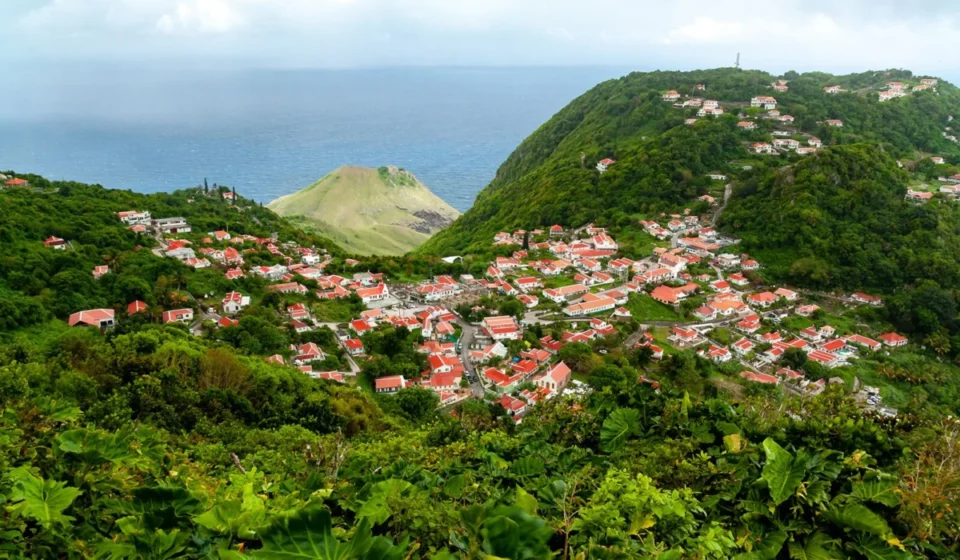

In an era defined by mass tourism, sprawling mega-resorts, and the homogenization of tropical destinations, the island of Saba stands as a defiant anomaly. Rising sharply from the Caribbean Sea like an emerald fortress, this five-square-mile volcanic peak has successfully resisted the commercial pressures that have reshaped its neighbors. With no sprawling beachfront properties and a strictly regulated development philosophy, Saba has earned its moniker as the "Unspoiled Queen of the Caribbean."
For the modern traveler, Saba offers something increasingly rare: a landscape untouched by excessive commercialization, where the rugged volcanic topography dictates the pace of life rather than the demands of a high-volume hospitality industry.
The Architecture of Preservation: A Deliberate Strategy
The defining characteristic of Saba is not what has been built, but what has been consciously left wild. Approximately one-third of the island’s land mass is legally protected as national parkland, encompassing the Mount Scenery National Park, the Saba National Marine Park, and the Saba Bank National Park.
Tom Brokke, a Senior National Park Officer with the Saba Conservation Foundation, notes that the island’s pristine state is the result of a long-term, deliberate policy of conservation. “What makes Saba special is its natural beauty, the dramatic landscapes, and the fact that development has remained relatively small-scale and in character with the island,” Brokke explains. “The small boutique hotels and locally owned businesses actually add to that identity rather than taking away from it.”
This strategy creates an economic ecosystem where tourism serves the environment rather than exploiting it. By limiting the scale of development, Saba ensures that its infrastructure remains in harmony with its history, maintaining the iconic Saban aesthetic: white walls, red-shingled roofs, and vibrant green-and-white shutters, all accented by classic gingerbread trim.
A Chronology of Ingenuity: Building "The Road"
To understand the spirit of Saba, one must understand "The Road." For decades, engineers from around the world deemed a road on the island’s precipitous slopes to be an impossible engineering feat. In the mid-20th century, the people of Saba chose to ignore the experts.
Teaching themselves the intricacies of road construction, the islanders took to the hills with picks, shovels, and sheer determination. By the time the road was completed in 1963, it stood as a testament to local self-reliance. Navigating the sharp, vertigo-inducing switchbacks today, it is clear why the local government insists on managed transportation; the road is as much a historical monument as it is a transit route.
This ethos of self-sufficiency defined the island’s economy for generations, particularly during the 19th and 20th centuries, when the men of the island were primarily seafaring. With the labor force at sea, the women of Saba developed the island’s signature "Saba Lace," or drawn threadwork, creating an international mail-order empire that sustained the local economy for decades.
Ecological Stewardship: Beyond the Surface
The preservation efforts extend far beyond the rocky cliffs and cloud forests. Since 1987, the Saba National Marine Park has protected the surrounding waters, and the results are undeniable.
The marine ecosystem here is a sanctuary of biodiversity. Divers and snorkelers report visibility that often exceeds 100 feet, revealing a thriving underwater world where schools of tropical fish navigate volcanic rock formations, sea turtles graze on sponges, and nurse sharks find refuge under coral ledges. Unlike many other Caribbean sites that suffer from the effects of cruise ship traffic and over-tourism, Saba’s waters remain a vibrant, healthy laboratory for marine biologists and nature enthusiasts alike.
The Human Element: Traditions Kept Alive
While the topography is the island’s initial draw, the culture of the people is what creates its lasting impact. The "Lace Ladies" of Windwardside, led by artisans like Peggy Barnes, represent a living link to the island’s history.
Barnes, who learned the intricate craft as a child by the light of a kerosene lamp, now oversees free workshops aimed at ensuring the skill does not vanish with the passing generation. "No barriers to entry," Barnes says of her teaching philosophy. "We always make room for whoever wants to come."
This spirit of preservation is mirrored in the work of Marie Petit, an artisan reviving the nearly lost art of plaiting. By sourcing materials like dried palm fronds and local seeds, Petit is re-establishing a connection to the island’s ancestral methods of craftsmanship. These efforts transform a visit to Saba from a simple vacation into an immersive cultural experience, where every souvenir carries the weight of history.
Supporting Data: The Logistics of Remote Travel
Reaching the "Unspoiled Queen" is, by design, an exercise in exclusivity. There are no direct international commercial flights to the island. Travelers must first route through St. Maarten, followed by a 15-minute hop via Winair’s STOL (Short Take-Off and Landing) aircraft, or a 90-minute journey via the Makana Ferry.
- Accommodation: The island maintains a limited inventory of five hotels, emphasizing family-run, boutique experiences. Establishments like Juliana’s Hotel offer a glimpse into traditional Saban architecture, with rates starting at approximately $205 per night.
- Dining: The culinary scene is heavily influenced by the "farm-to-table" necessity of a remote island. Establishments like Tropics Cafe emphasize locally sourced ingredients, while the renowned Brigadoon restaurant showcases the bounty of the Saba Bank, particularly the prized local lobster.
- Accessibility: The island’s terrain, characterized by intense elevation changes, requires physical preparation. Visitors are advised that the "daily leg day" necessitated by the steep, winding roads is an intrinsic part of the Saban experience.
Official Responses and Future Implications
The Saba Conservation Foundation remains the primary gatekeeper of the island’s future. Their mandate involves balancing the desire for economic growth with the imperative of ecological protection.
"I don’t think a camera can really capture what it feels like to actually live here," says Tom Brokke. This sentiment encapsulates the island’s core policy: by resisting the urge to cater to mass-market trends, Saba has inadvertently created the ultimate luxury—a destination that feels truly remote, authentically historic, and deeply personal.
The implications for the broader Caribbean region are significant. Saba provides a working model for "slow tourism," demonstrating that a destination can thrive without compromising its environmental integrity or cultural soul. As travelers become increasingly conscious of their carbon footprints and the impacts of over-tourism, Saba’s model of deliberate, small-scale development may well become the standard for the next generation of sustainable travel.
Conclusion: A Lesson in Restraint
Saba is not for the traveler seeking swim-up bars, sprawling casinos, or endless sandy beaches. It is for the explorer who understands that the most rewarding landscapes are often those that require a bit of effort to reach and even more respect to enjoy.
By prioritizing the health of its reefs, the integrity of its trails, and the vitality of its traditions, Saba has managed to remain an island out of time. It is a place where the air is cleaner, the people are more connected, and the silence is not a void, but a presence. For those willing to trade the resort experience for the rugged, authentic beauty of the volcanic Caribbean, Saba offers a masterclass in how a community can honor its past while protecting its future.