





















































The Sunset of a Civic Giant: Inside the Decision to Dissolve the Itasca Project

For over two decades, the Itasca Project served as the quiet powerhouse behind some of Minnesota’s most significant regional policy shifts and economic development initiatives. Comprised of a high-level alliance of CEOs, philanthropic leaders, and public sector officials, the group was often cited as the gold standard for "the Minnesota way" of cross-sector collaboration. However, in a move that has sent ripples through the state’s civic and business communities, the Itasca Project’s leadership has announced the dissolution of the organization as a standalone entity.
The decision marks a pivot point for regional leadership in the Twin Cities, signaling a transition from a centralized, CEO-led model to a more fragmented, specialized, and diverse ecosystem of civic engagement.
Main Facts: The Unanimous Decision to Sunset
On Friday, the Executive Leadership Council of the Itasca Project issued a ten-paragraph memo to its working teams and funders, announcing that the organization would be "graduating its work to other organizations in our region." The decision to retire the initiative was described as "unanimous" and the result of "careful deliberation" spanning several months.
The move is particularly striking given the organization’s recent attempts to formalize its structure. Only a year ago, Steve Grove, the publisher of the Minnesota Star Tribune and former commissioner of the Minnesota Department of Employment and Economic Development (DEED), was named chair. At the time, Grove praised Itasca as a "national model for collaboration." Now, Grove’s name sits atop the list of leaders—including executives from McKinsey & Co., Mortenson, and U.S. Bank—who have signed off on its closure.
According to the leadership council, the primary reason for the shutdown is not a failure of mission, but rather the success of the regional ecosystem. The memo argues that the "task force model" pioneered by Itasca has been successfully adopted by other entities, most notably Greater MSP and the GroundBreak Coalition. Consequently, the Itasca Project believes its specific intervention as a standalone "civic alliance" is no longer necessary to sustain the momentum of the projects it helped birth.
Chronology: From Informal Alliance to Formal Dissolution
The trajectory of the Itasca Project reflects the changing nature of corporate social responsibility and civic leadership over the last 20 years.
The Formative Years (2003–2010)
Founded in the early 2000s, the Itasca Project began as an informal, "virtual" entity. It had no permanent office and no full-time staff. Instead, it relied on the volunteer time of CEOs and the pro-bono consulting services of McKinsey & Co. During this era, the group focused on massive, macro-level issues. Its most significant early victory came in 2008, when it successfully lobbied for the largest transportation investment in Minnesota’s history—an increase in the gas tax to fund infrastructure following the I-35W bridge collapse.
Expansion and Institutionalization (2011–2021)
In 2011, the Itasca Project played a foundational role in creating Greater MSP, a regional economic development partnership. Over the following decade, Itasca expanded its scope to tackle socio-economic disparities. The "Mind the Gap" and "Close the Gap" campaigns became central to the regional conversation regarding racial and economic equity. During this period, Itasca remained a background force, often described by national columnists like Thomas Friedman as a unique "secret sauce" that allowed Minnesota to solve problems that paralyzed other states.
The 2022 Pivot
By 2022, under the leadership of then-chair Lynn Casey (former CEO of Padilla), the organization recognized a need for more accountability. Casey noted that "more is expected of Itasca," leading to the creation of an Executive Leadership Council, the hiring of its first managing director, Jake Blumberg, and the establishment of a physical office within the Greater MSP headquarters. This was intended to be a new chapter of "catalyzing action" with a more professionalized staff.
The Final Year (2023–2025)
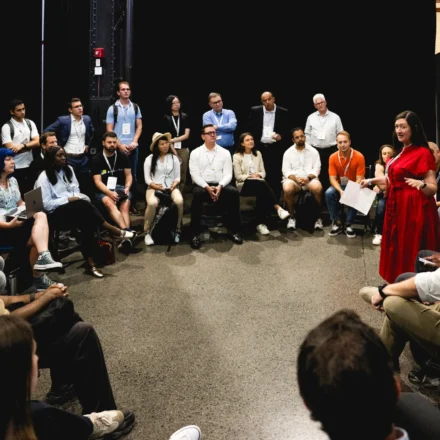
In October 2023, the organization celebrated its 20th anniversary with an event titled "Catalyzing Civic Leadership," attended by over 300 regional leaders. However, behind the scenes, a strategic review was underway. According to Managing Director Jake Blumberg, the leadership spent seven months asking whether they were still the "right leaders" to pursue success in a modern context. By early 2025, the conclusion was reached: the standalone model had reached its natural end.
Supporting Data: Two Decades of Impact
The Itasca Project’s legacy is defined by a data-driven "task force" approach. Typically, the group launched two task forces per year, focusing on well-researched reports that provided a roadmap for legislative and corporate action.
Key Achievements and Initiatives:
- Transportation Infrastructure: The 2008 gas tax increase remains the hallmark of Itasca’s influence. By researching funding models in other states, the task force provided the political cover and economic justification for a bipartisan investment in Minnesota’s roads and bridges.
- Business Bridge: This initiative encouraged the state’s largest employers—including Fortune 500 companies—to shift their procurement spending toward local, diverse suppliers. The goal was to keep more capital within the regional economy to stimulate growth in under-resourced neighborhoods.
- Early Childhood Care: Itasca made the "business case" for early childhood education, arguing that a lack of affordable childcare was a primary barrier to workforce participation and long-term economic competitiveness.
- Leadership Development: The Minnesota Young American Leaders Program (MYALP), a collaboration with Harvard Business School and the University of Minnesota, has trained hundreds of emerging leaders. This program will continue, with Greater MSP taking over the administration in 2026.
Despite these successes, recent data suggests a shift in how CEOs engage with such projects. In a 2024 Twin Cities Business survey, concerns were raised that modern CEOs are increasingly consumed by the "complexity and intensity of the corporate environment," leaving less room for the high-level civic advocacy that defined the early years of the Itasca Project.
Official Responses: A Shift in Leadership Philosophy
The official statements regarding the shutdown emphasize a theme of "evolution" rather than "retreat."
Jake Blumberg, Managing Director:
In a candid LinkedIn post, Blumberg explained that the decision was rooted in a desire for more inclusive leadership. "The work of cross-sector civic engagement is best carried forward by numerous other organizations… especially those led by folks with different lived experiences and identities than those who have predominantly led those efforts historically," Blumberg wrote. His comments suggest that the traditional "CEO-heavy" model of the Itasca Project may have felt out of step with contemporary demands for diverse representation in civic governance.
The Executive Leadership Council Memo:
The memo signed by Steve Grove and others took a celebratory tone, framing the dissolution as a "graduation." It noted that "the task force model that Itasca pioneered… has been fully adopted by Greater MSP and others." The council expressed confidence that the "spirit of Itasca" is now embedded in the broader community, rendering the specific organization redundant.
Lynn Casey, Former Chair:
Casey has previously pushed back against the idea that the business community is disengaging. She characterized the current state of affairs as an evolution driven by the "intensity of the corporate environment." She suggested that while CEOs may not be the sole faces of civic leadership anymore, executives at other levels of the corporate hierarchy are stepping into those roles.
Implications: A New Era for Minnesota’s Civic Ecosystem
The dissolution of the Itasca Project raises critical questions about the future of regional problem-solving in the Twin Cities.
1. The Risk of a Leadership Vacuum
While the leadership council maintains that other organizations will pick up the mantle, the Itasca Project occupied a unique niche: it was a "neutral" table where the most powerful people in the state could meet without the constraints of their specific corporate or political agendas. Without this centralized forum, there is a risk that regional efforts could become more siloed or less coordinated.
2. The Decentralization of Influence
The "graduation" of Itasca’s work to groups like GroundBreak and Greater MSP suggests a move toward specialized civic engagement. GroundBreak, for instance, focuses specifically on racial wealth equity and housing. This reflects a broader national trend where "big tent" civic groups are being replaced by targeted, mission-specific coalitions.
3. A Redefinition of "The Minnesota Way"
For decades, the "Minnesota Way" was defined by a small group of (mostly white, male) CEOs making decisions in wood-paneled boardrooms for the good of the state. The sunsetting of Itasca—and Blumberg’s comments regarding "lived experiences"—marks a formal acknowledgement that this model is no longer sufficient. The implication is that for civic leadership to be effective in 2025 and beyond, it must be more representative of the actual population of the Twin Cities.
4. Facing Modern Challenges
The shutdown comes at a precarious time. Minnesota is currently grappling with anemic population growth, significant fiscal hurdles for its major cities, and deep political polarization regarding public safety. The Itasca Project was designed to find consensus in such environments. Whether the "countless other groups" mentioned in the leadership memo can match Itasca’s history of achieving legislative breakthroughs remains to be seen.
In the coming weeks, the Executive Leadership Council plans to host a virtual meeting to allow for "dialogue" among stakeholders. While the Itasca Project as an entity is coming to an end, the questions it leaves behind—who leads, how they lead, and who they represent—will define the next twenty years of Minnesota’s civic history.