


























































In the heart of Hampton Roads, Virginia, the headquarters of the regional planning commission stood for years as a monument to a fading infrastructure philosophy. Its parking lot, a sprawling expanse of weathered, heat-absorbing asphalt, was a classic example of urban planning that prioritized simple vehicle storage over environmental health. However, when the time came for a necessary overhaul, the staff made a choice that bucked decades of convention.
Rather than settling for a standard repaving, the commission opted for an innovative redesign. Completed last year, the new lot is a patchwork of porous concrete panels, native landscaping, and recycled materials. It is a living laboratory designed to stay cool under the summer sun and act as a sponge during heavy rain, effectively mitigating the dual threats of the urban heat island effect and stormwater runoff.
"The rain infiltrates faster than it can puddle and stop on the surface," says Jill Sunderland, the commission’s senior water resources planner. Beyond its hydrological utility, the lot has transformed the site’s microclimate. "You notice, too, that it’s cooler. You really can tell a difference out there—not to mention it’s just more inviting."
The Hampton Roads project is not an isolated experiment. It is a bellwether for a growing movement across the United States. As climate change accelerates—bringing with it more intense heat waves and unpredictable, torrential rainfall—cities are increasingly viewing their vast inventory of parking lots as critical assets that can be repurposed to build urban resilience.
The Chronology of an Urban Transformation
The transition away from traditional asphalt did not happen overnight. For much of the 20th century, the American landscape was defined by the "minimum parking requirement"—a zoning mandate that forced developers to build an abundance of parking spaces, often far exceeding actual demand.
- The Era of Expansion (1950s–1990s): During this period, asphalt became the standard for urban development due to its low cost and ease of installation. Little thought was given to the environmental externalities of massive, impervious surfaces.
- The Recognition of Costs (2000s): Researchers began to quantify the "urban heat island" effect, noting that paved surfaces could reach temperatures 20 degrees higher than surrounding green spaces. Simultaneously, the ecological impact of polluted runoff—carrying motor oil, heavy metals, and debris into local watersheds—became a major focus of the Environmental Protection Agency (EPA).
- The Policy Shift (2010s–Present): Cities like Buffalo, New York; Austin, Texas; and Minneapolis began to lead the charge by eliminating mandatory minimum parking requirements. This regulatory shift allowed developers to build less parking, freeing up land for housing, transit, or green space.
- The Implementation Phase (2020–Today): Municipalities began integrating green infrastructure requirements into building codes. New Orleans, for example, now requires its Department of Public Works to utilize permeable paving wherever feasible, signaling a move from voluntary green projects to mandatory, climate-conscious standards.
Supporting Data: The Case for Change
The urgency behind this transition is supported by compelling data. According to urban planning experts, parking often occupies between 25% and 30% of downtown land in major U.S. cities. Yet, research from scholars like Adam Millard-Ball of UCLA suggests that more than a third of these spaces remain vacant at any given time, particularly at commercial hubs, sports arenas, and office parks.

The environmental "tax" of these empty spaces is immense:
- Thermal Retention: Dark asphalt acts as a solar collector. During the day, it absorbs energy, which is then re-emitted at night, preventing cities from cooling down. This cycle forces a higher reliance on air conditioning, which in turn vents more heat into the street, creating a feedback loop of warming.
- Hydrological Stress: Unlike natural soil, asphalt is impervious. In a storm, this creates high-velocity runoff that overwhelms sewer systems and carries urban pollutants directly into rivers and bays.
- The "Empty Space" Paradox: At the Newfields art museum in Indianapolis, staff realized their overflow parking lot was rarely used to capacity. By replacing a portion of that asphalt with recycled plastic grid pavers—a system that allows grass to grow through the structure—they created a parking surface that only "breathes" when needed, while remaining a functional part of the landscape the rest of the time.
Official Responses and Industry Perspectives
While the trend toward "depaving" is gaining momentum, it has not gone without pushback from traditional industry sectors. The Asphalt Pavement Alliance, a major industry coalition, warns that cities must be pragmatic.
Buzz Powell, the alliance’s technical director, acknowledges the appeal of alternative designs but urges caution regarding durability. "I just think we need to be really, really careful when we put alternative systems in to make sure that we have a good understanding of what the life cycle impact is going to be," Powell says. "Some things can be really sexy on the front end… but then when you run a trash truck over it, it can’t handle the stresses and strains."
Powell maintains that the future of pavement lies in evolution rather than abandonment. He advocates for "better asphalt"—improved mixing materials, more sophisticated structural design, and better preservation techniques—arguing that asphalt remains the most versatile material for high-traffic environments.
Conversely, advocates for green surfaces point to the "total cost of ownership." Sunderland admits that while the initial outlay for the Hampton Roads project was higher than a traditional repave, the investment pays dividends in reduced flood damage, lower localized cooling costs, and significantly longer surface life.
Implications: Building for a Resilient Future
The path forward for American cities involves a combination of strategies. There is no "silver bullet," but rather a toolkit of interventions that depend on the specific needs of a neighborhood:

- Cooling and Shading: Cities like Sacramento have implemented tree-shading ordinances, requiring developers to ensure a high percentage of shade coverage within 15 years of construction. Others, such as those in Los Angeles, are experimenting with high-albedo "cool pavement" coatings—specialized paint that reflects sunlight rather than absorbing it.
- Infrastructure Integration: Bioswales—long, vegetated channels that intercept water—are increasingly common in parking lot designs. They function as natural filters, scrubbing pollutants from runoff before it enters the water table.
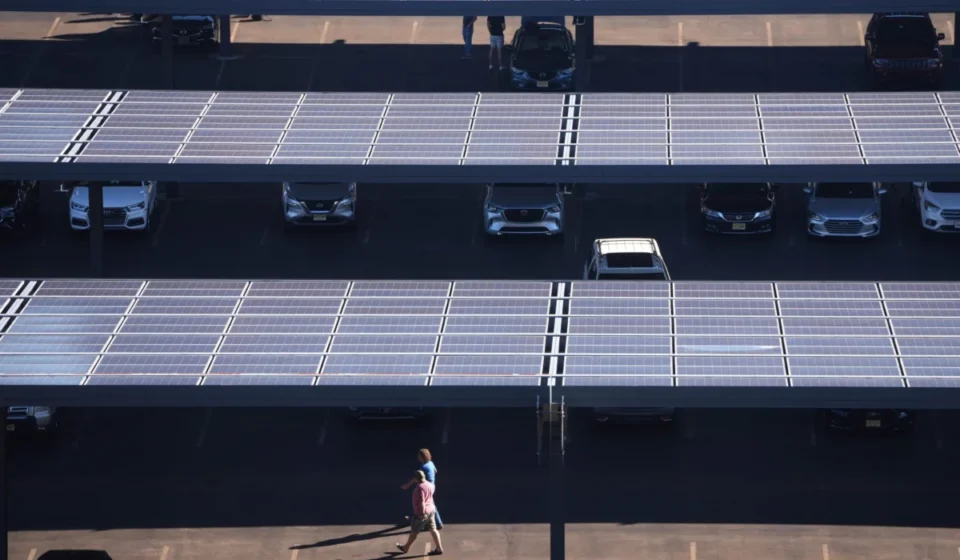
- Solar Canopies: Perhaps the most efficient dual-use solution involves installing solar panels above parking lots. These structures provide essential shade, protecting vehicles and reducing the heat island effect, while simultaneously generating clean electricity for the grid.
However, the most significant barrier remains financial. "We are headed in the right direction, but we’ve got acres and acres of nothing but blacktop parking lots that sit there and age," notes Vincent Cotrone, an urban forestry educator at Penn State. "We just don’t have the dollars to go retrofit those."
For cities under tight budget constraints, the transition is likely to be incremental. Yet, the philosophy is shifting. As Greg Kats, founder of the Smart Surfaces Coalition, observes, the benefit of these surfaces is increasingly becoming "intuitive."
Ultimately, the redesign of the parking lot is about more than just aesthetics or drainage. It is a fundamental reassessment of how we allocate our most precious urban resource: land. By shifting from the "blacktop-only" model to a more flexible, ecological approach, cities are not only preparing for a hotter, wetter climate—they are creating spaces that are safer, more sustainable, and, as planners in Virginia have discovered, significantly more welcoming to the people who use them every day.
The era of the "sea of asphalt" is not ending tomorrow, but the tide is clearly turning. As municipalities weigh the costs of inaction against the benefits of innovation, the parking lot of the future is beginning to look less like a paved void and more like a functional, living component of the city itself.