






















































The Minnesota Twins find themselves in the midst of a summer malaise that reflects the broader, often uninspiring landscape of the current Major League Baseball wild-card era. As the calendar flipped from June to July, the American League standings presented a bleak reality: only six of the league’s 15 teams managed to maintain a .500 winning percentage or better. The Twins, mired in a struggle for identity and consistency, were not among that elite group.
The current AL wild-card race has become a frantic, yet largely hollow, scramble. Five teams, including Minnesota, were positioned within 4.5 games of the third and final postseason berth—yet none possessed a winning record. For the observant fan, this is not a sign of a "pennant race" in the traditional sense; it is a symptom of a diluted product. For a Twins organization attempting to navigate a sea of skepticism, the lack of excitement surrounding this flawed roster is not a mystery—it is a logical conclusion.
The Chronology of Discontent: From Selloff to Stagnation
The seeds of the current apathy were sown long before the 2026 season opened. Last year’s mid-season trade deadline selloff served as a de facto signal to the fanbase that the organization had effectively punted on the immediate future. Despite a series of high-level administrative changes—the appointment of a new manager, a revamped baseball operations department, and Tom Pohlad assuming the reins at the top of the organization—the needle of public sentiment has barely moved.
The disconnect is quantifiable. While the team drew over 105,000 fans for a high-profile three-game set against the Los Angeles Dodgers in late June—a series highlighted by a sellout crowd of nearly 40,000 for a Shohei Ohtani pitching start—the broader trend remains grim. According to Baseball-Reference, overall attendance is tracking approximately 30,000 behind the same point in the 2025 season. While the stadium’s "happy hour" initiatives, live pregame music, and aggressive promotional giveaways keep the casual fan engaged, they fail to mask the product on the field.
Supporting Data: The Defensive Collapse
As Twins Chairman and CEO Tom Pohlad has stated on numerous occasions, the organization’s mandate is to win. However, winning is a mathematical impossibility when the fundamentals of the game are ignored. The Twins have been plagued by a leaky bullpen and an infield that has struggled to execute even the most routine defensive plays.
The defensive statistics are, frankly, alarming. Entering July, the Twins ranked dead last in Major League Baseball in Defensive Runs Saved (DRS), with negative values at every position save for center field, according to Sports Info Solutions (SIS). Their ability to convert ground balls into outs stood at a dismal 69.9%, trailing the MLB average of 73.4% by a significant margin.
The lack of stability is best evidenced by the team’s "positional fluidity." Three of the four starting infielders from the Opening Day roster in Baltimore—third baseman Royce Lewis, shortstop Brooks Lee, and second baseman Luke Keaschall—are currently playing different positions. Even first baseman Victor Caratini, primarily a catcher, is being asked to provide versatility the team lacks.
The SIS metrics further illustrate the chaos. At the shortstop position, the Twins posted a combined minus-15 defensive rating; no other club in the majors was worse than minus-8. Tristan Gray and Brooks Lee each recorded a minus-7, ranking them among the least efficient shortstops in the league. At second base, Keaschall’s minus-6 rating tied him for 134th out of 136 players. While some figures saw minor stabilization following a series against the New York Yankees, the anecdotal evidence remains constant: when the Twins need a clutch, above-average defensive play to escape a jam, it rarely happens.
Official Responses and Tactical Realities
Twins manager Derek Shelton has been forced to defend the team’s experimental approach to fielding. "Very few players in the game today, unless you’re a superstar, play only one position," Shelton noted during a mid-June press conference. The team possesses only one such "superstar" in the traditional sense: All-Star center fielder Byron Buxton. Unfortunately, his contributions have been limited by a nagging hip injury, highlighting the fragility of a roster that relies heavily on a few key pillars.
Shelton often cites the old baseball adage: "If you can play in the middle of the diamond, you can play anywhere." While theoretically sound, the application of this philosophy has been rushed. Historically, clubs provided players an entire off-season and spring training to facilitate a transition between positions. Today’s Twins, however, are forced to learn on the fly.
This "new-age" tactical thinking has left the roster in a state of perpetual adjustment. Whether it is moving players like Jorge Polanco—a former staple—to positions they are ill-equipped to handle, or asking young prospects like Keaschall to cover right field, the cost of this experimentation is a lack of cohesion. The team remains in a precarious position, hovering three games back of Cleveland in the AL Central and 1.5 games behind Texas in the wild-card hunt.
Strategic Implications: The Trade Deadline Dilemma
As the August 3 trade deadline approaches, the Twins find themselves at a crossroads. The organization needs immediate help in the infield and the bullpen. The former is theoretically solvable; Kaelen Culpepper, a rising star for Class AAA St. Paul, is a logical internal promotion, provided he recovers from a lingering hip strain. Fixing the bullpen, however, is a market-wide challenge.
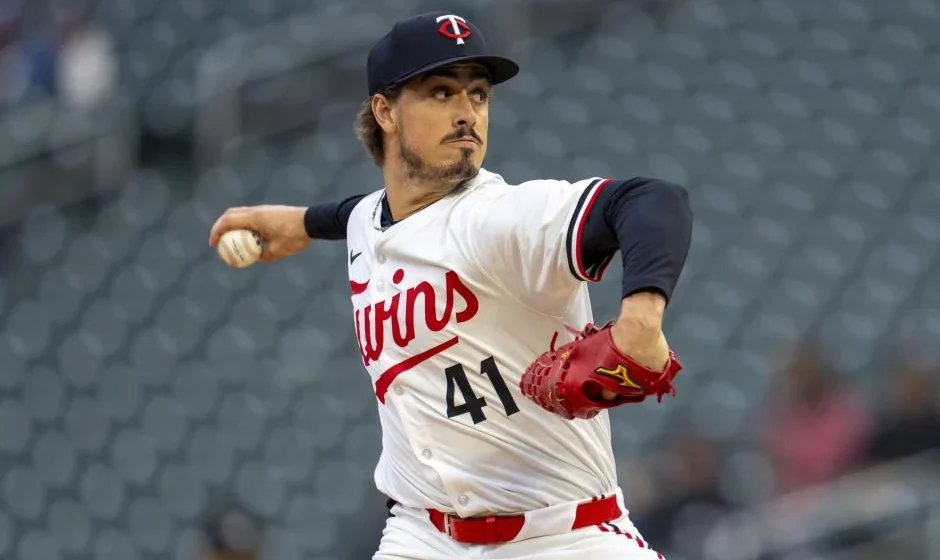
The most pressing question remains: will the Twins be buyers or sellers? The internal logic of the front office is being tested. With Buxton having reiterated his commitment to the team—and his intention to utilize his no-trade clause—the Twins’ most valuable trade assets are catcher Ryan Jeffers and starting pitcher Joe Ryan.
Jeffers is approaching free agency, and Ryan is set for arbitration in 2027. Both are entering the "magic age" of 30, a period often associated with performance decline. However, given the organization’s history—marked by the post-2023 payroll cuts and the public relations fallout regarding the reversal of a potential team sale—a "fire sale" approach would be catastrophic for the team’s relationship with its supporters.
The Path Forward: Stability Over Recycling
The path toward reclaiming the trust of the Minneapolis fan base does not lie in another cycle of low-cost replacements. The Twins must consider an aggressive shift in strategy: keeping Joe Ryan and Ryan Jeffers, and, more importantly, extending their contracts.
Quality starting pitching is an increasingly scarce commodity. Joe Ryan has proven to be a seasoned veteran who is unafraid to hold the organization accountable, as evidenced by his vocal criticism of the club’s decision to let Sonny Gray walk in 2023. Keeping Ryan, a two-time All-Star, is an investment in both talent and culture. Similarly, Ryan Jeffers represents the success of the Twins’ farm system; as the second-longest tenured player behind Buxton, his value extends beyond his offensive statistics into the realm of leadership.
In a winning clubhouse, the transmission of knowledge from veteran to prospect is essential. With a new wave of talent—including Culpepper and Walker Jenkins—on the cusp of the big leagues, the presence of experienced voices is non-negotiable.
Keeping these players may not silence the "Sell the Team" chants that occasionally echo through Target Field, but it would signify a departure from the "revolving door" mentality that has characterized recent seasons. The Tom Pohlad era is still in its infancy, and the choice is clear: the team can either continue the same act under a different name, or it can demonstrate a genuine commitment to building a sustainable, competitive winner. For the Twins, the August 3 deadline is not just about the standings; it is about defining the future of the franchise.