


















































Minnesota’s Political Crossroads: Tumultuous Conventions Reignite Debate Over Century-Old Nomination System

WASHINGTON D.C. – The echoes of last weekend’s contentious DFL and GOP state party conventions continue to reverberate across Minnesota, prompting a renewed and vigorous debate among Democrats and Republicans alike about the state’s deeply entrenched political candidate selection process. After decades of sporadic discussions, the recent events have amplified calls to scrap Minnesota’s unique, century-old caucus and convention system in favor of a more direct, primary-centric approach.
The current system, established in 1922, is a relic of a bygone era, deeply imbued with tradition and woven into the very fabric of Minnesota’s political culture. Yet, in modern American politics, it stands as a significant outlier. Only eight other states, including California and Michigan, utilize state party conventions for the endorsement or nomination of candidates, leaving Minnesota as one of the few to retain such a delegate-driven process for significant state and federal offices. The tumultuous scenes and controversial outcomes of the recent conventions have brought these historical practices under intense scrutiny, igniting a powerful movement for fundamental reform.
The Crucible of Convention: A Weekend of Discord and Disillusionment
The latest round of state party conventions proved to be particularly polarizing, fueling the sentiment that the existing system is failing to serve the broader electorate. For years, Minnesota’s nominating conventions have been a flashpoint, but the events of last weekend, especially in Duluth for the GOP and Rochester for the DFL, have pushed many to a breaking point.
A System Under Fire:
At the heart of the controversy is the perception that the delegate selection process disproportionately empowers highly motivated activists on the far ends of the political spectrum, leading to the endorsement of candidates who may struggle to appeal to mainstream voters. "Party endorsements do not produce the most electable candidates," asserts Blois Olson, a veteran political analyst and publisher of TheDailyAgenda.com, encapsulating a growing frustration. Jessica Shaten, a DFL convention delegate from south Minneapolis, echoes this sentiment, stating bluntly, "What the endorsement process has become is a way for extremist candidates to take control of their parties."
Shaten’s critique highlights a core democratic deficit many perceive: the delegates, numbering around 1,200 for the DFL and 2,000 for the GOP this year, represent a mere fraction of Minnesota’s over 3.8 million registered voters. While these delegates are chosen through a tiered caucus system (local, congressional district, then statewide), the participation rates at these initial caucuses are notoriously low, meaning a very small, highly engaged segment of the population ultimately determines party endorsements. This disconnect, critics argue, leads to candidates who are ideologically pure but politically vulnerable in a general election.
The GOP’s Duluth Debacle:
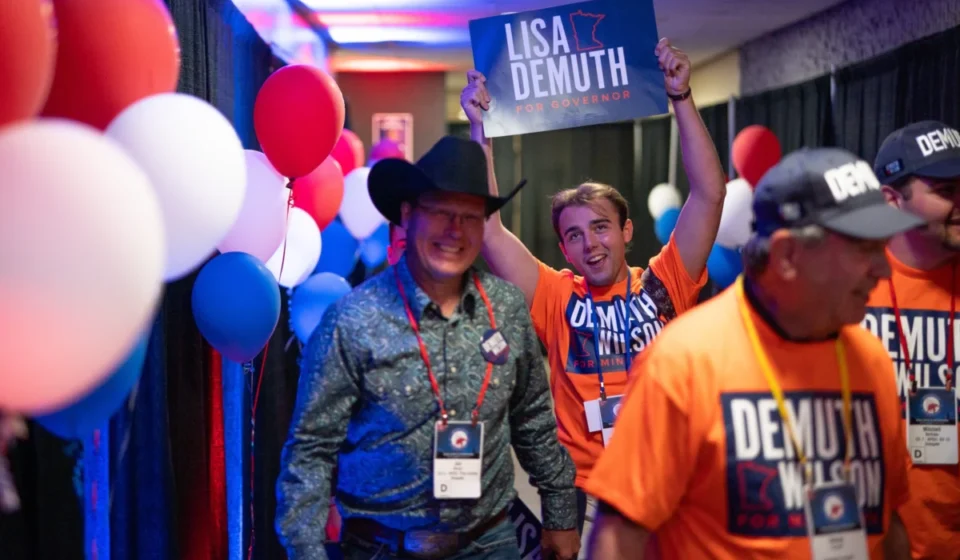
The Republican Party convention in Duluth was marred by significant internal strife and controversy. The process of endorsing a gubernatorial candidate was thrown into disarray when GOP officials announced "anomalies" in a round of balloting. Businessman Kendall Qualls, running to the right of state House Speaker Lisa Demuth, unexpectedly surged ahead, eventually securing the endorsement. The incident raised questions about the integrity of the process and further exacerbated divisions within the party.
Adding to the drama, former sportscaster Michele Tafoya, a candidate for the U.S. Senate backed by the National Republican Senatorial Committee (NRSC) for her broader appeal, was soundly rejected by delegates. They instead threw their overwhelming support (over 60% of votes) behind former Navy SEAL Adam Schwarze. Like Qualls, Schwarze is perceived as a more conservative, MAGA-aligned candidate, signaling a clear preference among the convention delegates for a more ideologically rigid approach.
In the aftermath of the balloting snafu and the rejection of a favored candidate, the Minnesota Republican Party took the unprecedented step on Monday night of releasing all candidates from the endorsement process. This decision allowed Demuth, who had previously pledged to abide by the endorsement, to continue her campaign into the primary, alongside Tafoya, who had already declared her intention to bypass the endorsement. MyPillow CEO Mike Lindell also remains in the race, ensuring a crowded and unpredictable GOP primary.
DFL’s Rochester Rift:
The Democratic-Farmer-Labor (DFL) convention in Rochester also saw its share of drama. Rep. Angie Craig, D-2nd District, found herself in a losing battle for delegate support against Lt. Gov. Peggy Flanagan in the race for retiring Sen. Tina Smith’s seat. Recognizing the uphill climb, Craig made a strategic decision to skip the convention entirely and proceed directly to the primary. Craig, like Tafoya on the Republican side, is generally considered the more moderate candidate in her race, and her decision underscored the growing perception that the convention system favors candidates further to the left.
These outcomes mean that both parties will face hard-fought primary battles for Smith’s Senate seat, and the Republican Party will endure a contentious primary for governor. The delegate picks, in essence, were devalued even before the general election season officially began.
Even popular figures were not immune to the ideological litmus test. Sen. Amy Klobuchar, seeking the gubernatorial endorsement, successfully secured it. However, even she, a widely popular and successful politician, was deemed "too moderate" by a significant portion of delegates; approximately 30% cast their votes for 26-year-old progressive Kobey Layne, indicating a strong appetite for more progressive candidates within the party’s activist base.
A Century of Tradition: The Mechanics and Their Impact
Minnesota’s caucus and convention system traces its roots back to 1922, emerging from an era when party bosses held significant sway and direct primaries were less common. The system was designed, in part, to give grassroots party members a voice in candidate selection and platform development, creating a "small d democratic" process that emphasizes internal party vetting.

The Multi-Tiered Process:
The current system works through a multi-tiered structure:
- Precinct Caucuses: These are the lowest level, typically held on a single night in February of election years. Registered voters who identify with a party gather in their local precincts to discuss issues, elect delegates to the next level of conventions, and offer resolutions to be considered for the party platform. Participation here is often low, attracting primarily the most committed party members.
- County/District Conventions: Delegates elected at precinct caucuses attend these conventions, where they elect delegates to congressional district and state conventions.
- Congressional District Conventions: Delegates from within each congressional district gather to endorse candidates for U.S. House races and elect delegates to the state convention.
- State Conventions: This is the pinnacle, where delegates from across the state gather to endorse candidates for statewide offices (Governor, Attorney General, Secretary of State, State Auditor) and U.S. Senate. This is where the ideological battles are most pronounced, as delegates often represent specific factions or movements within their parties.
This elaborate process is intended to ensure that candidates truly reflect the party’s values and platform. However, critics argue that this very structure makes it susceptible to control by well-organized, highly motivated activist groups who can mobilize their members to attend caucuses and secure delegate slots, effectively bypassing the broader, more moderate base of the party.
The Growing Chorus for Change: Arguments and Data
The calls for reform are driven by several key arguments and supported by comparative data showing Minnesota’s unique position.
The "Electability" Conundrum:
A primary argument for change is the belief that the convention system often prioritizes ideological purity over electability. Political analyst Blois Olson’s assertion that endorsements "do not produce the most electable candidates" resonates deeply with many. Delegates, who are often more ideologically driven, may select candidates who appeal to their base but alienate the independent and swing voters crucial for general election victories. The recent GOP convention outcomes, where more conservative candidates triumphed over those favored by the national party for their broader appeal, illustrate this tension.
Delegate Disconnect:
Jessica Shaten and others point to the fundamental democratic deficit: the delegates who cast votes at statewide conventions simply do not represent the millions of Minnesota voters. While the process is technically "democratic" within the party structure, its exclusivity means a tiny percentage of the population ultimately determines who gets the party’s official blessing. Moving to an open primary, Shaten suggests, would "let all the voters choose," allowing parties to then "endorse those nominees at a (post-primary) convention." This "post-primary endorsement" model would allow parties to rally behind a candidate chosen by the broader electorate, rather than pre-selecting one.
Minnesota as an Outlier:
The fact that Minnesota is one of only nine states to use conventions for candidate endorsement or nomination serves as powerful supporting data for reform advocates. The vast majority of American states rely on direct primary elections, where all registered party members (or, in some cases, all registered voters) can cast a ballot directly for their preferred candidate, bypassing the delegate system entirely. This mainstream approach, reformers argue, ensures broader participation and more representative outcomes.
The Summertime Blues: The Case for an Earlier Primary:
Another significant aspect of the proposed reforms involves moving Minnesota’s primary election date. Currently scheduled for August 11, it places Minnesota in a minority of states that pick their nominees so late in the year. Thirty-one states hold their primaries before the end of June.
Arguments for an earlier primary, perhaps in June, include:
- Increased Voter Turnout: Many voters are on vacation or less engaged with politics in August, leading to depressed turnout. Secretary of State Steve Simon, when a state House member, testified in 2017 that a June date would find more Minnesotans available to vote.
- Longer General Election Period: An August primary leaves a relatively short window for general election campaigning, especially for candidates who emerge from contentious primary battles. Moving it earlier would provide more time for voters to get to know the nominees and for candidates to articulate their messages, potentially leading to a more informed electorate.
- Logistical Advantages: While challenging to implement, an earlier primary could streamline campaign logistics and fundraising efforts, allowing candidates to focus on the general election sooner.
Resistance and Risks: The Obstacles to Change
Despite the growing momentum for reform, altering Minnesota’s candidate selection system is a monumental undertaking, fraught with political and logistical challenges.
Party Power and "Blowback":
Any attempt to eliminate the endorsement process would inevitably face "blowback" from powerful interest groups and party loyalists. Blois Olson warns of resistance from organizations that effectively field delegates, such as unions and hardline ideological groups. These entities benefit immensely from the current system, as it provides them with a direct and influential channel to shape party direction and candidate selection. Weakening the endorsement process would diminish their leverage within the party structure.
Party officials themselves, who declined to comment for this story (Minnesota Republican Party Chairman Alex Plechash and Democratic Party Chairman Richard Carlbom), often see value in the endorsement process as a means of maintaining party discipline, vetting candidates, and ensuring a cohesive platform. While Olson suggests "parties could still have influence" without endorsements, their power would undoubtedly be reconfigured, focusing more on fundraising, GOTV efforts, and platform development rather than kingmaking.
The "Small d Democratic" Defense:
Longtime GOP delegate Jason Franzen, while acknowledging the process as "archaic," defends its "small d democratic" nature. He and others argue that the caucus-to-convention system encourages deeper engagement from committed party members, ensuring candidates are thoroughly vetted by those most invested in the party’s future. Frank Long, a delegate and party activist from Watertown Township, asserts that delegates, having come up through the caucuses, possess a better sense of what party voters want than the "small group of people who are recruiting and funding candidates" in a primary system. This perspective emphasizes the value of grassroots participation, even if limited, in shaping party leadership.

The GOP’s Unique Dilemma:
Hamline University political science professor David Schultz points out a particular strategic reason why Republicans, despite their internal divisions, should be more eager to change the system. Historically, DFL candidates have shown a greater willingness and ability to flout party endorsements and successfully win primaries and general elections (e.g., Gov. Tim Walz, former Gov. Mark Dayton). In contrast, GOP candidates who defy the endorsement process have often been "punished by Republican voters in a primary," making it exceedingly difficult for them to win.
"Since they haven’t won a statewide election in 20 years," Schultz observes, "there are probably enough people in the Republican Party who are saying, ‘If we keep doing this and we keep losing, maybe we should do something else.’" This suggests that the current system might be uniquely detrimental to the Republican Party’s electoral success in Minnesota, pushing them toward less electable candidates in the general election.
Legislative Hurdles:
Implementing such a significant change would require the approval of both state parties and, crucially, the Legislature. Amending election law to establish a new calendar is a complex political lift that has been attempted before in Minnesota without success.
Several specific legislative obstacles exist:
- Election Calendar Overhaul: Moving the primary date would necessitate adjusting about a dozen other election deadlines, including candidate filing periods, absentee ballot availability, voter registration cutoffs, and the timing of local and county conventions. This ripple effect makes the legislative task formidable.
- Legislator Self-Interest: As Schultz notes, members of the Legislature, who are often still in session in mid-May during an election year, would face an even shorter campaigning window for reelection if the primary were moved to June. This direct impact on incumbents could create significant resistance to change.
- Bipartisan Consensus: Election law changes typically require broad bipartisan support to pass, which is often elusive in a closely divided Legislature. Both parties would need to agree on the necessity and specifics of the reforms, a challenging prospect given their differing strategic interests.
Looking Ahead: Implications and Potential Outcomes
The debate surrounding Minnesota’s nomination system is not merely academic; its resolution carries profound implications for the state’s political landscape, the nature of its political parties, and ultimately, the choices presented to voters.
A More Representative Democracy?
If reforms lead to a primary-centric system, the most immediate implication would be a shift in power from party activists and delegates to the broader electorate. This could result in the selection of more moderate, broadly appealing candidates, potentially increasing voter engagement and reducing the influence of extreme factions within parties. The vision articulated by Jessica Shaten—where all voters choose, and then parties endorse—could foster a more inclusive and representative democracy.
Redefining Party Role:
While eliminating the endorsement process would undoubtedly weaken the "kingmaking" power of state parties, it wouldn’t render them irrelevant. As Blois Olson suggests, "Parties could still have influence." They would retain crucial roles in fundraising, organizing grassroots efforts, drafting platforms, and developing overarching strategies. Statewide conventions could still be held for these purposes, fostering party unity and strategic planning without dictating candidate choices.
The Cost of Inaction:
For the Republican Party, in particular, the cost of inaction could be significant. If the current system continues to favor candidates who struggle in general elections, their long drought in statewide offices may persist. The internal divisions exposed at their recent convention, coupled with the historical tendency of their voters to "punish" non-endorsed candidates, suggest a strategic imperative for change.
For the DFL, while historically more successful at overcoming non-endorsements, a system that consistently pushes popular moderates like Angie Craig to bypass conventions risks alienating parts of their base and creating unnecessary primary battles that drain resources.
A Long Road Ahead:
The path to reform will be a protracted and arduous one. It will require not only sustained public pressure but also a rare alignment of political will within both major parties and the Legislature. The tradition embedded in Minnesota’s political culture is deep, and overturning a century-old system will challenge entrenched interests and long-held beliefs. However, the tumultuous events of the recent conventions have injected a new urgency into the conversation, potentially setting the stage for a transformative period in Minnesota politics. The question remains whether the state’s political leaders are prepared to meet this moment and redefine how Minnesota chooses its future.