







































Bridging Generations: The Collaborative Spirit of "Sakowin Synergy" at All My Relations Gallery

The contemporary landscape of Native American art is undergoing a profound evolution, one where the boundaries between traditional heritage and modern pop-culture iconography are not only blurring but merging. Nowhere is this more evident than at Minneapolis’s All My Relations Gallery, which is currently hosting Sakowin Synergy, an exhibition that serves as both a retrospective of artistic influence and a bold manifesto for the future of Indigenous expression.
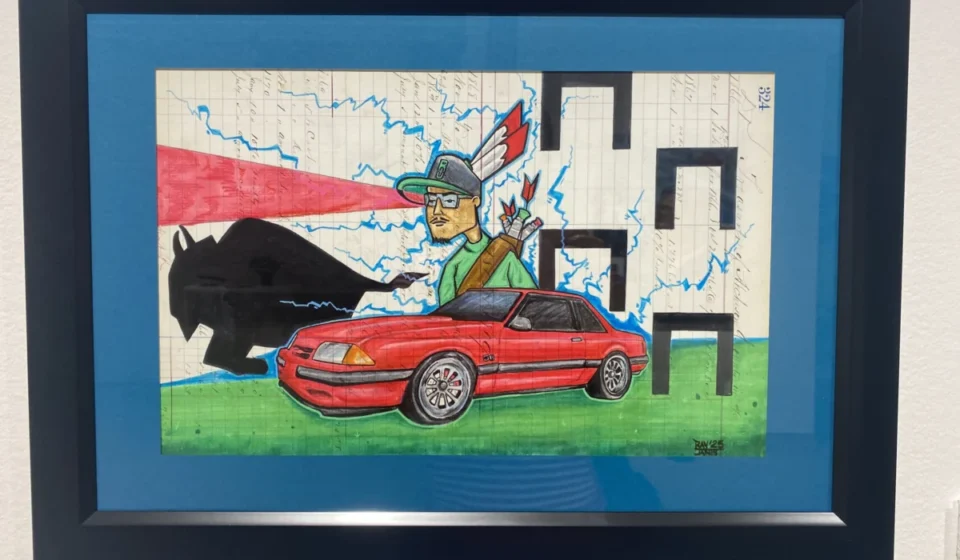
At the center of this dialogue is South Dakota-based artist Ray “Rock Boy” Janis. A visionary who frequently incorporates superhero motifs and the high-octane imagery of fast cars into his work, Janis has moved beyond solo practice to embrace a model of radical collaboration. By inviting his own mentors—established masters of the craft—to share the canvas with him, Janis has created a space where the “Seven Council Fires” (the Oceti Sakowin alliance of Dakota, Lakota, and Nakota nations) serves as both the thematic foundation and the literal site of artistic creation.
The Core Concept: A Legacy of Connection
The exhibition’s title, Sakowin Synergy, is deeply rooted in the history of the Oceti Sakowin. It refers to the historic alliance of the Dakota, Lakota, and Nakota nations, signaling a collaborative spirit that is woven into the very fabric of the gallery space.
For the exhibition, Janis has curated a collection that highlights the interplay between established veterans and the emerging generation. He is joined by his close collaborator Sheldon Starr, as well as renowned artistic heavyweights Dwayne “Chuck” Wilcox and Jim Yellowhawk. While Yellowhawk hails from the Itazipco Band of the Cheyenne River Sioux Tribe, the remaining trio—Janis, Starr, and Wilcox—share Oglala Lakota heritage.

The exhibition is a study in visual synthesis. It reconciles the “old-school” technical mastery of the elder generation with the digital-forward, contemporary sensibilities of the younger artists. As All My Relations Gallery director Angela Two Stars noted, the exhibition is designed to "speak to the influences of each other," creating a feedback loop of creativity that honors the past while pushing toward an uncharted aesthetic future.
Chronology of a Creative Convergence
The road to Sakowin Synergy has been marked by a slow-burn development of professional and personal relationships, cultivated over the better part of a decade.
- 2020: The Foundation: Janis and Starr first gained significant institutional visibility through an emerging artist cohort facilitated by a partnership between the Hennepin Theatre Trust and All My Relations Gallery. This period acted as a crucible for their development, allowing them to refine their voices within the Twin Cities art scene.
- 2022: The Group Show: The gallery hosted a group exhibition that featured the work of both Janis and Starr, cementing their reputation as artists to watch.
- Early 2026: The Disruption: The exhibition was originally slated for a January opening. However, the gallery became a vital hub for mutual aid in the wake of the political unrest surrounding "Operation Metro Surge." The staff and artists pivoted to focus on community support, pushing the exhibition back to its current mid-summer window.
- July 2026: The Opening: Sakowin Synergy officially opened to the public on July 9, 2026, accompanied by a community celebration featuring local fare from the adjacent Pow Wow Grounds coffee shop.
Artistic Analysis: The Evolution of Ledger Art
A cornerstone of the exhibition is the 2026 piece, “Rez Boys Boogie.” This work is a masterclass in the evolution of ledger art—a medium that dates back to the 19th century when Native artists, faced with a scarcity of traditional materials like buffalo hides, began creating intricate narratives on the pages of bookkeeping ledgers.
In “Rez Boys Boogie,” the four artists utilize a long, rectangular canvas that mimics the elongated nature of historical ledgers. The piece provides an aerial view of a pow wow circle, but the composition is far more than a mere depiction of a dance. Because Yellowhawk and Wilcox are both accomplished pow wow dancers, they chose to paint themselves as central figures on the periphery of the circle. Janis, meanwhile, took charge of the central circle and the celestial/sky elements, while Starr introduced bold, bat-like imagery and geometric abstractions.

The result is a unified work that feels less like a collage and more like a singular, living document. The way the figures frame the canvas creates an invitation for the viewer to step into the circle, bridging the gap between the observer and the ceremony.
Mentorship and the "Fantastic" Influence
The genesis of this collaboration is rooted in a moment of professional humility for Janis. When Jim Yellowhawk, an artist Janis grew up idolizing, caught wind of a series of paintings Janis had produced featuring characters from The Fantastic Four, he reached out—not to criticize, but to collaborate.
“I was like, ‘For real?’” Janis recalled of the moment Yellowhawk invited him to contribute imagery to a painting. It is this dynamic of mutual respect that defines the exhibition. For the artists involved, the process of painting on the same sheet of paper is an intimate act of dialogue. As Janis noted, the creation of “Rez Boys Boogie” marked the first time that veterans like Wilcox and Yellowhawk had ever worked directly on the same canvas, turning the exhibition into a site of historical artistic milestone.
Official Perspectives and Implications
The implications of Sakowin Synergy extend beyond the aesthetic. By placing contemporary digital-leaning artists in conversation with masters of traditional media, the exhibition challenges the narrative that Indigenous art is a static, historical entity.

"They have the old-school style, whereas [Janis] and [Starr] are more contemporary and digital," Angela Two Stars explained. "The show is about blending those together." This blending serves a socio-political purpose: it asserts that modern, even "pop-culture" inspired, Indigenous art is a legitimate continuation of a lineage that includes ledger art and hide painting.
The exhibition also features work that directly addresses the current political climate. Janis’s “Tatanka O’sni” (The Standing Bison) is a haunting, evocative piece. Rendered in icy, electric blues, the bison is depicted as if it is physically shattering a wall of ice. As an anti-ICE (Immigration and Customs Enforcement) statement, the work uses the power of the buffalo—a symbol of survival and resilience—to critique state-sponsored disruption of families and communities.
A Season of Indigenous Art
Sakowin Synergy is currently one of several major exhibitions highlighting the vitality of Native art in the Twin Cities. The region has become a focal point for this movement, with other institutions also hosting significant retrospectives and thematic shows:
- "Encounters" at the Bockley Gallery: A showcase exploring the intersections of history, place, and the personal experience of the contemporary Indigenous subject.
- "Queering Indigeneity" at the Minnesota Museum of American Art (MMAA): A provocative examination of the role of gender and sexuality within Indigenous traditions and modern identity.
- "Merciless: Indigenous Lands Since 1776" at the Weisman Art Museum (WAM): A heavy, critical look at the history of settler-colonialism and the ongoing struggle for land rights.
Conclusion: Looking Forward
Sakowin Synergy is on view through September 5, 2026. For those who visit, the exhibition offers a rare glimpse into a working, living tradition. It is a testament to the fact that, within the Oceti Sakowin, the most powerful art is not created in isolation, but in the shared space of community, mentorship, and the constant, rhythmic movement of the circle.

Ray Janis, by opening his practice to his mentors and peers, has achieved something rare in the modern art world: he has successfully navigated the tension between individual expression and collective identity. Whether through the bold, comic-book-inspired lines of his superhero works or the somber, powerful tones of his anti-ICE commentary, Janis proves that the "Synergy" in the exhibition’s title is not just a concept—it is the very engine of his art. As the exhibition continues its run, it serves as an essential reminder that while the materials of art may change from ledger paper to digital canvas, the story remains the same: a story of survival, connection, and the enduring power of the Seven Council Fires.