





















































The Shifting Landscape of Minnesota’s 2nd Congressional District: Craig’s Legacy and a Fractured Democratic Primary

WASHINGTON D.C. – As Representative Angie Craig prepares to vacate her hard-won seat in Minnesota’s 2nd Congressional District (CD-2) to pursue a bid for the U.S. Senate, the Democratic primary to succeed her has erupted into a fiercely contested battleground. While Craig, a four-term incumbent known for her moderate stance, has publicly declared her neutrality in the August 11 primary, her formidable legacy and recent political challenges cast a long and complex shadow over the three Democratic hopefuls vying for the nomination.
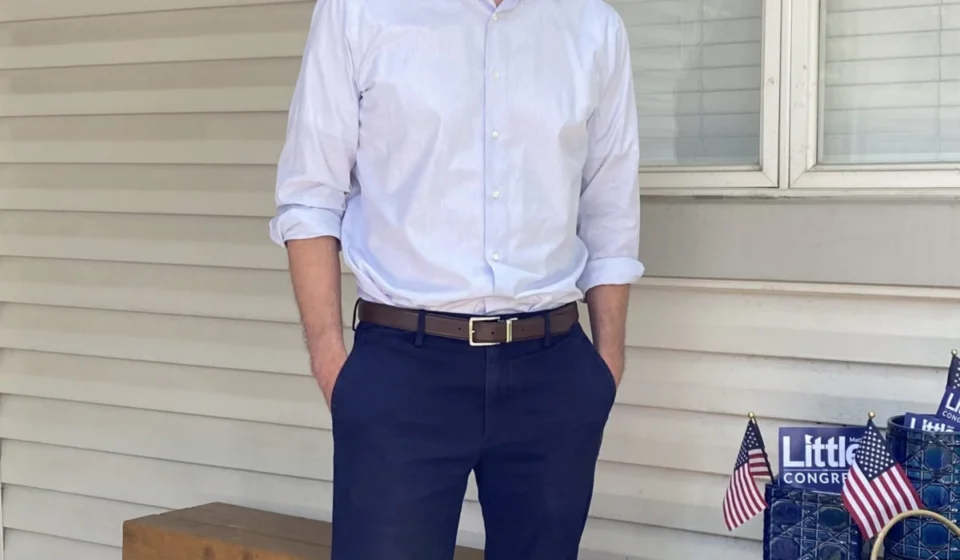
The race features a dynamic interplay of ideological currents, personality, and strategic maneuvering. Matt Little, a former state senator and mayor of Lakeville, has secured the DFL Party’s endorsement and positioned himself as the most progressive candidate. State Senator Matt Klein, a physician from Rochester, presents himself as a moderate, explicitly aligning with Craig’s successful political blueprint. Rounding out the field is State Representative Kaela Berg of Burnsville, a flight attendant and fellow progressive, who is leveraging her unique background and gender in a district where Craig’s presence has reshaped voter expectations. This primary is not merely about selecting a candidate; it is a critical referendum on the future ideological direction of a pivotal swing district.
Chronology: The Evolution of a Swing District and the Current Race
Rep. Angie Craig’s tenure in the 2nd Congressional District has been nothing short of transformative for Minnesota Democrats. Before her election in 2018, CD-2 was largely considered a Republican stronghold, encompassing the diverse southern suburbs of the Twin Cities and expansive rural farm areas. Its "purple" hue, signifying a roughly equal split between Democratic and Republican voters, made it a perennial battleground. Craig’s groundbreaking victory, and her subsequent three re-elections, demonstrated a winning formula: a moderate political stance that successfully broadened her appeal across the district’s varied demographics.
From 2019, Craig meticulously built a reputation as a hard worker with extensive community relationships, capable of bridging partisan divides. Her ability to deliver tangible results for her constituents, combined with her moderate positioning on key issues, allowed her to wrest control of the district from the GOP and solidify it in Democratic hands. This success was also fueled by an extraordinary fundraising capability, with Craig raising an impressive $8.3 million in her last reelection bid in 2024, ultimately securing a nearly 14-percentage-point victory over Republican Joe Teirab.
The political landscape began to shift, however, when Craig announced her intention to seek a Senate seat, setting the stage for an open primary in CD-2. This decision, driven by her ambition to serve at a higher level, simultaneously created a vacuum and an opportunity for a new generation of Democratic leaders. Her own primary challenge for the Senate against Lt. Gov. Peggy Flanagan is a significant factor in her declared neutrality for the House race, as endorsing a candidate in CD-2 could risk alienating a segment of voters she needs for her statewide campaign.
As the August 11 primary drew closer, the field crystallized around Little, Klein, and Berg. Matt Little, with his background as a former state senator and mayor, quickly garnered the DFL Party’s endorsement, signaling his strength within the party’s organized base. Matt Klein, a sitting state senator and physician at the renowned Mayo Clinic, sought to position himself as the natural successor to Craig’s moderate approach, emphasizing the need for a centrist appeal to hold the swing district. Kaela Berg, a state representative and flight attendant, entered the race with a focus on progressive values and a distinct appeal to working-class voters and women.

A critical turning point influencing the primary dynamics, and Craig’s own political standing, was her controversial vote on the Laken Riley Act. This Republican-sponsored legislation, which empowers the Department of Homeland Security to detain and deport noncitizens charged with – not just arrested for or convicted of – offenses like burglary, shoplifting, or assault on a law enforcement officer, drew sharp criticism from progressive Democrats. Craig’s vote, initially defended as a measure to support law enforcement, quickly became a liability. She has since publicly expressed regret for her vote, acknowledging the profound backlash from the progressive wing of her party. This incident, occurring amidst a surge of progressive activism in the state post-“Operation Metro Surge,” has significantly complicated the calculus for candidates seeking to align with Craig’s legacy, particularly for those on the left.
Supporting Data and Campaign Dynamics
The financial health of the campaigns offers a glimpse into the candidates’ perceived viability and organizational strength, though none have yet matched Craig’s past fundraising juggernaut. According to the latest filings with the Federal Election Committee as of June 30, Matt Klein has demonstrated the strongest fundraising among the Democrats, having raised over $1 million. This robust financial backing underscores his appeal to traditional Democratic donors and potentially reflects confidence in his moderate platform. Matt Little, despite securing the DFL endorsement, reported nearly $900,000 in contributions, a figure that includes a significant $155,000 personal loan to his campaign, indicating a strong personal investment but also a potential reliance on self-funding. Kaela Berg lags behind with approximately $355,000 raised, suggesting a more grassroots-focused or resource-constrained effort. For context, the leading Republican challenger, state Senator Eric Pratt, has raised around $462,000, setting a benchmark for the eventual Democratic nominee in the general election.
The ideological fault lines within the Democratic Party are a defining feature of this primary. Matt Little, having secured the DFL Party endorsement, is running on a distinctly progressive platform. His campaign has carefully navigated its relationship with Rep. Craig, particularly in the wake of the Laken Riley Act controversy. Little stated, "It’s not something we’ve sought because she’s made it very clear she will not endorse," signaling a strategic distance designed to avoid alienating the energized progressive base that might view Craig’s recent votes with skepticism. Hamline University political science professor David Schultz observes that Little’s positioning "as the candidate furthest to the left" is a calculated move, especially given concerns that "because of (Craig’s) support for the Laken Riley Act, progressives may not support him if he has her endorsement."
In contrast, Matt Klein explicitly embraces Craig’s moderate blueprint for CD-2. A physician and state senator, Klein views himself as a pragmatic Democrat capable of appealing to the district’s broad electorate. He actively sought Craig’s endorsement, stating, "I would be honored to have it." Klein’s core message revolves around the unique nature of CD-2: "This is the last swing district in Minnesota," he asserts. "To hold it, you have to bridge a (partisan) divide." His strategy is to appeal to the district’s moderate sensibilities, drawing parallels to Craig’s successful coalition-building across party lines. He hopes that the presence of two progressive candidates—Little and Berg—will split the left-leaning vote, thereby creating a clearer path for his centrist nomination.
Kaela Berg, while also identifying as progressive, presents a distinct appeal rooted in her identity and experience. She has actively sought Craig’s endorsement, highlighting their shared work on local issues, such as securing funding for a dangerous intersection in Burnsville. Beyond policy, Berg emphasizes her gender as a crucial factor. "I’m the only woman in the Blue Collar Brigade, and the only woman in the race," Berg states, referring to a joint fundraising effort by working-class candidates. "That matters right now. I love an ally and a great dude, but women’s voices are needed right now." This narrative resonates in a district that, according to Professor Schultz, many now "view… as a female seat" due to Craig’s successful tenure. Berg’s campaign has also received significant backing from Emily’s List, a prominent organization supporting pro-choice female candidates, which provides not only financial contributions but also strategic campaign advice and advertising support.
The 2nd Congressional District itself is a complex tapestry of political leanings. Stretching from the rapidly developing southern suburbs like Lakeville and Burnsville to more rural, agricultural communities, it truly embodies the "purple" designation. While analysts suggest it currently leans Democratic, the extent of that lean is perpetually debated. The district demands a candidate who can connect with diverse constituencies, from urban-adjacent professionals to rural farmers, making the ideological positioning of each Democratic candidate a critical determinant of their electability in both the primary and the general election.

Official Responses and Expert Analysis
Rep. Angie Craig’s decision to remain neutral in the primary for her successor is a strategic move, officially conveyed through her statement that the "choice belongs to 2nd District voters." This public stance allows her to avoid alienating any segment of the Democratic base, which is crucial as she campaigns for her own Senate primary against Lt. Gov. Peggy Flanagan. University of Minnesota political science professor Larry Jacobs notes that such neutrality from an incumbent is "not unusual," reflecting a common practice of "letting the voters decide."
However, the implications of her non-endorsement, particularly in the context of her Laken Riley Act vote, are not lost on the candidates or political observers. David Schultz points out that Craig’s abstention allows candidates like Matt Little, who is trying to solidify his progressive credentials, to distance themselves without directly criticizing the incumbent. "Little is concerned that because of (Craig’s) support for the Laken Riley Act, progressives may not support him if he has her endorsement," Schultz explains, highlighting the delicate balance required in a post-controversy environment. For Kaela Berg, who also identifies as progressive, an endorsement from Craig could likewise "alienate the progressive voters she needs now," Schultz adds. Yet, Berg’s emphasis on maintaining the seat for a woman, a narrative partly cultivated by Craig’s own success, is seen as a safe and potentially beneficial strategy: "But saying, ‘Let’s keep this seat in a woman’s hand’ won’t hurt her," Schultz concludes.
Matt Klein, the moderate in the race, openly embraces Craig’s political style and sees himself as her natural successor. His request for her endorsement, even if unfulfilled, signals his intention to run on a platform that mirrors Craig’s successful strategy of bridging divides. Klein’s argument is that the district’s "swing" nature necessitates a centrist approach for general election viability. He observes the potential for the two progressive candidates to split the left-leaning vote, a scenario that Larry Jacobs agrees could "open a path for Klein" to secure the nomination. Jacobs further notes that Klein’s track record in the state Senate, where he has appealed to unaffiliated voters and even moderate Republicans, aligns with the coalition-building that characterized Craig’s victories.
The recent surge in progressive activism within the district, particularly following “Operation Metro Surge,” has injected a new dynamic into the primary. This heightened progressive energy complicates the traditional moderate path to victory. Klein acknowledges this, reminding voters that the eventual Democratic nominee will need to pivot to the center to defeat the Republican candidate, state Senator Eric Pratt. "And we can’t just say, ‘We’ll see what the progressive (voters) are up to this year,’" Klein cautions. "We need a Democrat who can win every cycle." This sentiment directly addresses the central tension of the primary: whether a deeply engaged progressive base can propel one of their own to victory in a district traditionally requiring broader appeal, or if the moderate path remains the most reliable strategy. Klein articulates the fundamental question: "Can a progressive candidate win in parts of the district that are not progressive?"
Implications and The Road Ahead
The outcome of Minnesota’s 2nd Congressional District primary on August 11 will have significant implications, not only for the future representation of the district but also for the broader political landscape of Minnesota and the Democratic Party’s strategic approach in swing districts nationwide.
For Rep. Angie Craig, the dynamics of this primary could indirectly affect her own high-stakes Senate bid against Lt. Gov. Peggy Flanagan. While her neutrality in the CD-2 race is designed to protect her statewide appeal, the intensity of the ideological debate and any lingering fallout from her Laken Riley Act vote could resonate with different voter blocs across the state. Should a highly progressive candidate win the CD-2 primary, it might reinforce a narrative of a shifting Democratic Party, which could both energize and alienate voters in Craig’s Senate primary, depending on their political leanings.

Looking towards the general election, the Democratic nominee will face the formidable task of unifying a potentially fractured party base and then pivoting to appeal to the district’s crucial moderate and independent voters. State Senator Eric Pratt, the Republican challenger, represents a significant hurdle. His campaign, having already raised a respectable $462,000, will likely capitalize on any internal divisions within the Democratic Party. If the primary results in a nominee perceived as too far left, Pratt could gain an advantage in a district that, despite leaning Democratic, has consistently favored candidates capable of bridging partisan divides. The historical difficulty of maintaining Democratic control in CD-2 underscores the importance of a nominee who can replicate Craig’s broad appeal.
The primary will also serve as a crucial test for the future identity of CD-2. Will the district continue to be defined by the moderate, pragmatic politics that allowed Craig to flip and hold the seat, or will the growing influence of progressive activism, particularly post-“Operation Metro Surge,” usher in a new era? The candidacies of Matt Little and Kaela Berg represent this progressive surge, challenging the notion that only a moderate can win in a "purple" district. Conversely, Matt Klein’s campaign is a direct assertion that Craig’s centrist strategy remains the most viable path to sustained Democratic success in CD-2.
Beyond the immediate election, the choices made by CD-2 voters will offer insights into the broader ideological currents within the Democratic Party. As voters call for change, the question is what kind of change they seek: a continuation of moderate governance that emphasizes broad appeal, or a bolder progressive agenda that seeks to push the boundaries of political possibility. The eventual winner will inherit not only a congressional seat but also the defining characteristic of Craig’s legacy: a reputation as a diligent worker with deep community ties, and a proven ability to raise significant campaign funds – attributes that will be essential for any candidate hoping to hold this crucial swing district for the Democrats. The August 11 primary is more than just an internal party contest; it is a bellwether for the evolving political identity of one of Minnesota’s most consequential congressional districts.