























































By Investigative Staff
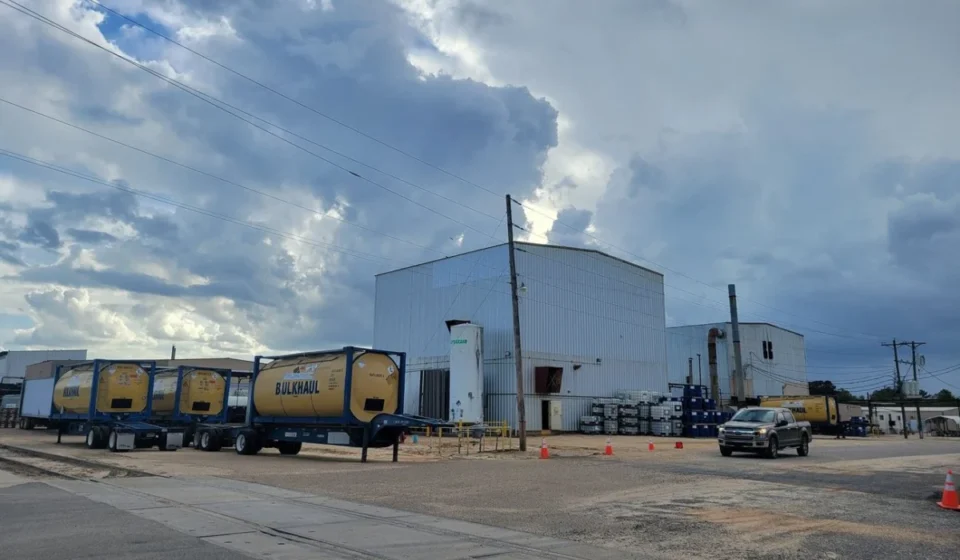
In the quiet, pine-forested landscape of Wayne County, Mississippi, a silent health crisis is unfolding. Home to approximately 20,000 residents, the county is defined by its sprawling agricultural fields and timberland. Yet, beneath the serene rural veneer, Wayne County holds a grim distinction: it is the epicenter of the largest single emission site for paraquat in the United States.
Paraquat, a highly toxic herbicide marketed most famously as Gramoxone, has been scientifically linked for decades to Parkinson’s disease—a progressive, incurable neurodegenerative condition that is currently the fastest-growing of its kind in the world. While the rest of the developed world—including the European Union, China, and Brazil—has moved to ban the chemical due to its catastrophic potential for human harm, the U.S. continues to see its usage climb.
In Waynesboro, the county seat, the consequences are stark. Between 2018 and 2024, Wayne County reported Parkinson’s disease death rates that placed it in the top 7% of all U.S. counties. For the residents living within a mile of the Sipcam Agro plant, which processes this lethal chemical, the air they breathe may be carrying the seeds of a terminal diagnosis.
A Chemical Legacy: The Science of Exposure
Paraquat dichloride is not a modern innovation; it was introduced in the 1960s by a predecessor of Syngenta. Since its inception, the herbicide has been classified by the Environmental Protection Agency (EPA) with the chilling warning: "One sip can kill."
The chemical’s mechanism of destruction is particularly insidious. When inhaled or ingested, paraquat travels to the brain, where it systematically destroys the dopamine-producing neurons. This neurological damage is the foundational cause of Parkinson’s disease. Furthermore, the herbicide has been linked to thyroid cancer and childhood leukemia. Even at the industrial level, where personal protective equipment (PPE) is standard, studies show that applicators and those living in close proximity to spray sites face a significantly heightened risk of neurodegenerative decline.
Recent research published in the International Journal of Epidemiology underscores the danger, finding that farmworkers who handle the chemical are 2.5 times more likely to develop Parkinson’s than those who do not. Disturbingly, the danger extends to those living near fields; those within 1,600 feet of an application site face a 91% higher incidence rate of the disease.
A Chronology of Contamination
The history of paraquat in the United States is one of escalating volume and shifting responsibility:
- 1960s: Paraquat is introduced to the U.S. market. Corporate predecessors to Syngenta identify early evidence of adverse effects on the nervous system and brain tissue.
- 2006–2017: The use of paraquat in the U.S. triples, driven by the rise of glyphosate-resistant "superweeds." Farmers, desperate to clear land for soybeans, corn, and cotton without manual labor costs, turn to the cheaper, more potent paraquat.
- 2015: The Sipcam Agro facility opens in Waynesboro, Mississippi, beginning the local phase of the chemical’s processing.
- 2023: Sipcam Agro takes full control of the Waynesboro plant and announces an expansion, bolstered by state-provided tax credits from the Mississippi Development Authority. Airborne emissions at the plant skyrocket from roughly 1,500 pounds in 2022 to over 47,000 pounds by 2024.
- March 2026: Facing thousands of lawsuits and generic competition, industry titan Syngenta announces it will cease production of paraquat by the end of June.
- 2026: While Syngenta exits the market, the void is filled by smaller, localized entities. The Waynesboro plant, now a critical hub for the supply chain, continues to operate under minimal federal oversight, with permits currently being sought for increased emissions of other pollutants like lead and ozone.
The Geography of "Cancer Alley" and Beyond
The life cycle of paraquat in America is inextricably linked to the Mississippi River. Millions of pounds of concentrate are imported, primarily from the United Kingdom, through the Port of New Orleans. From there, the chemical is trucked into the heart of the "Cancer Alley" region in Louisiana for formulation.
As the industry shifts away from major players like Syngenta, the production is decentralized. Facilities across the Midwest and South—in states like Kansas, Missouri, Georgia, and North Carolina—are poised to expand their operations. The Port of New Orleans remains the primary artery, with shipments rising from 14 in 2006 to 449 in 2025—an average of more than one shipment per day.
For residents like those in Waynesboro, the impact is personal. Ashton Pearson Sr., a retired mechanical engineer and life-long Mississippian, was diagnosed with Parkinson’s in 2013 at the age of 58. Having spent his youth working on farms and operating spray rigs, he lives with the haunting question of whether his environment betrayed him. "We’re all dying off," he says, reflecting on the fate of his childhood peers.

Regulatory Failure: Why the Emissions Continue
The most alarming aspect of the Wayne County situation is that, under current U.S. law, paraquat is not classified as a "hazardous air pollutant." This loophole allows plants like the one in Waynesboro to emit tens of thousands of pounds of the chemical as "fugitive emissions"—unintentional leaks that fall outside of strict federal enforcement.
The Mississippi Department of Environmental Quality (MDEQ) maintains that they are aware of the facility and have an open enforcement action. However, because there is no federally mandated maximum threshold for paraquat emissions, the agency’s ability to curb the output is severely limited. Experts, such as Kimberly Terrell of the Environmental Integrity Project, argue that the emission levels in Waynesboro are "far above what’s considered to be a major source" and represent a significant public health risk.
The irony is not lost on the community: while the plant is subsidized by state tax credits, the residents bear the cost in medical bills and lost quality of life. The lack of federal regulation is a stark contrast to the stringent controls required for other industrial byproducts, such as coal-fired fly ash, which are strictly managed to prevent dispersion.
The Political Tug-of-War
The battle to ban paraquat has reached a fever pitch in 2026. While the Parkinson’s Foundation and various environmental advocacy groups are pushing for a federal ban, the political landscape remains treacherous.
In January, the EPA under the current administration claimed it would "reassess" the safety of paraquat. While some view this as progress, others are wary of the "revolving door" between the chemical industry and government agencies. For instance, Kelsey Barnes, a key advisor to the U.S. Department of Agriculture, is a former lobbyist for Syngenta.
Furthermore, language inserted into the federal Farm Bill threatens to strip individual states of their power to regulate pesticides. This "pre-emption" would effectively silence the efforts of states like New York, Iowa, and Illinois, which have introduced bills to restrict or ban the herbicide.
Implications: A Future Without Paraquat?
The human cost of paraquat is becoming impossible to ignore. As the Parkinson’s mortality rate in Wayne County sits at nearly double the national average, the narrative of "agricultural necessity" is being dismantled. Recent studies have demonstrated that agricultural productivity would remain stable even if paraquat were removed from the market, as safer alternatives are readily available.
For survivors like Jannette Holifield, whose husband Martin Montelongo died at 63 after years of working at the Sipcam plant, the struggle is not merely about policy—it is about justice. Montelongo’s death, officially attributed to a heart attack, is viewed by his family as the final result of chronic exposure to a toxic environment.
The fight to ban paraquat is now a litmus test for the American approach to public health. It asks a fundamental question: Is the convenience of industrial farming worth the irreversible neurodegenerative damage inflicted upon rural, often marginalized, communities?
As the scientific evidence mounts and the death toll rises, the pressure on the EPA to act has never been higher. Yet, for the residents of Waynesboro, the solution cannot come soon enough. "It’s just another example of the fact that there’s folks across the political spectrum who are saying, ‘Enough is enough,’" says Andi Fristedt of the Parkinson’s Foundation. Whether the government will listen, or whether the toxic haze will continue to settle over the fields of Mississippi, remains the defining challenge of the coming year.