

























































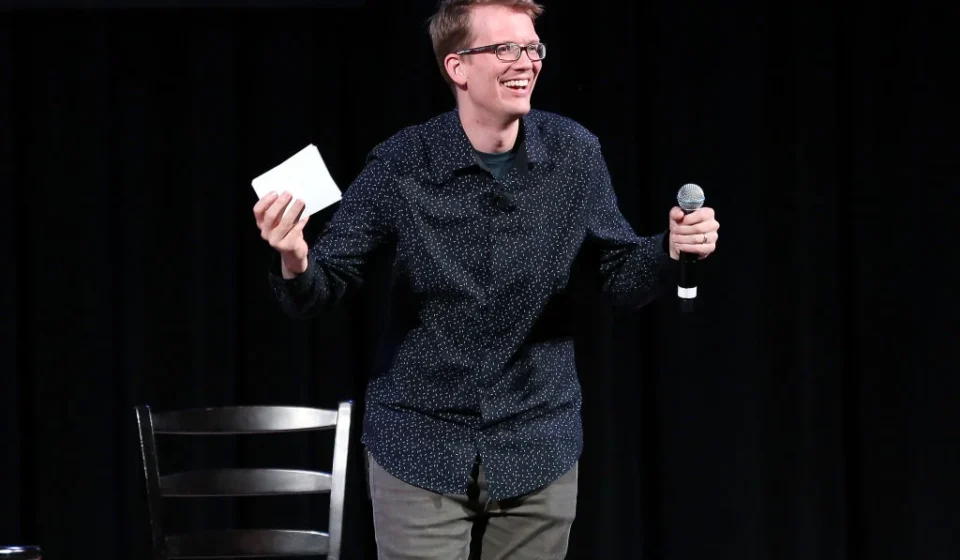

In the modern digital landscape, the line between human creative expression and machine-assisted efficiency is becoming increasingly blurred. For creators who have built their careers on authenticity and deep, intellectual engagement, this intersection presents a profound existential crisis. Hank Green—novelist, comedian, and a cornerstone of the YouTube educational community with over 3.2 million subscribers on his personal channel—recently found himself at the center of a firestorm regarding his reliance on Large Language Models (LLMs). The controversy, which began as a minor observation by eagle-eyed viewers, has ballooned into a significant industry conversation about burnout, intellectual integrity, and the future of independent media.
The Catalyst: A Glitch in the Script
The controversy erupted following the publication of a video on Complexly, an educational network co-founded by Green. During a segment, Green uttered the phrase, “I appreciate the pushback.” To his audience, the comment felt incongruous and strangely detached from the context of the conversation.
The internet, known for its forensic scrutiny of popular creators, quickly zeroed in on the phrasing. Speculation mounted that the line was not an organic part of the script, but rather an artifact of a conversation between Green and an AI chatbot—a piece of text that had been accidentally copied and pasted into the final production script. The implication was clear: the audience felt that the "human" element of Green’s educational content was being outsourced to an algorithm.
A Chronology of the Controversy
The timeline of the incident illustrates the rapid escalation common in modern online discourse:
- The Oversight: During a high-pressure production window, Green utilized ChatGPT to assist in the research and drafting of a video script for Complexly.
- The "Glitch": In the published video, a prompt-response snippet—"I appreciate the pushback"—remained in the final edit, signaling to the audience that the barrier between human creator and machine assistant had been breached.
- Initial Defensive Posture: Green initially addressed the situation in a post on X (formerly Twitter). He admitted to working "under a ton of pressure" and confirmed the use of AI for research purposes, though he clarified that the specific line in question was intended as a response to his episode guest, not an AI artifact.
- The Deletion and Pivot: Recognizing that his initial response was insufficient and perhaps dismissive, Green deleted the post and moved to a more public-facing platform, Reddit, to issue a formal, vulnerable apology to his community, known as "Nerdfighters."
- The Commitment to Change: Following the intense backlash, Green announced his intention to scale back his output and reassess his production process to ensure that his voice remains unmistakably his own.
The Anatomy of an Apology: "Mortified" by the Dilution
Green’s subsequent statement on Reddit was notably candid. He expressed being "mortified" that he had disappointed his audience, acknowledging that his recent workflow had led to a "dilution" of his own creative process.
"I am not a pure AI-hater," Green clarified, "but I have not been managing my impulses well." He drew a distinction between using tools for research and allowing those tools to dictate the tone or structure of his intellectual contributions. The core of his concern, and the source of his fans’ frustration, was the speed of production. Green admitted that in his rush to meet the demands of the algorithm and his own internal drive for productivity, he had lost track of his own voice.
"You need to know that my words are mine," Green wrote. "I don’t think that this hasn’t been true, but I’ve been moving so fast that my own process isn’t actually clear to me and I want to have it be a guarantee moving forward."
Ethical Implications: Climate, Capitalism, and Creativity
Green’s introspection went beyond his personal workflow. He used the incident as a springboard to discuss broader, systemic concerns regarding AI technology. He highlighted two specific areas of concern: the massive environmental cost of training and running LLMs, and the rapid consolidation of economic power by a handful of AI companies.
By addressing these issues, Green reframed his mistake not just as a slip-up in editing, but as a symptom of a larger, systemic problem in the creator economy. He argued that the "dopamine" hit of using AI—the intoxicating efficiency that allows a creator to do more, faster—is fundamentally "careless" and "disconnected" from the reality of the societal impacts of these technologies.
The Future of Content Production
For a creator who has thrived for over a decade by building deep, parasocial, and intellectual bonds with his audience, the "AI incident" represents a pivot point. Green has expressed a desire to return to the roots of his craft. He pointed toward recent, more meditative content where the writing was "the whole thing" and he "felt it all the way down."
This shift suggests a move away from the hyper-productive, high-volume model that dominates modern YouTube, in favor of a more deliberate, artisanal approach to content creation. This involves:
- Slower Production Cadence: Pausing or reducing the frequency of uploads to ensure quality and authenticity.
- Emphasis on Unscripted Formats: A return to "dumb unscripted straight-to-camera thoughts" as a way to re-establish trust and intimacy with his audience.
- Radical Transparency: A commitment to being clear about his process and the tools he utilizes, ensuring that his audience never has to question the provenance of his ideas.
The Broader Industry Context
The "Hank Green Incident" is emblematic of a larger struggle facing high-profile creators. As AI tools become more integrated into software suites, the temptation to use them for routine tasks is immense. However, for "personality-driven" creators, the audience is paying for the human behind the screen—their unique cognitive biases, their specific style of humor, and their lived experience.
When a creator introduces an LLM into that feedback loop, they risk commoditizing their own personality. The backlash Green faced serves as a warning to other creators: efficiency cannot come at the expense of authenticity. As the industry moves forward, the "human-made" label may eventually become a premium commodity, distinct from the mass-produced, AI-assisted content that is currently flooding digital platforms.
Conclusion: Reclaiming the Creative Process
Hank Green’s transparency throughout this ordeal has, in many ways, solidified his relationship with his core audience. By admitting his fallibility and taking responsibility for his reliance on AI, he has modeled a form of accountability that is rare in the creator economy.
The lesson here is not that AI is inherently malicious, but that it is a tool that requires intentionality. For creators, the challenge of the next decade will be to integrate these technologies without losing the idiosyncratic spark that made them successful in the first place. For Green, the path forward is clear: it is not about doing more, but about doing what matters, and ensuring that every word, every take, and every idea remains, unequivocally, his own.
As he navigates this period of recalibration, the world will be watching to see if this shift in strategy will set a new standard for ethical content creation in the age of artificial intelligence. In a digital world dominated by optimization, choosing to slow down might just be the most revolutionary act of all.