























































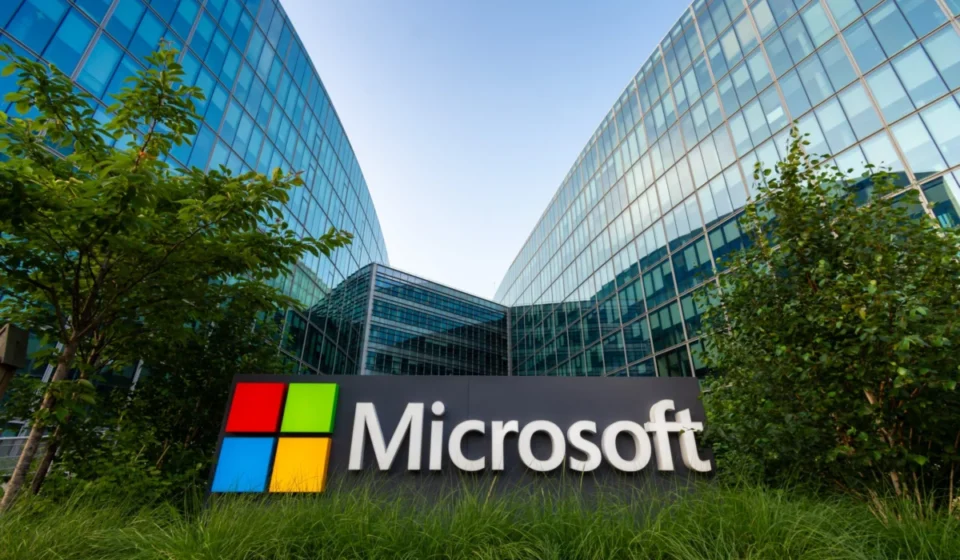

In a significant update to its productivity suite, Microsoft has announced a strategic shift in how its artificial intelligence-driven text prediction features operate within Microsoft Word and Outlook. According to recent reports, the company is transitioning its "text suggestions" feature—which attempts to predict and complete user sentences in real-time—from an "opt-out" to an "opt-in" experience.
For millions of professionals and casual users worldwide, the interface of Microsoft 365 is about to become slightly less predictive. While the technology remains available, Microsoft’s decision to disable it by default signals a growing awareness of user autonomy, productivity fatigue, and the nuanced reception of AI-assisted writing tools in professional environments.
Main Facts: The End of Predictive Defaults
The core of this change involves the text prediction engine that has become a staple of modern digital writing. By leveraging machine learning models, these tools anticipate a user’s intent, providing grayed-out, "ghost" text that can be accepted with a simple keystroke, such as the Tab key.
As of the latest rollout, this feature will no longer be active upon the first launch of Word or Outlook for a vast array of platforms. The change spans:
- Word: Windows, Web, iOS, and Android versions.
- Outlook: The "Classic" version for Windows and the desktop application for macOS.
While Microsoft has not explicitly cited a single catalyst for this move, the company acknowledged that while a subset of the user base finds the feature indispensable for speed, a significant portion of the community finds the intrusive suggestions to be a source of distraction rather than a productivity boost. Users who still wish to utilize the feature will maintain the ability to reactivate it through their individual settings menus.
A Chronology of AI-Assisted Writing
To understand the significance of this move, one must look at the evolution of predictive text within the Microsoft ecosystem.
The Emergence of Predictive Typing (2019–2021)
The journey toward "smart" composition began in earnest as Microsoft sought to harmonize its mobile and desktop experiences. Following the success of predictive text on mobile platforms like Gboard and iOS, Microsoft introduced "Text Predictions" to Word and Outlook. The rollout was marketed as a revolutionary leap in efficiency, designed to help users draft emails and documents faster by reducing the cognitive load of typing repetitive phrases.
The Integration Phase (2022–2024)
During this period, text prediction became a hallmark of the "Modern Work" philosophy. Microsoft pushed these features aggressively, integrating them into the core experience of Microsoft 365. For many, the appearance of predictive text became synonymous with the "smart" office, positioning Microsoft as a leader in applying AI to everyday workflows.
The Reevaluation (2025–2026)
As the deployment of Generative AI and Large Language Models (LLMs) accelerated, user expectations shifted. The industry began to grapple with "AI fatigue." In late 2026, user feedback within corporate environments and public forums indicated a desire for greater control over automated writing aids. Microsoft’s decision to pivot, as reported by The Register and Computer Sweden, reflects this maturation of the AI era—moving from a "more is better" approach to one defined by user agency.
Supporting Data and The User Experience Dilemma
The debate surrounding predictive text is rooted in the psychology of human-computer interaction (HCI). Studies in workplace productivity have long suggested that while automated tools can increase the volume of output, they can simultaneously decrease the quality of cognitive focus.
The "Cognitive Load" Argument
For many writers, the appearance of a predictive suggestion—even if correct—interrupts the "flow state." When the software suggests a phrase, the user must perform a split-second evaluation: Is this what I meant to say? Even if the answer is "yes," the act of deciding requires more energy than the act of typing itself. For heavy users, this micro-interruption occurs hundreds of times per day.
The Accuracy Gap
Predictive models are trained on vast datasets of human communication. However, professional writing—which is the primary use case for Word and Outlook—often requires nuance, specific jargon, and tone-setting that general models struggle to replicate perfectly. When a model suggests an incorrect word, it creates a "negative friction" that forces the user to hit backspace or ignore the prompt, which is often more disruptive than if the prompt had never appeared.
Official Responses and Implementation
Microsoft has been relatively measured in its communication regarding this update. In a statement via the Microsoft 365 Insider Blog, the company emphasized that this change is about customization rather than a deprecation of the underlying technology.
"We recognize that every user has a different writing rhythm," a Microsoft representative noted. "By defaulting to ‘off,’ we are putting the power back in the hands of the user to build an environment that supports their specific needs, rather than assuming a one-size-fits-all approach to AI assistance."
Rollout Strategy
The transition is being managed through the Microsoft 365 admin center. Administrators of enterprise accounts are currently receiving guidance on how to manage these settings across their organizations.
- New Installations: Users downloading or updating to the latest versions will find the feature toggled off by default.
- Existing Profiles: There remains some ambiguity regarding existing users. Microsoft has indicated that while the goal is to provide a consistent experience, they are monitoring the transition to ensure that current power users do not lose their settings unexpectedly. The company encourages IT departments to consult the official release notes for specific GPO (Group Policy Object) overrides if they wish to force the feature to remain active for their entire organization.
Broader Implications: The Future of AI in the Workplace
This move by Microsoft is emblematic of a broader trend in the tech industry: the "human-in-the-loop" philosophy.
The Shift from "Magic" to "Tool"
For the past decade, Silicon Valley has attempted to hide the mechanics of software behind "magic" features that anticipate user needs. We are now entering a phase where users are demanding transparency and control. By making text prediction an opt-in feature, Microsoft is acknowledging that AI is a tool, not a default state of being.
Privacy and Data Concerns
While the current conversation focuses on distraction, there is a secondary, quieter conversation about privacy. Every predictive suggestion relies on a degree of data processing. Even if the local model is lightweight, the implicit suggestion that "the computer is reading what I am writing" creates a level of unease for users handling sensitive legal, medical, or corporate data. By defaulting to "off," Microsoft inherently reduces the amount of background processing that occurs on a user’s machine until the user explicitly requests it.
What Lies Ahead
As we look toward the future, the integration of more advanced tools—such as Copilot—suggests that predictive text is merely the "Level 1" of AI assistance. If Microsoft is pulling back on basic predictive text, it is likely doing so to clear the stage for more sophisticated, context-aware AI agents.
However, the lesson here is clear: even as AI becomes more powerful, the most successful implementations will be those that respect the user’s right to choose the degree of assistance they receive.
Conclusion: Empowering the User
Microsoft’s decision to disable text suggestions by default is a significant milestone in the evolution of professional software. It marks a transition from the "experimental phase" of AI, where features were pushed to users to gauge interest, to the "mature phase," where features are implemented with respect for user workflow and cognitive well-being.
Whether you are a writer who relies on the speed of predictive text or a professional who prefers a clean, distraction-free interface, the ability to tailor your environment is a win for productivity. As Microsoft continues to iterate on its suite, the balance between "helpful" and "intrusive" will remain the central challenge for all developers of AI-driven tools.
For now, the choice is yours. Should you find that you miss the ghost-text prompts, a quick trip to the settings menu will restore them, ensuring that your software works exactly how you want it to—and not the other way around.