

























































Defiance in Albert Lea: The Growing Legal and Financial Standoff Over Cannabis Retail

ALBERT LEA, MN – In a move that legal experts suggest borders on open defiance of Minnesota state law, the Albert Lea City Council has formally denied a business registration for what was slated to become the city’s first licensed cannabis dispensary. The 4-3 vote, which took place during a contentious Monday evening session, has set the stage for a high-stakes legal battle that could cost the city hundreds of thousands of dollars in litigation and lost state aid.
The denial of "The Smoking Tree," owned by local entrepreneur Jacob Schlichter, marks a significant flashpoint in the rollout of Minnesota’s adult-use cannabis industry. While the state’s 2023 legalization law was intended to create a streamlined, uniform market, the actions in Albert Lea highlight a simmering rebellion among local officials who feel their traditional zoning and licensing powers have been usurped by the state legislature.
Main Facts: A Vote Against the Grain
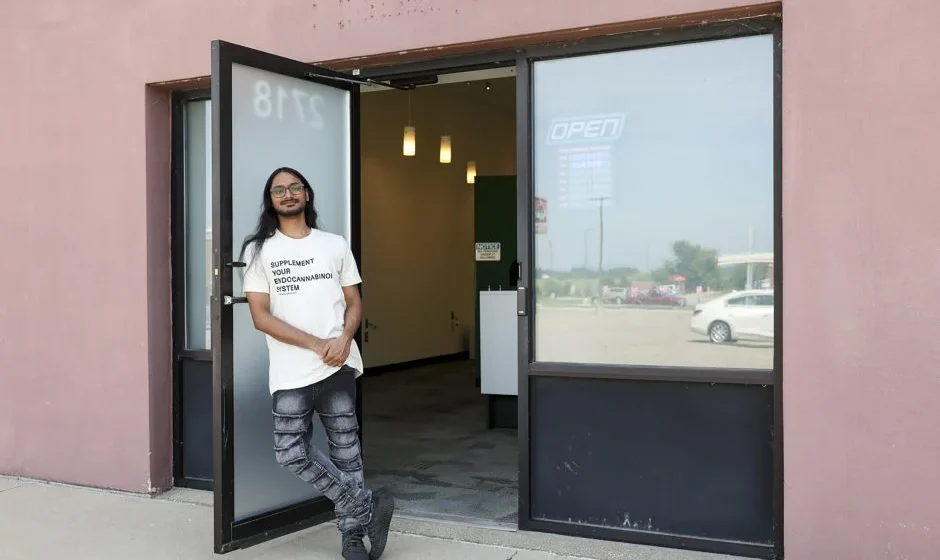
The Monday night vote was not merely a rejection of a single business; it was a symbolic and literal rejection of the regulatory framework established by the Minnesota Office of Cannabis Management (OCM). Jacob Schlichter, the proprietor of The Smoking Tree, had arrived at the meeting expecting a routine approval. His business had already cleared the most rigorous hurdles: it was the first micro-retail cannabis applicant in the state to pass a formal state inspection in June, and it had met every technical requirement stipulated by Albert Lea’s own local ordinances.
Despite these credentials, the Council majority—comprising Mayor Rich Murray and Councilors Larry Baker, Rachel Christensen, and Keith Van Beek—voted to block the registration. This decision directly contradicts Minnesota Statute 342.13, which limits the ability of local governments to prohibit cannabis businesses that have secured state licensure and comply with local zoning.
The immediate fallout was the cancellation of The Smoking Tree’s scheduled "soft opening" on Tuesday. Schlichter now finds himself in a legal limbo, possessing a valid state license but lacking the local registration required to open his doors. The denial has also placed the city’s financial health at risk, as administrative officials warned that the move could trigger a cascade of lawsuits and severe financial penalties from the state.
Chronology: From Legislation to Local Gridlock
To understand the current impasse, one must look at the timeline of Minnesota’s cannabis rollout and Albert Lea’s specific path toward this confrontation.
- May 2023: Governor Tim Walz signs HF 100 into law, legalizing recreational cannabis and establishing the Office of Cannabis Management. The law grants cities the power to set "reasonable" time, place, and manner restrictions but explicitly forbids them from banning the industry entirely.
- May 2024: The Albert Lea City Council approves a local ordinance governing cannabis businesses. This ordinance established a "first-come, first-served" registration process based on the timestamp of state licensure.
- June 2024: Jacob Schlichter makes history as the first micro-retail applicant in Minnesota to pass a state licensing inspection. This milestone positioned The Smoking Tree as a pioneer in the state’s emerging market.
- July 18, 2024: Schlichter completes his local registration application with city staff. City Manager Ian Rigg confirms that the application is fully compliant with all municipal codes and state requirements.
- July 2024: The registration is placed on the City Council’s "consent agenda" for the Monday meeting. Items on the consent agenda are typically considered non-controversial and are passed en masse without individual discussion.
- Monday Night: The item is pulled from the consent agenda for a separate vote. Following a heated debate regarding local control and state overreach, the Council votes 4-3 to deny the registration.
- Tuesday Morning: The Smoking Tree remains shuttered, and Schlichter begins consulting with legal counsel to weigh a lawsuit against the city.
Supporting Data: The Statutory and Financial Reality
The legal framework surrounding cannabis in Minnesota is designed to prevent a "patchwork" of legality where one town allows sales and the next forbids them. According to the law, cities must allow a minimum number of cannabis retailers based on population.
For a city the size of Albert Lea (approximately 18,000 residents), the state formula requires the registration of at least two cannabis businesses (one for every 12,500 residents). By denying the very first applicant, the city has essentially signaled a 0% compliance rate with the mandatory minimums.
The financial risks of this defiance are quantifiable and significant:
- Direct Litigation Costs: City Attorney Joel Holstad estimated that a "legitimate defense" of the city’s position against a state-led lawsuit would cost a minimum of $100,000. He further noted that the city has a "highly unlikely chance of prevailing" given the clear language of the state statute.
- Local Government Aid (LGA) Penalties: Albert Lea is heavily dependent on state funding. City Manager Ian Rigg noted that the city receives over $6 million in LGA, accounting for roughly one-third of its general fund. Under state law, non-compliance can result in a 5% penalty on LGA distributions.
- The $300,000 "Entry Fee": Rigg explicitly warned the Council that the 5% penalty alone would amount to $300,000 in lost revenue before a single dollar is spent on attorney fees or potential damages awarded to the business owner.
Official Responses: A Clash of Ideologies
The debate on the Council floor revealed a deep-seated resentment toward the state government in St. Paul. The arguments were split between those who viewed the vote as a matter of "principled stand" and those who viewed it as a "fiduciary failure."
The Opposition: "A Matter of Principle"
Councilor Larry Baker emerged as the most vocal critic of the state’s mandate. He framed his "no" vote as a defense of municipal autonomy against a "power grab" by state and federal entities. "We need to speak up, and this is just a point where I’m going to start speaking up," Baker said. "It has nothing to do with me not being responsible as far as spending money… It’s just a matter of principle."
Baker further suggested that if the city did not resist the cannabis law, the legislature would eventually move to strip cities of other powers, such as zoning for residential high-rises.
Mayor Rich Murray echoed these sentiments, expressing personal distaste for the legalization of cannabis and the method by which it was enacted. "I do not like the way the state Legislature and the governor has rammed this down our throats with very little say in the process, all because they’re hungry for more revenue," Murray stated.
The Realists: "Orders are Orders"
Conversely, those who voted in favor of the registration—Councilors Brian Anderson, Jason Howland, and Reid Olson—argued that the city was essentially fighting a losing battle with taxpayer money.
Councilor Anderson noted that the city’s authority in this matter was an "illusion." He argued that the responsible path was to accept the state’s reality rather than engage in performative defiance. "I think it’s up to me sitting up here to do the responsible thing and actually say that this is going to happen whether we want it to or not," Anderson said. "I think we need to embrace it and make the best of it."
City Manager Ian Rigg, while sympathetic to the desire for local control, was blunt about the legal hierarchy. "Local control is important… but until it’s restored or it’s preserved, we do have our, I hate to say it, we have our orders."
Implications: A Precedent for the State
The situation in Albert Lea is being closely watched by the Minnesota Office of Cannabis Management and municipal leaders across the state. If Albert Lea is allowed to successfully block a state-licensed business without legal repercussion, it could embolden dozens of other conservative-leaning cities to follow suit, potentially crippling the state’s nascent cannabis economy.
However, the more likely outcome is a swift and decisive legal response. Legal analysts suggest that Schlichter could file a "writ of mandamus"—a court order compelling a government official to properly fulfill their official duties—to force the city to issue the registration. Because the City Manager and City Attorney have already admitted on the record that the business met all legal requirements, the city’s defense would be exceptionally weak.
For Jacob Schlichter, the frustration is palpable. Having navigated the complex state bureaucracy to become a pioneer in the industry, he now finds himself a pawn in a jurisdictional feud. "The last thing I want to do is sue my own city and cause us to use taxpayer dollars on that," Schlichter said. "Whether or not you agree with cannabis, we can all agree that this is a bad use of our tax money. The law is the law."
As of Tuesday, the future of The Smoking Tree remains uncertain. Schlichter has encouraged supporters to lobby the City Council to reconsider their vote, but if the "principled" majority holds its ground, the battlefield will likely shift from the council chambers to the courtroom. In the end, the citizens of Albert Lea may find themselves paying a high price for a symbolic stand against a state law that, for better or worse, remains the law of the land.